Blog Subscription via Follow.it

December 2, 2010

Thieves in Madrid Steal 28 Artworks, including Picassos


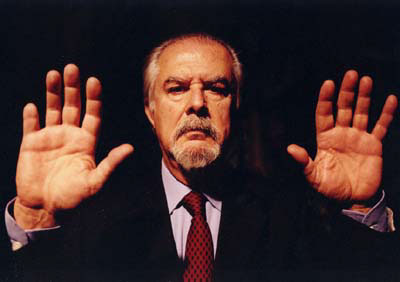
See the link above for a new article by ARCA president Noah Charney, on last week's theft of 28 artworks from a truck parked in a warehouse outside of Madrid. Works by Picasso, Chillida, Tapies, and Botero (pictured above) were stolen en route back from loan in Germany to six different galleries in Madrid and Barcelona.

November 30, 2010

ARCA Student Kim Alderman Presents "Honor Amongst Thieves"

by Catherine Schofield Sezgin

Kim Alderman, a Clinical Assistant Professor at the University of Wisconsin Law School and a student in ARCA’s Class of 2010 postgraduate program in International Art Crime Studies, presented at the Antiquities Trafficking panel at the American Society of Criminologists Conference in San Francisco in mid-November.

Alderman, who studied art history and archaeology at the University of Maryland at College Park, provided an abstract of her presentation on her blog, Cultural Property and Archaeology Law Blog, and we followed up via email with some questions of our own.

ARCA Blog: Do you believe that organized crime has fueled the illicit antiquities trade since the early 1960s?

Alderman: “Whether organized crime is connected to the illicit antiquities trade depends on how you define “organized crime.” The broad definition of organized crime is three or more people, engaged in a pattern of illegal conduct, for the purpose of obtaining material gains. If you use this definition, then it is correct to say that organized crime is involved in the illicit antiquities trade. From subsistence looters to tombaroli to smugglers, there are always people working in concert to excavate and move illicit antiquities. If you are talking only about mobsters or the mafia, then there is less evidence to support the alleged connection. As to the claim that the involvement began in the 1960s, I suspect this originated with allegations of the mafia’s entry into art theft during that decade, and was later extended by imprecise language to the illicit antiquities trade. There has certainly been increasingly organized subversion in the illicit antiquities trade since then, although whether the 1960s served as a temporal starting point for such organization remains to be seen.”

ARCA Blog: Is the illicit antiquities trade linked to money laundering, extortion, the drug and arms trades, terrorism and even slavery?

Alderman: “Claims that the illicit antiquities trade is connected with money laundering, extortion, the drug and arms trades, terrorism, and slavery, should be taken individually. The purchasing of illicit art and antiquities has long been a way to take cash gained from criminal activities and convert it to the ownership of goods, thereby concealing the source of the funds. Extortion would be more an issue for stolen artwork, and I have not observed a link between it and antiquities. As to terrorism, there are discrete instances of terrorist groups unearthing and exporting antiquities in their local regions, but these instances serve as indicators of a potential connection – not hard evidence. Finally, as to the alleged connection between illicit antiquities and the drug and arms trades or slavery, Eastern European mafias have been accused of trafficking in “everything from antiquities to humans.”

ARCA Blog: Thank you, Kim.

Readers can follow Kim Alderman at http://www.culturalpropertylaw.net.

November 23, 2010

ARCA Panel at the 2010 American Society of Criminology

File:MalteseFalcon1930.jpgLast Thursday ARCA sponsored an antiquities panel held at the American Society of Criminology meeting in San Francisco. It was a lively panel, and I always enjoy getting a chance to discuss these issues in person, to an interested audience. San Francisco was a great setting for this kind of thing, and though the conference hotel was located near the Tenderloin, in the old stomping grounds of Dashiell hammett, I managed to restrain myself and avoid making any pained "Maltese Falcon" references, though I'm unable to resist here. What follows are a few of my thoughts which I jotted down during the panel.

Kimberly Alderman began the panel by examining the connections between art crime and organized crime and the drug trade. The connection matters, as it may be one way to help highlight the problem of the theft and looting of sites, as organized crime and illegal drug sales will draw the attention of law enforcement more readily. Yasmeen Hussain followed, and discussed the role of antiquities issues in international relations. I was really struck that there may be more room in the debate for political scientists to weigh in on these issues in a more direct way, perhaps offering frameworks for useful dialogues which can "build capacity" as Yasmeen argued. Erik Nemeth followed and really opened my ideas to the idea of "cultural intelligence" and the need to assess the "tactical and strategic significance of antiquities and cultural heritage sites". I ended the panel by looking in some detail at the Four Corners antiquities investigation, and argued that the criminal offenses at the Federal level are inconsistently applied and do not really do a very good job of regulating and changing the underlying nature of the market.

One interesting idea which emerged from the questions after the panel was Simon Mackenzie's question about whether the UN definition of organized crime could or should be applied to certain parts of the antiquities trade like auction houses. The definition states that organized criminal groups are "a structured group of three or more persons, existing for a period of time and acting in concert with the aim of committing one or more serious crimes or offences. . .". Kim responded by noting that even if these groups are not actively and intentionally engaged in the crimes, they may be unwitting actors or play a part in an organized criminal network, referencing the work of Edgar Tijhuis.

Overall, it was a terrific weekend, another Cultural Property panel with Blythe Bowman Proulx, Matthew Pate, Duncan Chappell, and Simon Mackenzie was terrific as well. Thanks to all the panelists, and especially the volunteers who put together Thursday evening's reception at the Thirsty Bear.

ARCA's Colette Loll Marvin Lectures on "Curating Art Crime" in Budapest


By Catherine Schofield Sezgin

Last weekend ARCA's Director of Public and Institutional Relations, Colette Loll Marvin, lectured on "Curating Crime" to a group of students in the Arts Management program at the International Business School of Budapest.

Ms. Marvin spoke about several recent museum exhibitions dedicated to the subject of art crime, specifically forgery. Marvin has been conducting research for a documentary on the famed Hungarian forger Elmyr de Hory (1906-1976) who was arguably the most prolific forger of the twentieth century.

De Hory operated primarily in Europe and the United States for three decades and is alleged to have circulated hundreds, perhaps even thousands, of paintings into the art market, according to Marvin. Unable to find success in selling his own original works, Marvin said, De Hory turned his talents and Beaux Arts training towards the crafting of fake paintings in the style of Modigliani, Picasso, Matisse, Dufy, Vlamink and other Impressionist and Modernist masters.

“Fakes and forgeries were once the dirty little secret of the art world,” Marvin said. “No gallery, museum or auction house is entirely free from the embarrassment of a costly error of misattribution or faulty provenance. Duped museums can feel slightly vindicated, however, as there is a growing public fascination in these costly mistakes, as witnessed by the record crowds visiting exhibits dedicated to fakes, mistakes and misattributions.”

The latest exhibit, "Fakes, Forgeries and Mysteries" opened this weekend at the Detroit Institute of Arts in Detroit and examines 58 artworks from paintings to decorative arts in the museum's collection whose artist attribution and authenticity have changed since being donated or purchased by the institution.

Professor Jeff Taylor, an American art historian currently completing the doctoral program at Central European University on the subject of the historical evolution of the Hungarian art market, invited Marvin to speak to the class after being asked to serve as a Humanities advisor to her film project.

"Colette's presentation served as the ideal exclamation point to this section of the semester which had been focusing on the problems of the art market, particularly fakes, plunder, and restitution,” Taylor said. “I think the students got a full appreciation for how much these issues are being widely discussed, both in the many recent exhibitions which were shown, but also in terms of Colette's documentary project on Elmyr de Hory, and that seemed to generate a lot of interest among them in the ARCA Postgraduate program."

The Arts Management program at the International Business School of Budapest is a recently added program and boasts a curriculum designed to produce students that are well versed in the business aspects of the art market.

Ms. Marvin also gave a presentation to the undergraduate class about ARCA's Postgraduate Certificate in International Art Crime Studies.

ARCA’s courses include “Art Crime and Its History” by Noah Charney, founding director of ARCA; “Art in War” by Judge Arthur Tompkins of New Zealand; “Art Policing and Investigation” by Richard Ellis, former director of Scotland Yard Arts and Antiques Unit; and “Museums, Security, and Art Protection” taught in 2010 by Anthony Amore, Security Director of the Isabella Stewart Gardner Museum.

ARCA’s Postgraduate Program in International Art Crime and Cultural Heritage Protection Studies has taken place in Italy in the medieval town of Amelia in Umbria from June through August for the past two years and is accepting applications through January 3 for the 2011 program.

In addition, ARCA’s third annual International Art Crime Conference is scheduled for July 9th and 10 next summer in Amelia. Papers for the conference will be accepted in the spring.

Art Crime in Hungary

On November 5 1983, thieves robbed the Museum of Fine Arts in Budapest and stole paintings by Raphael (Esterhazy Madonna and Portrait of a Young Man); Giorgione (Self-portrait), Tintoretto (Portrait of a Gentleman and Portrait of a Gentlewoman), and Tiepolo (Madonna and the Saints and Rest on the Flight into Egypt). All of the works, including Raphael’s Esterhazy Madonna, also known as Virgin and Child with St. John the Baptist, were recovered two months later by the Italian Carabinieri in an abandoned Greek Monastery near Aigio in northeast Greece. Operation Budapest was a joint investigation between the Italian Carabinieri, the Hungarian police, and the Greek Police.

The Old Gallery of the Museum of Fine Arts in Budapest has a collection of 3,000 Old Master Paintings from the 13th to the 18th centuries, with more than 700 acquired from the Esterhazy estate, a noble family of the Austro-Hungarian Empire. Inadequate physical maintenance may have made the museum vulnerable to thieves. A visitor to the Budapest museum in the 1980s described the 1906 building housing the collection as “in a sorry state” with “various roofs leaking and many of its masterpieces draped in sheets of polythene to protect them when rain fell.” The museum had been bombed in World War II and the construction of an underground railway may have damaged the building’s structure.

According to the Commission for Art Recovery, about 20 percent of all Western art in Europe was looted during the war. During World War II, the Hungarian government, a Nazi ally, confiscated art owned by Jews. The Hungarian government participated in the 1998 Washington Conference on Holocaust-Era Assets and agreed to work to identify Nazi-era looted art and opening museum archives for provenance research. However, the Jewish Claims Conference and World Jewish Restitution Organization claims that Hungary has disregarded the principles and not returned art looted from Holocaust victims.

The family of Baron Mar Lipot Herzog, a wealthy patron of the arts, who lived in Budapest and died in 1934, has sought restitution from Hungary with no success, according to a recent article by Judy Dempsey in the New York Times.

Hungary to Sell Communist Relics

Artdaily.org today published an article by Pablo Gorondi of the Associated Press about an upcoming auction in Budapest of the sale of 230 communist-era relics, including a life-size bust of former Soviet dictator Vladimir Lenin.


November 22, 2010

ARCA Lecturer Richard Ellis weighs in on recovery of stolen paintings from Malmö Art Museum

by Catherine Schofield Sezgin

Swedish police recovered three paintings that had not been reported stolen from the Malmö Art Museum last month during an investigation into a case concerning credit fraud in the taxi sector. The case was covered here in The Local, Sweden’s News in English. Mark Durney’s Art Theft Central urged police investigators to reveal how and why the paintings were in possession of individuals with ties to a credit card case in an article on October 7 . The ARCA blog sought additional insight on this case from one of its instructors, Richard Ellis, former Director of Scotland Yard’s Arts & Antiquities Unit.

“In my experience, unlicensed taxi services (sometimes referred to as mini-cabs) have frequently been involved in criminal groups, committing such crimes as burglary, fraud and local drug distribution,” Mr. Ellis wrote in an email this month. “I suspect that this was an unlicensed taxi service and therefore it is not a surprise that they were involved in credit card frauds.

“Professional criminals often operate in more than one area of crime and a lot of art recovered by police is found whilst investigating other crimes,” he continued.

Mr. Ellis cited the robbery at the National Gallery in Stockholm in 2000 when three masked and armed robbers walked into Stockholm’s National Museum and took a small self-portrait on copper by Rembrandt and two paintings by Renoir (“A Young Parisienne” and “Conversation”) and escaped in a boat, diverting police by setting cars on fire in nearby streets. Renoir’s “Conversation” was recovered one year later when Swedish police raided the place of known drug traffickers. In 2005, the other two paintings were recovered when police infiltrated a U. S.-based crime syndicate: Renoir’s “A Young Parisienne” was recovered in Los Angeles and Rembrandt’s self-portrait was recouped in Copenhagen. “In this case, the stolen art was used to fund other criminal activities,” Mr. Ellis wrote.

“In the current case, the painting by Munch was stolen because they recognized that in theory it would attract a high cash value,” Mr. Ellis continued in his email response to the ARCA blog. “However, whether they had the knowledge required to capitalize on this is not clear and it is this ability in knowing how to dispose of stolen art that sets an art thief apart from other criminals."

The Munch painting is worth around 10 million kroner ($1.5 million) and was found with two paintings by Gustaf Rydberg and Pär Siegaard. Munch's 1913 “Two friends”, which portrays two dogs and is thought to have been done when the Norwegian painter was living in Germany, is the Malmö Art Museum’s only work by the artist.

Founded in 1841, the Malmö Art Museum collection contains 32,000 works from the 16th century to the present. The museum building from 1937 is in the Malmöhus castle complex, one of the oldest remaining renaissance castles in Scandinavia.

November 11, 2010

German Forgers May Have Used Catalogs of Jewish Art Dealer


by Catherine Schofield Sezgin

German forgers may have used the records of a long-dead Jewish art dealer as provenance for as many as 35 second-tier French and German expressionist paintings sold through auction houses in Cologne and London which may have defrauded art collectors of more than 15 million Euros over the past two decades.

The alleged forgery activities of a German couple and their extended family and friends are detailed in a report in Der Spiegel with additional analysis by Mark Durney at Art Theft Central in October. Although only one painting has been confirmed as a fake, according to Der Spiegel, all of the paintings from two fictitious collections that claim to have been purchased through the same art dealer in Germany in the 1920 are now suspect. Many of the paintings are stamped with a fraudulent sticker trying to identify the artworks as from the Galerie Flechtheim.

Provenance of these suspected paintings may have been lifted from sales and exhibition catalogues from a Dusseldorf art gallery owned by the Jewish art dealer Alfred Flechtheim who fled Nazi Germany when his business was confiscated in 1933. Der Spiegel reported that parts of his collection and documents from his business were lost. Flechtheim, who died in London in 1937, represented Pablo Picasso, George Braque, Paul Klee, George Grosz, and Max Beckmann and other painters in the 1920s who were later deemed by Nazi officials to have produced “degenerate art”. Galerie Alfred Flechtheim held exhibitions of works by André Durain, Juan Gris, Max Ernst, Paul Klee, and Paul Cézanne in 1929; and Edzard Dietz, August Renoir, Fernand Léger, Max Beckmann in 1928. A 1926 portrait of Alfred Flechtheim by Otto Dix hangs in the Neue Nationalgalerie, Staatliche Museen zu Berlin (see image above).

Flechtheim’s heirs have tired to recover about 100 paintings by artists such as Picasso, Juan Gris, Fernand Léger, and Vincent van Gogh from German and American museums. In July 2010, the Fleichtheim heirs claimed a portrait of the actress Tilla Durieux by Oskar Kokoschka from the Museum Ludwig in Cologne (Zeit Online, translated, “He Was His Own Best Client Client,” July 8, 2010). Flechtheim’s gallery was taken over by the Nazis in 1933. Alex Vömel, the new ‘owner’, sold the Durieux portrait from Flechtheim’s private collection in 1934 for a price below the 1931 insurance value, according to the heirs’ lawyer, who also claim that there’s no record that Flechtheim received any proceeds from the sale.

In another litigation news, the heirs of George Grosz are pursuing the restitution of paintings they claim Grosz left on consignment with Flechtheim before Grosz also fled Germany in 1933.

November 10, 2010

Wednesday, November 10, 2010 - , No comments

You're Invited to ARCA's Happy Hour: Thursday November 18 (San Francisco)

ThirstyBear Brown Bear Ale

Thursday, November 18
6.30 p.m. to 8.30 p.m
Thirsty Bear
661 Howard Street
San Francisco, CA 94105

ARCA warmly invites those in the Bay area to join us for some free drinks, nibbles, and lively discussion about art crime and cultural heritage protection. This is an excellent opportunity to meet ARCA staff, volunteers, and experts and professionals in the field of art crime. We look forward to seeing you there!

For further information email Joni Fincham, Managing Director director@artcrime.info