Blog Subscription via Follow.it

Showing posts with label art and organized crime. Show all posts

March 8, 2026

The man at the centre of one of Italy's biggest antiquities trafficking scandals, Gianfranco Becchina, has had his fortune restored. Should it have been?

Today in Italu, it was announced that the Preventive Measures Section of the Palermo Court of Appeal has overturned a sweeping asset confiscation order issued against Gianfranco Becchina, 85, the Sicilian-born antiquities dealer whose name has been at the centre of international art trafficking investigations for more than three decades. The preventive measures panel of the Court of Second Instance, (Italy's court of appeals), revoked entirely the order issued on 22 October 2021 and made public on 26 May 2022 by the Tribunal of Trapani.  

That ruling ordered the confiscation of a significant portion of movable, real estate and corporate assets "attributable to a well-known international trader of works of art and artefacts of historical-archaeological value" long suspected to have links with the Sicilian mafia, in and around the port town of Trapani,   This we know was Gianfranco Becchina and by extension his family.  Those assets were ordered seized on the premise that, according to the prosecution, the antiquities dealer had laundered illicit archaeological finds for the Matteo Messina Denaro clan of Cosa Nostra.

In delivering their 2026 reversal, the Court of Second Instance accepted the defence's appeals, concluding that no disproportion existed between the family's accumulated wealth and their declared legitimate sources of income, effectively ruling that Becchina's assets had been lawfully acquired.  But having said that one must remember that the Italian Judge Rosalba Liso dismissed all antiquities trafficking-related charges against Gianfranco Becchina due to the running of the statute of limitations in 2011.  

Judge Liso is also the judge who ordered the seizure of 5,919 of Becchina’s antiquities (seized in 2002 and 2009), holding that “from the evidence…it emerges that Becchina bought antiquities from tombaroli.” Addressing the antiquities themselves (both those seized and those depicted in the seized photographs), Judge Liso found that “all come from clandestine excavations conducted in Italy…[and that]…the copious documentation seized from Becchina definitely certifies that those objects come from clandestine excavations and excludes any legitimate provenance.”


Defence attorneys in the current case, Francesco Bertorotta, Marco Lo Giudice, and Giovanni Miceli, issued a statement asserting that the Court of Appeal’s decision restored justice to their client and his family, who, they said, had endured nearly eight years of asset seizures affecting their businesses and property. According to the defence, the ruling confirms what Becchina’s lawyers had long argued: that the family’s wealth derived from lawful professional activity. 

While Judge Liso noted that a substantial portion of Becchina's wealth was generated through the sale of illicitly excavated antiquities, it should be underscored that it was the passage of time, rather than the absence of underlying misconduct, that limited the possibility of the Sicilian dealer's criminal prosecution, due to statutes of limitation.

Among the most symbolically significant assets returned under the ruling is the Palazzo dei Principi Aragona Pignatelli Cortes in Castelvetrano, an iconic landmark of the city's historic centre originally rebuilt in the sixteenth century and incorporating the Castello Bellumvider, a fortification commissioned by Frederick II in the twelfth century. Considered a monument of considerable architectural and cultural significance, this and other property has now been ordered returned to the family, eight years after their seizure in November 2017 by Italy's Anti-Mafia Investigative Directorate, through the Criminal and Preventive Measures Section of the Court of Trapani. 

Prosecutors had alleged, but according to the appellate court failed to prove, that Becchina laundered illegally excavated archaeological artefacts on behalf of the Messina Denaro crime family, whose patriarch, before his arrest and subsequent death, had been Italy's most wanted Mafia boss. The courts at both levels found the allegations of a relationship between Becchina and the Messina Denaro clan difficult to sustain. 

Even at the court of first instance, the Tribunal of Trapani had already rejected the Mafia association claim after reviewing the testimony of multiple informants, noting the generic nature of their statements and finding a "lack of certainty not only regarding affiliation, but also regarding specific unlawful conduct attributable to Becchina in support of Cosa Nostra."  That same tribunal had also established that the vast majority of artefacts stored in Becchina's Basel warehouses originated from Campania, Lucania and Puglia on the Italian mainland.

These findings are also borne out by examination of the Becchina Archive, which revealed that over 80% of the antiquities derived from Apulia and of the Apulian vases, over 90% were traceable to a single source within Becchina's network: convicted tombarolo and later intermediary trafficker Raffaele Monticelli, and were therefore unconnected to the Messina Denaro clan in Sicily.

It is worth noting, however, that the court's rejection of a formal Cosa Nostra connection does not discount the question of organised criminality in the antiquities trade, nor Becchina's alleged role within it.  Art crime investigators and cultural heritage scholars have long distinguished between two distinct, though sometimes overlapping, criminal ecosystems.

The first comprises Italy's primary poly-crime-oriented syndicates, the hierarchical organisations most commonly associated with the structured Mafia model. These groups maintain formal leadership, internal codes of conduct, long-term territorial control, and well-established codes of silence. They are, in the broadest terms, powerful transnational clans that extort, tax, or directly control criminal operations across territories with distinct geographic origins and international reach. 

The most prominent of Italy's Organised Crime Groups (OCG) is the Cosa Nostra, which despite sustained pressure from law enforcement continues to maintain its territorial grip on Sicily, adapting constantly to evade scrutiny and remaining the most historically recognisable and publicly emblematic of the Italian mafias. 

The 'Ndrangheta, rooted in Calabria and built upon blood ties and tightly-knit family clans known as 'ndrine, has grown into arguably the most formidable of the four, having expanded into the most countries and dominating Italy's cocaine trade through networks stretching across South America and West Africa. 

The Camorra, operating primarily out of Naples and Caserta, functions through a volatile mixture of large cartels and smaller, more fractious clans engaged in drug trafficking, extortion, and illicit financial schemes, with profitable operations extending across Spain, France, the Netherlands, Germany, and Dubai. 

The Apulian crime groups, namely the Sacra Corona Unita, the Società Foggiana, the Camorra Barese, and the Gargano Mafia, evolved from their origins in cigarette smuggling into a broader criminal portfolio encompassing human trafficking, drug and weapons running, as well as illegal waste disposal, with networks present in the Netherlands, Germany, Switzerland, and Albania.

Heritage-crime criminal ecosystems, by contrast, are more loosely structured. Often, they consist of temporary collaborations among tombaroli (clandestine diggers), middlemen, couriers, restorers, and dealers who cooperate in specific territories in relation to specific transactions.Taken together, however, these actors form a sophisticated supply chain fully capable of functioning as a form of organised crime in its own right. 

Unlike traditional Mafia-styled OCGs, most antiquities trafficking OCG networks lack formal leadership structures, initiation rituals, or territorial monopolies enforced through violence. Instead, they rely on highly specialised divisions of labour, shared financial incentives, and the complicity, or at the very least the indifference, of segments of the international art market that have historically looked the other way regarding the illicit origins of the objects they traded.

The consequences of that indifference is severe. Over several decades, well-developed supply chains have enabled the large-scale, systematic removal of archaeological material from some of Italy's most significant cultural landscapes. Looted objects flowed steadily from easily exploited heritage-rich sites to storage facilities, freeports, and private galleries, where they were laundered using  fabricated collecting histories and sold onward to major Western museums and private collectors. 

It is within this framework that law enforcement and art crime researchers have directed sustained attention toward the activities of Gianfranco Becchina.  Rather than viewing him solely through the lens of his Mafia contacts, many analysts position him as a central and well-connected node within a commercially motivated antiquities trafficking network. In this role, the Sicilian dealer functioned as a high-level intermediary whose gallery connections and market relationships enabled large numbers of illicitly excavated antiquities to enter the legitimate international art market, contributing significantly to the long-term exploitation of Italy's archaeological heritage.

Originally from Castelvetrano and for many years resident in Switzerland, Becchina operated for decades within the international art and antiquities market, and his name appears repeatedly across multiple investigations into the illicit trafficking of antiquities sourced from Italian territories. Investigators allege that over roughly thirty years he accumulated his wealth through the proceeds of international trafficking in archaeological artefacts, many of which had been clandestinely looted from sites throughout southern Italy where his cordata operated.

The scale of the damage is reflected in the volume of significant objects that have since been repatriated. Through what investigators describe as a lucrative criminal enterprise, Becchina supplied several important antiquities to the J. Paul Getty Museum and other American artistic institutions, works that have since been restituted to Italy. 

Among the more notable returns, some of which have been discussed on this blog, are the Paestan red-figure calyx krater painted and signed by Asteas, the Sarcofago della Bella Addormentata, a grouping of helmets later gifted to the Metropolitan Museum of Art, and an important  black-figure kalpis depicting the myth of Dionysus being kidnapped by pirates whom he transforms into dolphins. These objects are just a few of the numerous works circulated by Becchina and traced through documentation seized by the Italian heritage crime authorities, which helped art crime analysts reconstruct the full extent of the network and actors involved in funnelling artefacts from Italian soil onto the international antiquities market.

This month's appeals ruling in Becchina's favour does not erase any of that contested history. 

As recently as February 2025, the United States returned 107 archaeological artefacts, collectively valued at $1.2 million to Italy, items identified through ongoing investigations as having been looted and illicitly exported by traffickers including Becchina. Among the recovered objects was a fourth-century BC bronze patera that had passed through Becchina's hands before reaching a New York antiquities dealer and eventually being seized by Manhattan's Antiquities Trafficking Unit. 

The appellate ruling likewise does not address the broader international record of illicit artefacts connected to Becchina's operations that have been recovered by law enforcement agencies over the past two decades, nor does it resolve the wider question of how a sophisticated, decentralised criminal network trading in looted antiquities, operated quite apart from any single organised crime family, and was able to function effectively for decades.

The consequences for Italy's archaeological heritage has been devastating and, in numerous instances, permanent. Sites cannot be unlooted. Context, once destroyed, cannot be restored. The historical knowledge embedded in the ground alongside these objects fenced to Becchina is gone forever.

What makes this court ruling especially difficult to reconcile is the striking disparity in how the law treats different categories of organised crime. Those convicted of Mafia association in Italy routinely face lengthy custodial sentences, with the full weight of anti-racketeering legislation brought to bear against them. 

Those caught participating in the trade in looted antiquities, by contrast, have historically faced far more lenient consequences, despite the fact that the harm they inflict on the collective cultural memory of a nation is, by any meaningful measure, quite serious. Until the legal frameworks governing cultural property crime begins to reflect the true scale of that harm, the gap between the severity of the offence and the severity of the punishment will continue to undermine the protection of the world's shared archaeological inheritance.

By:  Lynda Albertson

November 30, 2025

Archaeologist Arrested in Greece as Europol Expands Probe Into Bozhkov-Linked Antiquities Network


The Bulgarian Anti-Money Laundering Directorate, the Bulgarian Prosecutor's Office and Europol announced this month that a coordinated action, led by Bulgarian authorities, and supported by Europol, had resulted in 35 arrests in Bulgaria and the dismantling of a major criminal network involved in large-scale trafficking of cultural goods across Europe. 

Although Europol did not name the principal High-Value Target (HVT) in this multi-country police action, the agency noted that the investigation was triggered by a 2020 house search in Bulgaria in which authorities seized approximately 7,000 cultural artefacts of exceptional historical and monetary value.  According to the Europol statement, the material consisted largely of Greco-Roman and Thracian antiquities of remarkable quality and significance.  Bulgarian Prosecutor Angel Kanev, under national police protections for threats made to his life in this investigation, pointed out that the investigation centred on a case the country had been following for four years and involved coordination with law enforcement actions in Germany, Japan, Italy, the US, and the UK. 

The only publicly documented seizure of that scale, in Bulgaria, during 2020, was the government’s raid on the holdings of Bulgarian gaming tycoon Vasil Bozhkov, AKA Vassil Bojkov, whose business entities were searched on 20 January 2020 by the Specialised Prosecutor’s Office. Widely described as the country’s richest man, Bozhkov has long been referred to as the country's most notorious gangster, with allegations of money laundering, extortion, racketeering, tax fraud, and illegal antiquities dealing documented as early as a 2009 U.S. Embassy leaked diplomatic cable made public through WikiLeaks.

At the time of the 2020 search and subsequent seizure, Bozhkov faced seven criminal charges, including leading an organised crime group, coercion, extortion, attempted bribery of an official and incitement to malfeasance in office.  During the raid, prosecutors and police entered his offices at Nove Holding on Moskovska Street in Sofia and impounded 6,778 of the mogul's antiquities dating from as early as 4,000 BCE through the 6th century CE.  Shortly after these raids Bozhkov was handed additional charges, including influence trading and holding and expropriating valuable cultural artefacts.

Later, in June 2021, the U.S. Department of the Treasury’s Office of Foreign Assets Control (OFAC) sanctioned Bozhkov, under E.O. 13818 for materially supporting corruption, misappropriation of state assets, and related criminal activity.  In February 2023, the United Kingdom followed suit and imposed sanctions under its Global Anti-Corruption sanctions regime.  After spending years in Dubai as a fugitive and avoiding extradition on a European arrest warrant, Bozhkov returned to Sofia voluntarily in August 2023 and remains at liberty with some restrictions while his numerous trials proceed through the Bulgarian courts.

The November Europol operation, coordinated this month, expands upon Bozhkov's earlier antiquities-related investigations and extends into multiple jurisdictions.


In late November (19 November and later) Greek anti-mafia officers working with the Directorate for Combating Organized Crime (DAOE) Sub-Directorate for Combating Trafficking in Human Beings and Goods carried out a specialised police operation at multiple locations in Greece, including a mansion purchased by Bozhkov in 2018 for the sum of 6 million euros.  

Acting on a warrant issued by a Greek prosecutor, authorities in the country were aware that despite being a defendant in a mounting number of high-profile cases, including contract killings, money laundering, tax evasion and attempted rape of Maria Filipova, the former head of the State Gambling Commission, Bozhkov had been granted permission to travel abroad with court permission staying at the mansion he had purchased in the resort village of Hanioti on the Halkidiki peninsula.  In doing so, he is said to have spent more time in Greece than in Bulgaria in the past year.  

Perhaps tipped off to the pending police action, Bozhkov was not at his residence at the time the search warrant was executed by the Greek police, having departed one day prior.  In an interview with Sasho Dikov, afterward, Bozhkov admitted to the search having occurred of his Greek estate, but denied that an arrest warrant had been issued by the Greek authorities which some Bulgarian news sites have stated.

During this same investigation, related searches were also carried out by Greek authorities at other locations in Athens, Malesina (Fthiotis), and Saronida (Attica) targeting four individuals related to Bozhkov's alleged criminal activity.  At one residence in Athens, police arrested a 60-year-old archaeologist which Greek newspaper Kathimerini reported as having assisted in managing the private antiquities collection of the Bulgarian businessman known as “the Skull,” a nickname widely associated with Bozhkov.  

At said residence, officers seized 474 ancient objects from the Hellenistic and Mycenaean periods, four ancient coins, a wooden icon of St Anthony classified as an antiquity under Greek law, two precision scales, banking documents, photographs of archaeological material, reference books depicting antiquities and ancient object auctions, and 3,200 euros in cash.   Upon being taken into custody, the scholar confirmed his relationship with the Bulgarian businessman but claimed that the seized antiquities in his possession were there as part of his professional capacity for research purposes. 

Unnamed initially in most news publications, the arrested scholar is easily identified as he was said to have taught at a university in Prague.  Other news sources went on to state that the academic had previously met Bozhkov in 2014 and worked as a researcher and catalogue writer for his extensive collection, as well as on related archaeological projects.

All of the aforementioned details provide a solid match to an affiliated professor of Classical Archaeology at Charles University in Prague named Athanasios Sideris.  According to this scholar's LinkedIn profile, he was the director of excavations in Halka Bunar, Bulgaria between 2009 and 2014 and from January 2017 until August 2022 was the Head Curator of the Thrace Foundation, in Sofia where he was responsible for curating and organising exhibitions and publications for Bozhkov's mostly unprovenanced antiquities collection. 

Sideris is also the author of several books featuring material from Bozhkov problematic ancient art collection.  One of these, Theseus in Thrace: the silver lining on the clouds of the Athenian-Thracian relations in the 5th century BC published by Bozhkov's Thrace Foundation in 2015, includes unprovenanced material from the Bozhkov Collection, as well as other unnamed private collections in Bulgaria, some of which have never been published previously.  At least two of the objects depicted in this catalogue have previously been in circulation with the Swiss gallery, Phoenix Ancient Art.  They are:

     • a Phiale depicting Thetis and Nereids bringing Achilles, 430-420 BCE

     • a Kylix belonging to the “Rhenia” type depicting a  Greco-Thracian rider. 430-420 BCE

How the current investigations will advance the cases against Bozhkov or those related to his enterprises remains to be seen, but it marks a significant escalation in ongoing efforts to dismantle transnational networks responsible for the looting, laundering, and illicit circulation of plundered cultural property in Europe. It also underscores how deeply embedded some actors have been within both academic and commercial sectors, blurring the boundaries between scholarship, private collecting, and illicit trade.

As these investigations continue one thing is clear: the protection of cultural heritage depends not only on police action but on confronting the long-standing entanglements between wealth, influence, organised crime and the illegal antiquities market. For additional background on Vasil Bozhkov's art related cases, readers may wish to consult our earlier ARCA blog posts here:

January 22, 2023

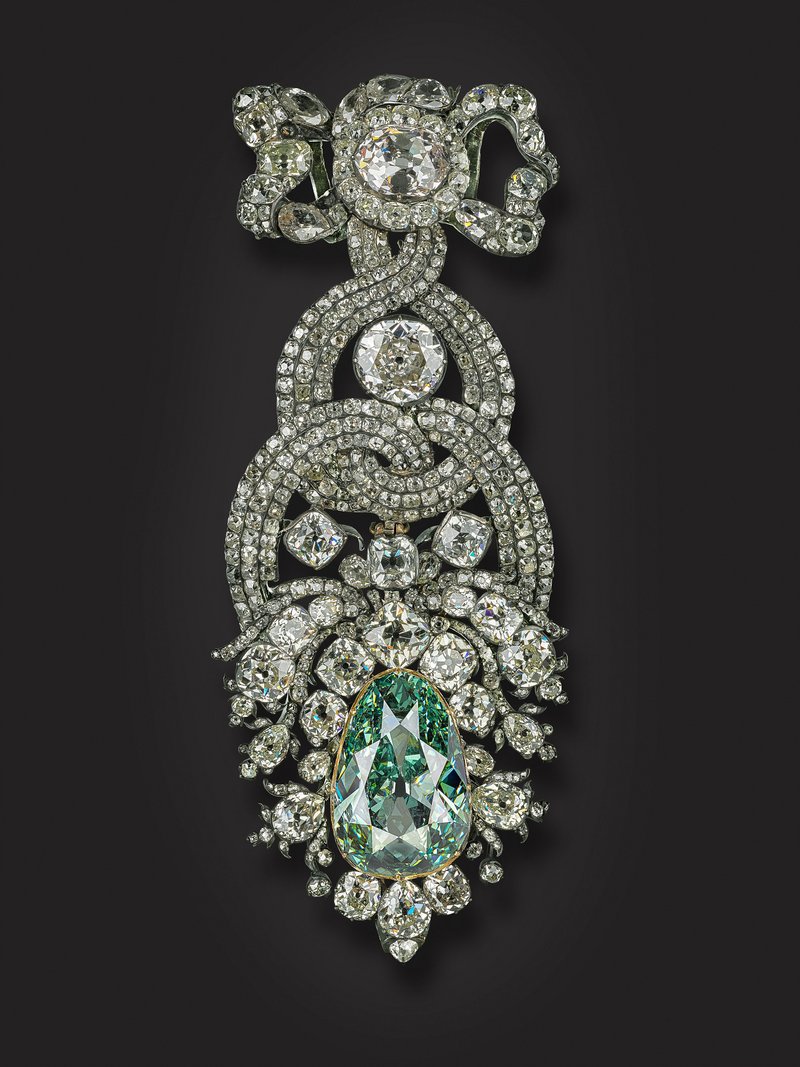
Four confessions to a museum burglary all started with a photo of the Green Diamond

This month, has proved an interesting month in the ongoing trial of six burglars, believed to be responsible for the theft of 18th-century jewels stolen from the Green Vault (Grünes Gewölbe in German) museum within the Dresden Castle in Saxony.  This week, four out of six members of the large Remmo family, brothers Wissam and Mohamed, and cousins Rabieh and Bashir Remmo entered formal confessions before the district court in Dresden, in hopes of receiving lighter sentences for their cooperation. 

Family members Abdul Majed and Ahmed Remmo have seemingly been exonerated by the confessions of the others. 

Family members who have confessed to active roles in the museum burglary, stated that they orchestrated the theft after Mohamed Remmo, twin brother to Abdul Majed Remmo, received a photo from an unnamed person who had visited the museum during a school outing. That photo was apparently of the Dresden Green Diamond. 

Set in a hat clasp, this dramatic 41-carat, 8.2 gram natural green diamond, from the mines of India, is the largest green diamond in the world.  Too well guarded, the team of would-be burglars turned their sights to other jewels which they believed would be easier to access.

Abdul Majed Remmo's role, had been stated as having been to gather supplies used for the theft, though his family members on trial downplayed his role, saying he performed inadequately, purchased inferior tools, and wasn't present on the day of the heist. 

After scouting the building in a lead up to the November 25th 2019 theft, Rabieh Remmo, caught on CCTV footage with a flashlight, entering the closed museum shortly before 5 a.m.  He admitted that he is the thief depicted in video footage and to smashing the display case, struck an estimated 56 times in less than 30 seconds.  Rabieh also admitted to filling a sack with €113.8m. worth of pieces from the Green Room's historic jewellery collection.

Pieces stolen during the theft include:

  • a Hutkrempe der Diamantrosengarnitur by Christian August and August Goffhelf Globig, Dresden, 1782-1789;
  • a Shoulder loop (epaulette) (diamond rose set) (part available) by 
  • Christian August Globig and August Gotthelf Globig. Dresden 1782-1789;
  • Christian August and August Gotthelf Globig's Sword (diamond rose), 1782-1789, inv. no. VIII 16 with a diamond-studded hilt containing nine large and 770 smaller diamonds as well as its scabbard;
  • the Jewel of the Polish Order of the White Eagle (diamond rose set) by Christian August and August Gotthelf Globig, Dresden, 1782-89
  • Breast Star of the Polish Order of the White Eagle (set of brilliants) Jean-Jacques Pallard. Geneva/Vienna between 1746 and 1749;
  • Queen Amalie Auguste's Great Pectoral Bow by Christian August Globig, Dresden 1782, 51 large and 611 small diamonds, silver;
  • Necklace of 177 Saxon River Pearls, obtained from Vogtland waters before 1734, lined up in 1805;
  • 10 Rock Buttons from the Diamond Rose Set (each preserved)
  • Jean Jacques Pallard, Geneva 1753, inv. no. VIII 9/1-10;
  • Two arched shoe buckles from the Diamond Rose Set, workshop of Christian August Globig, Dresden 1782-1789, inv. no. VIII 12/ a,b;
  • Large Diamond Rose (Diamond Rose Set)inventory no. VIII 15;
  • Piece of jewelery in the form of palmettes (set of diamonds)
  • Jean Jacques Pallard, Vienna, 1746-1746;
  • Epaulette with the so-called "Saxon White" from the diamond set
  • Franz Diespach; Christian August or August Gotthelf Globig; Jean-Jacques or André Jacques Pallard; 1782-1789;
  • Hat decoration, so-called heron tail from the diamond set
  • August Gotthelf Globig, Dresden between 1782 and 1807, inv. no. VIII 26; 
  • Part of a muff hook, workshop of Jean Jacques Pallard, Geneva/Vienna 1746 and 1749, inv. no. VIII 34;
  • Queen Amalie Auguste's diamond necklace (preserved in parts), 
  • Ignaz Konrad Plödterl, Dresden 1824, inv. no. VIII 38;
  • Aigrette for the hair in the shape of a sun by August Gotthelf Globig, Dresden, 1782-1807;
  • Aigrette for the hair in the shape of a crescent moon (The diamond jewelry and the pearls of the queens)
  • August Goffhelf Globig, Dresden, 1782-1807;

Wissam and Mohamed Remmo informed the court, through their lawyers, that they too were immediately involved in the heist. Wassim copped to having cut the bars on a window in the vault prior to the burglary and also to standing guard outside of the museum to receive the stolen items and tools used in the break-in.  Mohamed Remmo admitted, through his lawyer, to being outside the museum on the morning of the theft and to to receive the stolen items.

In a later than the others admission, Bashir Remmo, through his lawyers, told the court on Friday, that he had not been initially involved in the preparations for the burglary, but admitted to standing guard on the morning of the theft and to receiving the stolen items.

The thieves involved then made their getaway in an Audi A6 which they set fire to some four kilometers away from the palace in an underground car park, in Dresden-Pieschen, hoping by doing so, to any destroy evidence they may have theft behind.  They then proceeded back to Berlin in a Mercedes disguised as a taxi.

In an early Christmas present to Dresden, German authorities have been able to retrieve 31 of the jewellery pieces stolen in the 2019 robbery between December 16th and 17th.  Several of the most valuable pieces are still unaccounted for. 

Conservators testified during the trial that several of the recovered diamond-encrusted jewellery pieces had been broken and all bear traces of a whitish substance. This could be discharge residue from the fire extinguisher that the burglar discharged in an attempt to destroy traces of the team's DNA.  Some of the recovered diamonds also appear to have been damaged and it is believed that they were submerged in water for an extended period of time.

All of these confessions were spurred by efforts to lower time in prison, where the maximum period of incarceration could be up to 15 years for the museum theft and the accompanying charge of aggravated arson in the underground car park. 


December 17, 2022

Recovered: (Some) of the Jewels Stolen in the November 25, 2019 Green Vault Burglary at Dresden's Residenzschloss.


On 25 November 2019, burglars entered the Green Vault (Grünes Gewölbe in German) museum within Dresden Castle in Saxony, Germany and smashed open exhibition cases using an axe. In only a few minutes, the precision coordinated team of thieves slipped away with an outstanding cache of jewellery, including the 49-carat Dresden White Diamond, the diamond-laden breast star of the Polish Order of the White Eagle, a 16-carat diamond hat clasp, a diamond epaulet, and a diamond-studded hilt containing nine large and 770 smaller diamonds, as well as its jewel-encrusted scabbard.  

Despite having torching the motor vehicle used in the getaway to any destroy evidence they may have theft behind in its interior, clues surrounding the spectacular art theft, lead German authorities to investigate the purchase of SIM cards by members of a clan known to have been involved in a series of criminal offenses which eventually resulted in the arrest of several members of the Remmo clan, one of the grandfamilies of Lebanese-Kurdish descent who immigrated to Germany during Lebanon's 1975-1990 civil war. 

Members of this clan have been criminally conspicuous, gaining reputations for trafficking, racketeering and robbery, some of which have been spectacular in their execution. Their complicated family ties and property ownership structures, have made it possible for the tightly knit groups to launder money - and sometimes, but not in this case, have made it considerably more difficult for investigators to entangle who is involved and in what capacity. 

Today, during a press conference held by the Ministry of the Interior of Saxony, jointly with the Dresden Public Prosecutor's Office and Police, German officials announced that between December 16th and 17th, the Dresden public prosecutor, Soko Epaulette and the LKA Sachsen seized 31 of the stolen Green Vault jewels in Berlin  Several of the pieces appeared to be complete including the hat decoration (heron tail) and the breast star of the Polish Order of the White Eagle from the diamond set. 

The items recovered will now go before specialists from the Dresden State Art Collections to ensure their authenticity and completeness.  The epaulette with the "Saxon White" that was damaged during the theft and the large breast bow of Queen Amalie Auguste remain missing.

On September 2, 2021, six members of the Remmo family were formally indicted in Dresden for serious gang theft and arson for their alleged involvement in the 25 November 2019 burglary of the Green Vault (Grünes Gewölbe in German) museum within Dresden Castle in Saxony.

Wissam Remmo, Rabih Remmo, and Bashir Remmo, were arrested in 2020.  Wassim was arrested in his car in Berlin while Rabih and Bashir were picked up when police stormed apartments in the densely populated suburbs of Neukölln and Berlin-Kreuzberg. 

On 14 December 2020 and 18 May 2021 twin cousins Mohamed Remmo and Abdul Majed Remmo were also placed in handcuffs.  Later that summer, law enforcement officers in Saxony arrested the sixth suspect, Ahmed Remmo on 19 August 2021 at an apartment in Berlin-Treptow.  

German authorities have stated that the jewellery was recovered following ongoing negotiations with defence counsel for members of the Remmo clan. While information pertaining to what plea deal, if any, has been agreed upon regarding the charges faced by the six defendants, a followup hearing  is scheduled for Tuesday, December 20th, 2022. 

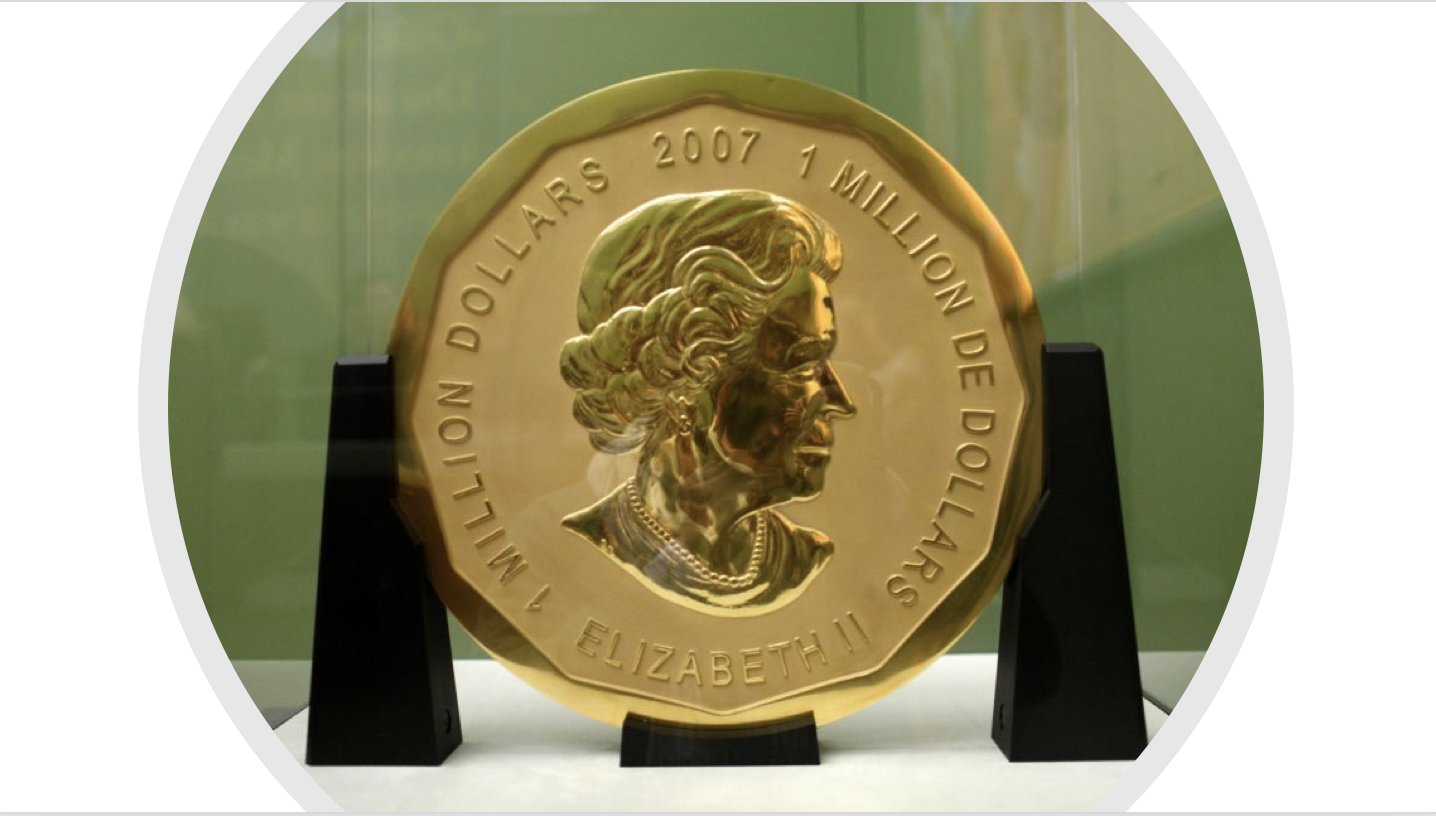
Previously, members of the Remmo clan were charged and sentenced in another audacious heist, which took place at the Bode Museum.  In that theft, the thieves made off with a 100 kilo gold coin on 27 March 2017 which has never been recovered and is believed to have been melted down

In July 2018 the Berlin public prosecutor's office and the state criminal police provisionally seized 77 properties, including apartments, houses and land belonging to members of the "Lebanese" Kurdish extended family "Remmo" worth an estimated 9.3 million euros.  These seizures were based on evidence that the properties was likely purchased with proceeds from crime using new rules under the German Criminal Code (StGB) and Criminal Procedural Order (StPO) enacted 1 July 2017.  Modelled after Italy's own organised crime laws on property seizure,  where the state may order the seizure of property that a person of interest is able to dispose of when the value of the property is disproportionate to the person’s declared income or economic activity, Germany's new law regulates the recovery of criminal proceeds and serves to effectively confiscate illegal proceeds from offenders or third beneficiaries who can be tied to proceeds from criminal transactions. 

According to an earlier article by Der Spiegel it is estimated that while that clans make up just four percent of Berlin's inhabitants, 20 percent of suspects in organized crime cases belong to one of the city's well-known clan groups.  The trio arrested this week have been charged with serious gang theft and arson.  

To learn more about the structure of the Berlin clan groups, German readers can read Ralph Ghadban's Arabische Clans: Die unterschätzte Gefahr.  Ghadban, who has spoken out about the criminal machinations of the Arabische Großfamilie clans which dominate Berlin's underworld, is now under permanent police protection, for his criticism of the clans and the power of the Lebanese mafia in Europe. 


September 3, 2021

Six members of the Remmo family are formally indicted in Dresden for connection to the 2019 Grünes Gewölbe burglary


Yesterday an indictment was filed at the state court in Dresden, Germany formally charging six individuals, aged 22-27 with serious gang theft and arson for their alleged involvement in the 25 November 2019 burglary of the Green Vault (Grünes Gewölbe in German) museum within Dresden Castle in Saxony. In that dramatic incident, a precision coordinated team of thieves pried open iron bars to access the museum through a window and smashed open exhibition cases using an axe to make off with an outstanding cache of historic jewellery.  Objects taken during the theft  include the 49-carat Dresden White Diamond, the diamond-laden breast star of the Polish Order of the White Eagle, a 16-carat diamond hat clasp, a diamond epaulette, and a diamond-studded hilt containing nine large and 770 smaller diamonds, as well as its jewel-encrusted scabbard.  The historic pieces have been valued at almost 113.8 million euros.

Three suspects, from the Remmo Arabische Großfamilie clan, Wissam Remmo, Rabih Remmo, and Bashir Remmo, were arrested during a raid last Autumn which proved almost as sensational as the theft itself.   Carried out on 17 November 2020, special forces from the federal government and the states of Baden-Württemberg, Berlin, Brandenburg, Lower Saxony, North Rhine-Westphalia, Saxony-Anhalt and Thuringia spread out to search some 18 properties in several districts, arresting the three suspects and hoping to recover all or part of the stolen jewels.  Wassim was arrested in his car in Berlin while Rabih and Bashir were picked up when police stormed apartments in the densely populated suburbs of Neukölln and Berlin-Kreuzberg. While cell phones, computers, clothing and some drugs were seized during the massive manhunt, none of the stolen museum's stolen jewellery was recovered.

On 14 December 2020 and 18 May 2021 twin cousins Mohamed Remmo and Abdul Majed Remmo were also placed in handcuffs.  By summer, law enforcement officers in Saxony also arrested a sixth suspect, Ahmed Remmo on 19 August 2021 at an apartment in Berlin-Treptow.  

Two of the six men accused in the break-in into the Green Vault, Wissam Remmo and Ahmed Remmo, are the same perpetrators who had already been convicted for their roles in the 27 March 2017 Bode Museum theft.  In that incident, members of the same crime family and an unrelated accomplice orchestrated and carried out the theft of a 100-kilogram gold coin called the "Big Maple Leaf" valued at 3.75 million euros.  Despite having been sentenced to 54 months and fined €3.3 million for that theft, Wissam Remmo and Ahmed Remmo had remained at liberty in the German capital while they appealed their sentences.

Ironically, two days following the breaking at the Green Vault, Wassim Remmo had been stopped while driving to the Erlangen district court.  Inside the vehicle, inspection officers noted balaclavas, gloves, a crowbar and a hammer drill.  For now, four other suspects are still wanted for questioning related to aiding and abetting, as CCTV footage seems to indicate that the individuals may have been spying on the museum in the lead-up to the November 2019 break-in.

If convicted in the Dresden Regional Court, the six suspects face prison sentences ranging from 10 or 15 years, given that two of the suspects were 22 years old at the time of their alleged involvement in the museum burglary. 

Meanwhile, another court case also got underway for another member of the Remmo clan. Muhamed Remo (31), father of three and nephew of clan boss Issa Remmo (55) was in court yesterday answering to charges related to the February 2021 armed robbery and assault on a money transport vehicle.  In that case, four men posing as garbage workers made off with 648,500 euros.  Muhamed was arrested when his DNA was matched to evidence left on a witness's sweater.  Since his arrest, he has confessed to his role in the heist admitting that his cut for the robbery was 70,000 euros and that his drippy nose, which proved his undoing, stemmed from his cocaine consumption. 

January 19, 2021

Recovery: "Salvator Mundi", stolen from the Basilica of San Domenico Maggiore, is recovered by Italy's Polizia di Stato

A lesser-known 15th-century version of the contentious "Salvator Mundi", most likely painted towards the end of the second decade of the sixteenth century by a Lombard artist and a follower of Leonardo's style of the second Milanese period (1508-1513), has been recovered on Saturday by the Crimes Against the Heritage Section of the Naples Flying Squad of the Polizia di Stato.  The painting was discovered behind a wardrobe in a private residence in Ponticelli, an eastern suburb of Naples.  The 36-year-old owner of the apartment has been taken into custody for the offence of receiving stolen goods.  

The panel painting was probably originally purchased by Giovan Antonio Muscettola, advisor to Charles V and his ambassador to the papal court, while on diplomatic missions to the north, perhaps in Milan.  It was then likely originally placed in the family chapel inside the Basilica of San Domenico Maggiore in the heart of Naples in the lower Decumano known as Spaccanapoli.   

Some news reports indicate that the painting was stolen two years ago, however, the prosecutor of the Republic of Naples Giovanni Melillo, gave different details as to the mysterious disappearance of the painting during a meeting with the press at the Aula Vadalà of the IV Mobile Department of the State Police in Naples.

Prior to the artwork's theft, the "Salvator Mundi" was stored in the Hall of Sacred Furniture, in a church reliquary, protected by a large sturdy cabinet originally intended for the convent's treasure.  To access the painting, one would need a key, yet the latching mechanism to the cabinet showed no signs of forced entry and had not been opened since March 2020, at the start of the city's Covid-19 emergency.  


Mellilo believes that the theft was a targeted raid, saying "Whoever took it wanted that painting and it may be a plausible conjecture that it was a commissioned theft by an organization dedicated to the international art trade".  Pictured in the video below, you can see the painting, the outside of the reliquary and the "Salvator Mundi" with its simple frame, being hung, one hopes in a temporary location,  yesterday.  

The basilica where the painting hangs was built by the will of Charles II of Naples between 1283 and 1324 and contains one of the largest convent complexes in the city.   Built by the Angevins, San Domenico Maggiore served as the Aragonese royal church and its monastery was once the original seat of the University of Naples. where Saint Thomas Aquinas studied.  

It has not yet been ascertained if the owner of the apartment was the author of the Bascilia's theft.  According to Alfredo Fabbrocini of the Naples law enforcement division, the arrestee gave "little credible information on how he came into possession of the painting" and told the officers "I found it at a flea market."

By:  Lynda Albertson

November 17, 2020

Three suspects in the burglary theft at the Green Vault have been arrested in Berlin.

Image Credit: Saxony Police

One year ago, on 25 November 2019, burglars entered the Green Vault (Grünes Gewölbe in German) museum within Dresden Castle in Saxony, Germany and smashed open exhibition cases using an axe. In only a few minutes, the precision coordinated team of thieves slipped away, having made off with an outstanding cache of jewellery, including the 49-carat Dresden White Diamond, the diamond-laden breast star of the Polish Order of the White Eagle, a 16-carat diamond hat clasp, a diamond epaulet, and a diamond-studded hilt containing nine large and 770 smaller diamonds, as well as its jewel-encrusted scabbard.  The thieves then fled by car, torching the motor vehicle used in the getaway to any destroy evidence they may have theft behind in its interior. 

Nine months after the burglary, clues surrounding the spectacular art theft, lead German authorities to investigate the purchase of SIM cards by members of a clan known to have been involved in a series of criminal offenses.  This week, authorities announced the arrest of three individuals from the Remmo clan, as law enforcement from  Saxony, as well as special forces from the federal government and the states of Baden-Württemberg, Berlin, Brandenburg, Lower Saxony, North Rhine-Westphalia, Saxony-Anhalt and Thuringia spread out to search some 18 properties in several districts. Officers focused much of their search in and around Neukölln, Kreuzberg and Gesundbrunnen, areas which are home to the fourth-largest ethnic minority group in Berlin. 

The Remmo Clan is made up of members of one of the grandfamilies of Lebanese-Kurdish descent who immigrated to Germany during Lebanon's 1975-1990 civil war. Many moved to immigrant neighborhoods in Kreuzberg, Wedding, and Neukölln where this week's raids took place.  Some of these families originate with the Mhallami community, a cultural community with origins in the Mardin Province of Southeastern Turkey which had previously lived in Beirut, Tripoli, and the Beqaa Valley.

Members of this clan have been criminally conspicuous, gaining reputations for trafficking, racketeering and robbery, some of which have been spectacular in their execution. Their complicated family ties and property ownership structures, have made it possible for the tightly knit groups to launder money - and sometimes, but not in this case, have made it considerably more difficult for investigators to entangle who is involved and in what capacity. 

Previously, members of the Remmo clan were charged and sentenced in another audacious heist, which took place at the Bode Museum.  In that theft, the thieves made off with a 100 kilo gold coin on 27 March 2017 which has never been recovered and is believed to have been melted down

In July 2018 the Berlin public prosecutor's office and the state criminal police provisionally seized 77 properties, including apartments, houses and land belonging to members of the "Lebanese" Kurdish extended family "Remmo" worth an estimated 9.3 million euros.  These seizures were based on evidence that the properties was likely purchased with proceeds from crime using new rules under the German Criminal Code (StGB) and Criminal Procedural Order (StPO) enacted 1 July 2017.  Modelled after Italy's own organised crime laws on property seizure,  where the state may order the seizure of property that a person of interest is able to dispose of when the value of the property is disproportionate to the person’s declared income or economic activity, Germany's new law regulates the recovery of criminal proceeds and serves to effectively confiscate illegal proceeds from offenders or third beneficiaries who can be tied to proceeds from criminal transactions. 

According to an earlier article by Der Spiegel it is estimated that while that clans make up just four percent of Berlin's inhabitants, 20 percent of suspects in organized crime cases belong to one of the city's well-known clan groups.  The trio arrested this week have been charged with serious gang theft and arson.  

To learn more about the structure of the Berlin clan groups, German readers can read Ralph Ghadban's Arabische Clans: Die unterschätzte Gefahr.  Ghadban, who has spoken out about the criminal machinations of the Arabische Großfamilie clans which dominate Berlin's underworld, is now under permanent police protection, for his criticism of the clans and the power of the Lebanese mafia in Europe. 

For the moment Saxony police have not named the individuals arrested, nor indicated that any of the stolen jewelry, pictured below, has been recovered.  


Update: 

Newspaper Bild has named 23-year-old Wissam Remmo as one of the arrestees in  connection to the Green Vault burglary.  Well known to the authorities, he has already been convicted of robbery twice. Most recently in February 2020 in relation to the Bode Museum theft.  In that offense Wissam Remmo and his brother Ahmad were sentenced to four and a half years in prison for theft.  In that investigation, a search of Wissam Remmo's smart phone showed an app used to calculate gold prices as well as recent searches on how to melt down chunks of gold. Given this, authorities have surmised that the €3.75 million coin was hacked up into smaller bits, melted down, and the proceeds distributed among an unknown or unnamed number of affiliates. 

Der Spiegal lists the other arrestees as Rabih Remmo and Bashir Remmo.


By:  Lynda Albertson

February 25, 2020

Mild prison sentences handed down in organized crime-related theft at the Bode Museum in Berlin


When a giant gold coin, weighing 100 kilos was stolen from room 243 of the Bode Museum and carted off without a hitch in the early morning hours of March 27, 2017 it wasn't long before the German authorities pinpointed a likely group of culprits.  Taking only 16 minutes to carry out the crime, complete with carbon-fiber-reinforced ax used to break the extremely heavy security glass, and with the help of a strategically placed roller and wheelbarrow, it was obvious that the museum's burglary was not a random smash and grab.  All clues pointed to inside help, especially as the culprits had walked straight passed higher value, but less liquidatable works of art.

Raids carried out by authorities in Neukölln, Berlin’s most impoverished district, in July 2017 turned up an interesting wrinkle; three of the four men taken into custody for questioning, Wayci Remmo (now 24) Ahmed Remmo (now 20), and Wissam Remmo (now 22) all appeared to have ties to one of Germany’s burgeoning ethnic crime syndicates.  Now headed by brothers Issa and Ashraf Remmo, the clan's defacto patriarchs, the Remmo clan includes an estimated 500 family members people, many of whom originate from Mardin, and immigrated first to Lebanon, and later to Germany.  

Der Spiegel estimates that while that clans make up just four percent of Berlin's inhabitants, 20 percent of suspects in organized crime cases belong to one of the well-known clans.  For decades it is believed that male members of this and similar ethnic family clans, have been associated with extortion, drugs, laundering criminal proceeds, theft and robbery.  The complicated family ties and ownership structures developed by the clans' membership make it possible for the tightly knit groups to launder money - and sometimes, but not in this case, make it considerably more difficult for investigators to work. 

In this case, it was the fourth suspect, Denis Wilhelm's friendship with Ahmed's which helped unravel the case.  Wilhelm had conveniently been hired as a subcontractor for night shift security at the Bode Museum the same month as the theft.

After lengthy hearings, cousins Ahmed and Wissam Remmo, both German citizens were convicted as having orchestrated the job with the help of their German friend, after evidence obtained during the search of 17 residences and related property tied the men to the scene of the crime. During these searches, police found clothing which to matched security footage from the theft as well as gold particles of the same purity as the mammoth coin and shards of glass similar to that of the protective casing which was smashed to access the coin at the museum.  

A search of Wissam Remmo's smart phone also showed an app used to calculate gold prices as well as recent searches on how to melt down chunks of gold. Given this, authorities have surmised that the €3.75 million coin was hacked up into smaller bits, melted down, and the proceeds distributed among an unknown or unnamed number of affiliates. 

Sentenced lightly, given the offense took place while they were juveniles, Ahmed and Wissam Remmo were each given just 54 months in prison.  Their heavist punishment appears to be the fine they were adjudicated, totalling €3.3 million , the estimated total loss of the stolen coin.  

Wissam Remmo's sentence comes on top of an earlier conviction where DNA at a crime scene tied him to another property theft.  In that criminal case he was recently sentenced to two years and six months in prison via the district court of Erlangen. 

Their inside-man accomplice, Denis Wilhelm, was given a sentence of 40 months and was fined fine of €100,000. The fourth defendant, Wayci Remmo, a cousin of the two brothers, was acquitted of all charges as the court found the evidence insufficient to convict. 

To learn more about the structure of these groups, German readers can read 
Ralph Ghadban's Arabische Clans: Die unterschätzte Gefahr.  Ghadban, who has spoken out about the criminal machinations of the Arabische Großfamilie clans which dominate Berlin's underworld, is now under permanent police protection, for his criticism of the clans and the power of the Lebanese mafia in Europe. 

February 14, 2020

Charge of unlawful possession of items of cultural value has been added to existing charges against Vasil Bozhkov


During a news briefing on Thursday, 13 February, Bulgarian authorities announced that they have added two additional charges to add to those already filed against fugitive billionaire Vasil Bozhkov. 

In addition to the charge of leading an organized crime group, coercion, extortion, attempted bribery of an official and incitement to malfeasance in office, Bozhkov will now be formally charged with influence trading and holding and expropriating valuable cultural artefacts,.

The spokesperson representing the Prosecutor General has indicated that a 200 page application for Bozhkov's extradition has been prepared and awaits translation into Arabic.  Once completed, it will then be sent to the Justice Ministry in the UAE to forward to the competent judicial authority. 


February 11, 2020

The less than clear origins of fugitive Vasil Bozhkov's Thrace and Private Collection

Vessel from the
Panagyurishte Treasure
As Bulgarian authorities work through how to get their fugitive gambling tzar extradited from the UAE to stand trial, the cultural heritage community is crossing their fingers that the country's cultural ministry will (eventually) release a list of the nearly 3,000 artefacts which make up the art and antiquities previously purchased by the business mogul.  But to understand the current state of affairs as it is related to their sequestration, it is necessary to first understand the standing of private collections within this former Soviet-led Eastern Bloc country. 

In the past, Bulgaria's April 1969 Law on the Monuments of Culture and Museums (LMCM), a carryover from the country's communist era, defined cultural objects holding market actors as government agencies, state-owned museums, private and legal individuals.  As such, the LMCM did not explicitly ban the private ownership of antiquities, but it left their legal status somewhat vague.  This allowed collectors, like Bozhkov, and others, to benefit from quasi-legalized private collections, which in Bulgaria seemed to be purchased to philanthropically polish the reputations of the controversial new rich.

Rhyton Vessel from the Panagyurishte Treasure
Faced with a countryside increasingly devastated by archaeological pillaging throughout the 1990s and into the next century, Bulgaria's Ministry of Culture went on to adopt an amendment, Ordinance No.1 in 2005 on the procedure for the evaluation of declared cultural goods owned by legal entities or individuals.  The motivation for this new procedure stated that the implementation of the regulation was done in accordance with the obligations undertaken by the Bulgarian government with respect to their EU accession negotiations under negotiation Chapter 25, Customs Union.  It required that any legal entity or individual in possession of cultural property must complete and submit registration documents for each object within their collection, and for those documents to then be filed with the closest regional or specialized state museum. Unfortunately, despite its unifying intentions, the mandate set no fixed term deadline for an object's registration once purchased and again had gaps which further needed closing. 

Rhyton Vessel from the
Panagyurishte Treasure
Experiencing rampant looting and the moonscape-like devastation which occurred at the ancient Roman settlement of Ratiaria, Bulgaria adopted further stringent rules and legislation related to private collections, in part to address the loot-then launder-then-purchase cycle of plunder which had become a driving force in the market for Bulgaria's Thracian and Roman artifacts.  Revised in part to meet the new requirements corresponding to the rules of the European Union, the country's new Cultural Heritage Act (CHA) was adopted in March of 2009 and was subsequently put into force in April of 2009. This new law included stricter registration requirements and most importantly, the need to show demonstrable proof of legal ownership of objects.

Yet each tightening of restrictions continued to meet with resistance.  

Bulgarian coin collectors grumbled that the newly imposed paperwork was too costly and time consuming to compile for small dealers, i.e. those who make their livelihood off of the buying and selling of ancient ancient coins which are known to change hands frequently.  Likewise, wealthier collectors, already with established collections of costly ancient artifacts, complained that the rules did not allow for any sort of amnesty on prior acquisitions before the law was put in place. Some believed that the change in requirements favored those in political favor, and complained that even the country's own state museums could not pass the new stringent requirements now being required of them.  Privacy advocates also voiced suspicions that burglaries of private collections might be committed with the involvement of corrupt government officials who would, as a result of the new rules, have access to the property registration documentation of private citizens.

Which brings us back to the current state of Mr. Bozhkov's collection. 

Prior to the recent freezing of Bozhkov's assets the Thrace Foundation is believed to have successfully completed the applications for legalization for just 212 of Bozhkov's nearly 3,000 objects.  Many of these registered objects have been displayed in travelling exhibitions which have toured in Brussels, Moscow, and Sofia between 2005 and 2018. 

These objects, reportedly authorized by the Ministry of Culture, appear to have been registered as part of the private Vasil Bozhkov Museum which is said to be an independent legal entity. This entity "owns" the exhibits which make up the collection belonging to the Thrace Foundation, a non-profit organization, founded by Vasil Bozhkov in 2004.

It has been reported by some news agencies that the approximately 2700 remaining Bozhkov items have been declared with the government within the last ten years, and that the businessman applied for registration via the National Institute of Science, though no dates for these applications has been specified.  Even if the objects were dutifully declared, the bulk of the art and antiquities have not been formally evaluated to determine their origins or authenticity, nor has Bozhkov paid the 30 Bulgarian lev fee for each object's registration.   What should be noted however is that there is no deadline for paying this fee stated in the country's regulations, nor is there a deadline for the government to rule on an object's legitimacy, once it has been filed.  

Given that the objects have not yet been formally evaluated by heritage experts approved by the Ministry of Culture, is not clear at present how many of the artefacts in Bozhkov's private collection would meet the following Bulgarian two-step registration criteria. 

That identification/qualification process consists of two steps:  
  • identification the object to be registered via photos and historical or scientific records which concretize an artifact's authenticity and origin. 
  • provide supporting evidence of the object's legitimacy and purchase, via  substantiated collecting histories, concretized by an object's accompanying provenance records. 
Failure to establish an artwork or artifact's legitimacy via the above criteria, can result in the object's legal registration being withheld.   In some cases, said objects may be subject to seizure in favor of the state under Art. 278a (Last amendment, SG No. 27/2009 in force as of 10.04.2009) of the Penal Code which states:

(1) An individual who offers a valuable cultural artifact to the purpose of expropriation or expropriates a valuable cultural artifact which is not identified or registered, is imposed a punishment of imprisonment from one to six years and a fine from one thousand to twenty thousand BGN.

(2) The punishment is also imposed to an individual who acquire such cultural artifact.

(3) In the cases when the crimes under para 1 and 2 have been committed over again or are qualified as dangerous recidivism or they have been committed after an order or in implementation of a decision of an organized criminal group or they have been committed with the purpose the object of crime to be exported over the state border, the punishment which is imposed is imprisonment for a term from three to ten years and a fine from five thousand BGN to fifteen thousand BGN.

The gambler makes a case for buying antiquities to save them

Bozhkov himself is known to have admitted that not all of his antiquities would pass the country's registration sniff test.  In a 2005 interview with Bulgaria's daily newspaper Trud he unremorsefully confessed "I buy from people who buy from treasure hunters...I have more opportunities than the state."  He then justified his purchases by admitting "I am satisfied that I have at least somewhat limited the export of this wealth."   

By agreeing to purchase unprovenanced antiquities to develop his private collection and to fill his private museum, in furtherance of irresponsible collecting practices, Bozhkov and collectors like him, have continued to  incentivize destructive or clandestine excavations, feeding the demand for illicit goods. 

How big a demand?

Bozhkov's thirst for antiquities was large.  His collection of Thracian gold is believed to be larger than that held by Bulgaria's National Museum of History.  His collection is known to include three gilded silver vases representing Orpheus, situlae, several gold wreaths from Thracian rulers, gold funeral masks, kylix, lekanes, epichysis, oinochoi, phialae, a silver kantharos with an image of Theseus, and at least ten silver rhytons.  And that is just representative of some of what we know from the exhibitions of his collection to date. 

For now, it remains unknown which, if any of his purchases will eventually be restituted to the state on the basis on illicit origin, or, in the case of licit purchases, might be lawfully returned to Bozhkov after the conclusion of the state's current assessment. His collection might also be subject to criminal forfeiture by means of confiscation should he be convicted of the charges he is facing and should it be proven that the art and antiquities were acquired through the proceeds of crime. 

By:  Lynda Albertson
January 31, 2020

Vasil Bozhkov's antiquities collection ordered to be seized by Bulgarian authorities


The National Museum of History (NIM) has received a prosecutorial decree and a letter from the Ministry of Culture to seize and accept the art and antiquities collection of Bulgarian gaming czar Vasil Bozhkov.  This court order, along with seizure orders pertaining to his business assets, accompanies charges stemming from an investigation into allegations of serious financial violations within the gambling industry.  Filed on 29 January 2020 by the country's Prosecutor General, Ivan Geshev, the post-communist era mogul has been indicted in absentia for a series of offenses ranging from leading an organized crime group, incitement to commit criminal offenses, extortion, coercion, blackmail, and attempted bribery of an official. 

Believed to be the country’s richest man, Bozhkov has been referred to as Bulgaria's most infamous gangster, and as being reportedly active in money laundering, privatization fraud, intimidation, extortion, racketeering, and illegal antiqueè [sic] dealing as attested in a diplomatic cable of the US Embassy in Sofia, as far back as 11 September 2009 and released publically via WikiLeaks.  As owner of the country's biggest lottery,  Bozhkov has often been linked in the Bulgarian press to the Bulgarian mafia, but up until now, he has never been convicted of any crime. 

Bozhkov's ancient art collection consists of more than 3,000 antiquities and dates from 4,000 BCE though the 6th century CE.  With questionable provenance and transparency in their acquisition, the assembled objects, some of which can be viewed in the film below, include ancient treasures left by the Greeks, Macedonians, Romans, Byzantines, Bulgars, and Thracians, one of the most powerful Indo-European tribes of the ancient world, and one who played an important, creative, and key role in the shaping of European civilization as a whole and Bulgaria's culture in particular. 


Bozhkov also founded the Thrace Foundation in 2004, perhaps to lend credibility to his seemingly controversial collection and began holding exhibitions at various locations throughout Europe thereafter.  Marking Bulgaria's entry to the EU in 2007, his Brussels exhibition, "The Grandeur of Bulgaria" was abruptly terminated at the European Parliament following outraged complaints about the collections origins. One of the most vocal critics was Vassil Nikolov, then director of the National Archaeological Institute with Museum at the Bulgarian Academy of Sciences and president of the state committee responsible archaeological surveys throughout the country. He signaled out the Bozhkov exhibition as "the fruit of grave-robbing." 

Private collections such as this one in Bulgaria, are often deemed unacceptable, given they are established without concerns for the the provenance of the objects  accumulated and against the backdrop of rampant treasure hunting which is actively eviscerating Bulgaria’s tremendous historical and cultural heritage.

Trying to get ahead of this week's growing scandal, the Thrace Foundation issued an interesting one page press release while their founder remained missing.  Via email, the press release, sent to ARCA and others in the heritage protection community, stated that the authorities had stormed into the laboratory and museum of Thrace Foundation. Their press release read in part:
"At the moment, the Bulgarian authorities are blatantly violating the law by seizing priceless objects from the Vasil Bojkov Collection without any legal justification. The authorities made the decision to export fragile and unique works of art in plastic bags during the unregulated raid that took place in the building of Nove AD Holding, which has the status of a museum."
The Prosecutor’s Office has denied the accusations that Bozhkov’s collection was being mishandled, with the National Museum of History (NIM) reporting that nine museum staff members are involved in the process of packing and transporting the items.

Charged in absentia, Bozhkov's current whereabouts were unknown at the time of this articles writing.  The last flight of his private jet was from Sofia to Dubai.

UPDATE 2 February 2020: Bulgarian Prosecutor General Ivan Geshev, confirms that Vasil Bozhkov, who is the subject of a European arrest warrant, has been detained in the United Arab Emirates.  Bulgaria will now prepare a formal extradition request for his return to Bulgaria to face charges, but given that the U.A.E. and Bulgaria do not have a bilateral extradition agreement, the wait for his return, may stretch indefinitely.

With at least nine people wanted by the Italian judiciary in the UAE, on charges including mafia association, money laundering, drug trafficking, and tax fraud,  the country has become a well-known refuge and money laundering paradise for criminals with big bucks.  Avoiding extradition when its own bilateral agreement was not signed, Raffaele Imperiale, who hid two stolen Van Gogh paintings in one of his family's homes, has avoided his own convictions in absentia for more than ten years.  

Imperiale supplied weapons for a clan feud in the drug ravaged Scampia neighborhood of Naples, working within the drug trade with criminal Rick van der Bunt, who was liquidated in Spain in 2008. Imperiale has been spotted at the seven-star Burj al Arab hotel in Dubai with others who are believed to control the European cocaine trade.

By:  Lynda Albertson