Blog Subscription via Follow.it

December 8, 2010

December 7, 2010

Profile: ARCA Lecturer Judge Arthur Tompkins


ARCA is accepting applications for the 2011 Postgraduate Program in International Art Crime and Cultural Heritage Protection Studies until January 3, 2011. ARCA's blog will be interviewing instructors in December and today spotlights a returning lecturer.

New Zealand Judge Arthur Tompkins’ relationship with ARCA began in 2009 when he travelled to Amelia for the first of a two-part presentation at the International Art Crime Conference to discuss the possible pathway to creating an International Art Crime Tribunal. Last summer, in addition to presenting the second part of his proposal for the Tribunal at ARCA’s annual conference, Judge Tompkins taught a course, Art in War, at ARCA’s Postgraduate Program in International Art Crime and Cultural Heritage Protection Studies. He is returning to teach the same course again in Italy in July 2011.

Judge Tompkins has been a District Court Judge in New Zealand for nearly 14 years. His appointment as a Judge, in 1997, followed 10 years in private practice in Auckland as a commercial barrister. He gained his Bachelor’s degree in Law from Canterbury University, in Christchurch, New Zealand, in 1983, and subsequently graduated Masters in Law, with First Class Honours, from Cambridge University, England, in 1984. He has taught the Law of Evidence, and presented at numerous conferences and workshops on a variety of topics, including expert evidence, the intersect between law and science in the Courtroom, and most extensively in relation to forensic DNA and forensic DNA Databanks, in New Zealand, China, England, Ireland, France and Mauritius. He is an Honorary Member of Interpol’s DNA Monitoring Expert Group.

ARCA blog: Judge Tompkins, welcome to ARCA’s blog. First, we’d like to start off with an easy question – what brings you away from your court in New Zealand to travel halfway around the world to teach Art in War to graduate students? It can’t all be about the pizza and gelato.
Judge Tompkins: The pizza and the gelato – and especially the latter – is certainly a part of it! How I came to be involved with ARCA is a serendipitous tale of chance meetings, leading to contact with Noah Charney in relation to the chapter that I wrote for the Art and Crime volume he edited. Then, when I visited Amelia in July 2009 for the Conference, Noah offered me the chance to return to Amelia to teach. I made a considered decision (it took me, I seem to recall, less than a second to decide!) to leap at the opportunity both to develop the course, and then to escape the New Zealand winter for the summer in Umbria amid the company of a wonderful group of enthusiastic staff and students.
But perhaps most importantly, the course I teach allows me to combine on a longstanding interest in history (from my distant youth I have three-quarters of a BA majoring in European History, which some day I might just get around to finishing) with the work I have done with Interpol and others concerning the cross-border operation of the criminal law, and my interest in the way, over the years, public international law has developed and matured. I am not an art historian, so I leave that side of things to others!

ARCA blog: Have there been any recent events in the past six months that have refined your concept of an International Art Crime Tribunal?

It is not so much something that has happened, as what has not happened. In my paper to the ARCA Conference in 2009, I talked about, in relation to confronting the many issues raised by art crime, there being islands of excellence amid a sea of indifference. And I think that is still accurate – there are many people in many different places doing great work, including of course ARCA. But realistically they are islands, and there are lots of bridges still to build between them. It is happening, slowly – the availability now on the internet of the Jeu de Paume records left behind by the ERR is one recent example – but I still believe that a single bright focus would bring numerous benefits, not least of which would be the continued development of the durable and lasting culture of interdisciplinary scholarship that ARCA has done so much to reinvigorate and foster.

ARCA blog: In your course, what are some of the areas that you focus on and what do you find the most challenging?

Part of the challenge for both me and the students is that, in the first two days of the course, we cover a little over 3000 years of history – starting with the taking of the Stele of Hammurabi following the sack of Babylon in 1160 BCE, right through to the looting of the Iraqi National Museum and Library in 2003. On the way we stop off at, among many other things, the Thirty Years’ War and, inevitably, both the Napoleonic era and the Second World War. Because I seek to examine, with the students, the various art crimes we look at in their historical context, it is often challenging to summarise major historical events in a very short time – World War I in two paragraphs, anyone? Inevitably, I have many favourite parts of the course, but a couple stand out as particularly interesting. The story of the carrying of a large part of the Palatine Library over the Alps in 1622, on the backs of 200 mules who each wore a silver collar inscribed in Latin is an evocative image. The Vatican Library was closed for renovations this year, but next year I will arrange a reader’s pass to visit and, I hope, inspect some of the volumes, most of which are still in Rome. The astounding heroism of Rose Valland, who worked at the Jeu de Paume on behalf of the French Resistance for four tumultuous years during World War II, recording and identifying the numerous looted art shipments to Germany, to ensure that the Resistance did not inadvertently blow the trains up is a remarkable tale of sustained courage. And, in the second half of the course, presenting the sometimes complex subject of the public international law of treaties and the like presents its own challenges! Using actual examples, like the shelling of Dubrovnik by the Yugoslavian forces and the prosecution and conviction of two senior officers in the International Criminal Tribunal for the Former Yugoslavia, helps bring the international criminal law to life in a real and tangible way – especially as Dubrovnik is not all that far from Italy, just across the Adriatic Sea.

December 3, 2010

Renowned Art Conservator Julia Brennan discusses her adventures in conservation and the ARCA Postgraduate Program in the Study of Art Crime


Julia Brennan is a renowned art conservator specializing in textiles. In an interview with Noah Charney, Julia discusses her international adventures in conservation, the ARCA Postgraduate Program in the Study of Art Crime, and the cleaning of The Ghent Altarpiece.
Read more at Suite101: Renowned Conservator Discusses Art, Art Crime, and Van Eyck http://www.suite101.com/content/renowned-conservator-discusses-art-art-crime-and-van-eyck-a316311#ixzz173Y2vP4B

December 2, 2010

Summary of Erik Nemeth's Presentation at the 2010 ASC Conference

ARCA Trustee Erik Nemeth (www.culturalsecurity.org and www.artworldintel.com) has forwarded on a summary of his thoughtful panel presentation at the American Society of Criminology annual meeting. The presentation, "Cultural Intelligence: data sources on the motivation and means for trafficking" crystallizes I think the systemic nature of the illicit trade in antiquities, and the need for further rigorous examination of the trade across the relevant disciplines. His summary follows:

The annual multibillion-dollar illicit market in movable cultural property motivates looting in developing nations. As demonstrated from Latin America in the midst of the Cold War era to South-central Asia in the post-Cold War period, organized crime may take advantage of limited security in “source nations” by recruiting locals to loot. In African nations, the corruption extends into the public sector with bribes to customs officers and collusion with staff of cultural ministries. On a transnational level, the risk that revenues from trafficking may fund insurgencies and terrorist groups has alerted law enforcement agencies to the implications for international security. The degree of the security threat posed by looting ultimately depends on the market value of the artworks and the intersections with trafficking in weapons and narcotics. Quantitative analysis of the market value and mapping the trafficking networks illustrate the potential of specialized “art intelligence” to enable countermeasures to mitigate, and optimally forestall, threats to cultural identity.

The traditionally clandestine nature of the art market poses challenges to assessing looting and trafficking in developing nations. In the absence of direct information on transactions in ource nations,sales at auction provide a sense of the market value and trade volume of antiquities and primitive art. Auction houses openly publish results of auctions and enable access to sales archives through web sites. On-line access to sales archives creates a substantive pool of data on hammer prices from auctions around the world. Sales archives also contain detailed descriptions of the artworks. The description that accompanies an auction lot can identify the geographic origin of the artwork. Data mining of sales archives for hammer price and origin enables analysis of market value by source nation. The analysis assesses relative market value and, thereby, contributes to an assessment of relative risks of looting across developing nations.

Any threat of looting has serious implications for the cultural identity of local communities, but the market value that motivates looting has implications for the severity and extent of the threat. Large demand in market nations and high market value increases the scale of looting and the range of parties with vested interest. A large market for artworks from a particular source nation increases the likelihood that organized crime will invest in developing trafficking networks and in recruiting locals to loot. As the involvement of organized crime increases, the opportunities for corruption within government also increase. An assessment of the relative risk of looting informs policy on the protection of cultural patrimony. With an understanding of the magnitudes of risk facing different source nations, market nations can strategically focus resources to engage actors in the art market and local governments.

Thieves in Madrid Steal 28 Artworks, including Picassos


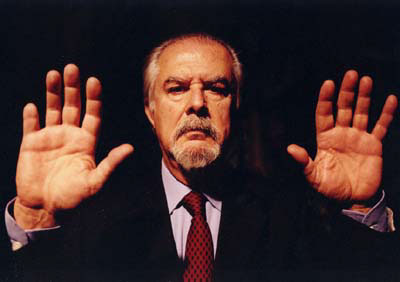
See the link above for a new article by ARCA president Noah Charney, on last week's theft of 28 artworks from a truck parked in a warehouse outside of Madrid. Works by Picasso, Chillida, Tapies, and Botero (pictured above) were stolen en route back from loan in Germany to six different galleries in Madrid and Barcelona.

November 30, 2010

ARCA Student Kim Alderman Presents "Honor Amongst Thieves"

by Catherine Schofield Sezgin

Kim Alderman, a Clinical Assistant Professor at the University of Wisconsin Law School and a student in ARCA’s Class of 2010 postgraduate program in International Art Crime Studies, presented at the Antiquities Trafficking panel at the American Society of Criminologists Conference in San Francisco in mid-November.

Alderman, who studied art history and archaeology at the University of Maryland at College Park, provided an abstract of her presentation on her blog, Cultural Property and Archaeology Law Blog, and we followed up via email with some questions of our own.

ARCA Blog: Do you believe that organized crime has fueled the illicit antiquities trade since the early 1960s?

Alderman: “Whether organized crime is connected to the illicit antiquities trade depends on how you define “organized crime.” The broad definition of organized crime is three or more people, engaged in a pattern of illegal conduct, for the purpose of obtaining material gains. If you use this definition, then it is correct to say that organized crime is involved in the illicit antiquities trade. From subsistence looters to tombaroli to smugglers, there are always people working in concert to excavate and move illicit antiquities. If you are talking only about mobsters or the mafia, then there is less evidence to support the alleged connection. As to the claim that the involvement began in the 1960s, I suspect this originated with allegations of the mafia’s entry into art theft during that decade, and was later extended by imprecise language to the illicit antiquities trade. There has certainly been increasingly organized subversion in the illicit antiquities trade since then, although whether the 1960s served as a temporal starting point for such organization remains to be seen.”

ARCA Blog: Is the illicit antiquities trade linked to money laundering, extortion, the drug and arms trades, terrorism and even slavery?

Alderman: “Claims that the illicit antiquities trade is connected with money laundering, extortion, the drug and arms trades, terrorism, and slavery, should be taken individually. The purchasing of illicit art and antiquities has long been a way to take cash gained from criminal activities and convert it to the ownership of goods, thereby concealing the source of the funds. Extortion would be more an issue for stolen artwork, and I have not observed a link between it and antiquities. As to terrorism, there are discrete instances of terrorist groups unearthing and exporting antiquities in their local regions, but these instances serve as indicators of a potential connection – not hard evidence. Finally, as to the alleged connection between illicit antiquities and the drug and arms trades or slavery, Eastern European mafias have been accused of trafficking in “everything from antiquities to humans.”

ARCA Blog: Thank you, Kim.

Readers can follow Kim Alderman at http://www.culturalpropertylaw.net.

November 23, 2010

ARCA Panel at the 2010 American Society of Criminology

File:MalteseFalcon1930.jpgLast Thursday ARCA sponsored an antiquities panel held at the American Society of Criminology meeting in San Francisco. It was a lively panel, and I always enjoy getting a chance to discuss these issues in person, to an interested audience. San Francisco was a great setting for this kind of thing, and though the conference hotel was located near the Tenderloin, in the old stomping grounds of Dashiell hammett, I managed to restrain myself and avoid making any pained "Maltese Falcon" references, though I'm unable to resist here. What follows are a few of my thoughts which I jotted down during the panel.

Kimberly Alderman began the panel by examining the connections between art crime and organized crime and the drug trade. The connection matters, as it may be one way to help highlight the problem of the theft and looting of sites, as organized crime and illegal drug sales will draw the attention of law enforcement more readily. Yasmeen Hussain followed, and discussed the role of antiquities issues in international relations. I was really struck that there may be more room in the debate for political scientists to weigh in on these issues in a more direct way, perhaps offering frameworks for useful dialogues which can "build capacity" as Yasmeen argued. Erik Nemeth followed and really opened my ideas to the idea of "cultural intelligence" and the need to assess the "tactical and strategic significance of antiquities and cultural heritage sites". I ended the panel by looking in some detail at the Four Corners antiquities investigation, and argued that the criminal offenses at the Federal level are inconsistently applied and do not really do a very good job of regulating and changing the underlying nature of the market.

One interesting idea which emerged from the questions after the panel was Simon Mackenzie's question about whether the UN definition of organized crime could or should be applied to certain parts of the antiquities trade like auction houses. The definition states that organized criminal groups are "a structured group of three or more persons, existing for a period of time and acting in concert with the aim of committing one or more serious crimes or offences. . .". Kim responded by noting that even if these groups are not actively and intentionally engaged in the crimes, they may be unwitting actors or play a part in an organized criminal network, referencing the work of Edgar Tijhuis.

Overall, it was a terrific weekend, another Cultural Property panel with Blythe Bowman Proulx, Matthew Pate, Duncan Chappell, and Simon Mackenzie was terrific as well. Thanks to all the panelists, and especially the volunteers who put together Thursday evening's reception at the Thirsty Bear.