Blog Subscription via Follow.it

Showing posts sorted by date for query Lawrence Fleischman. Sort by relevance Show all posts

October 8, 2025

Caveat Emptor: What the Dancing Maenad Can Tell Us About the Market for Looted Art

Christie's 2019 Auction
In November 2019, ARCA published a blog post raising questions about a 5th-century BCE polychrome antefix depicting a dancing maenad, which had been consigned to a Christie’s auction and that I believed the piece warranted closer scrutiny. For those unfamiliar, an antefix is a decorative architectural element once placed along the eaves of ancient roofs to conceal the joints between tiles.

What drew my attention was the striking resemblance between the object at right and three other Etruscan antefixes, also portraying maenads, that had previously been repatriated to Italy after being identified as having been illegal excavated and removed from Italy.


The provenance of the previous, 2019-consigned, antefix up for auction at Christie's read:
Provenance:

In terms of its circulation history, that sparse entry left roughly 2,500 years unaccounted for as nothing prior to 1994 was specified.  Knowing a bit about the consignor's background, I knew, that before her death, Ingrid McAlpine had been married to the ancient art dealer Bruce McAlpine, and that prior to their divorce, both were listed as proprietors of McAlpine Ancient Art Limited in the United Kingdom.

The McAlpines’ names have surfaced in connection with other trafficked antiquities that passed through the legitimate art market. Among these is an Attic black-figured hydria which reached the McAlpines through Palladion Antike Kunst, a gallery operated by disgraced dealer Gianfranco Becchina. Their names also appear alongside the red flag names of Robin Symes and Barbara and Lawrence Fleischman, in relation to the donation of a looted Apulian bell-krater, both objects of which were later restituted to Italy. 

In addition, former Judge Paolo Giorgio Ferri, the Italian judge who worked heavily on these looting cases, showed me a letter, seized by the Italian authorities during their investigations which was written by the staff of Bruce and Ingrid's McAlpine Ancient Art Gallery.  This letter, dated 8 July 1986, tied the couple to at least one transaction with Giacomo Medici and Christian Boursaud and referred obliquely to companies that the later convicted Rome dealer operated through third parties, fronts, or pseudonyms. 

Despite my suspicions I still didn't know where that Etruscan dancing maenad came from.  

Villa Giulia, 1937 Excavation
A few weeks into that investigation, and following a notification from the Carabinieri Command for the Protection of Cultural Heritage, curators Leonardo Bochicchio and Daniele F. Maras of Italy’s Ministry of Culture identified the likely find spot of the disputed object: Campetti Nord. They were able to pinpoint the location precisely, as the National Etruscan Museum of Villa Giulia already held another headless antefix of a dancing maenad, featuring the same polychrome details and stylistic traits.  The museum’s specimen had been uncovered during authorised excavations by the Italian Superintendency at the Etruscan sanctuary of Campetti Nord in the autumn of 1937 — a site previously worked over by tombaroli.

The sanctuary lies within the ancient urban area of Veio, also known as Veii, one of the major cities of Etruria and a formidable rival to early Rome. Its ruins rest quietly near the medieval village of Isola Farnese, about fifteen kilometers northwest of Italy's capital, amid the rolling hills and woodlands of what is now the Veio Regional Park.  For archaeologists, the city is a treasure of discovery, offering rare insight into the architecture, rituals, and daily life of the Etruscans on the frontier between the  Etruscan and Latin worlds.

After much finagling, the story of the first looted antefix was brought to light in an art crime documentary Lot 448, directed by Bella Monticelli which highlighted the objects lack of legitimate paperwork or export license and which exposed how difficult it is to identify and document an object with only a few days notice before an appraching sale.  Fortunately, with some help from Bulgari SpA, (who purchased the artefact at auction and donated it, through the Ministry of Cultural Heritage and Activities and Tourism, to the Italian State) the 2019 auctioned dancing maenad joined her sister at the National Etruscan Museum of Villa Giulia, reunited with other ancient artworks from the same archaeological context from which both figures originated.

Fast forward to a 2nd Christie's Antquities auction, scheduled for later this month and it seems we have a third headless lady dancer from Veio. 


The provenance for this third Etruscan antefix, equally headless, but less intact reads:  Elsa Bloch-Diener (1922-2012), Bern, 1975 (Antike Kunst, no. 113).

If you look carefully, by her feet you can make out the hoof of the Silenos this lady would have been dancing with.  

This detail is remarkably similar to the antefix in the form of a Maenad and Silenos Dancing which once graced the cover of the exhibition catalog A Passion for Antiquities: Ancient Art from the Collection of Barbara and Lawrence Fleishman.  

After careful restoration that antefix was first seen on the market with Robert Hecht who sold it to the Hunt collection.  Next it was circulated via Sotheby's with that collection was liquidated and bought by Robin Symes, who immediately resold it to the Fleischmanns.  In1994 the couple exhibited the piece , along with their entire collection, at the J. Paul Getty Museum, before it was formally acquired by   the museum in 1996 (96.AD.33).  The piece was restituted to Italy after it was matched by Daniela Rizzo and Maurizio Pellegrino to a polaroid in the Giacomo Medici archive.  Like the one up for sale at Christie's now, both artefacts were broken along the lower half and when whole, depicted a Silenos dancing behind the Maenad.


Now let's look at the provenance the auction house has cited.

Elsa Bloch-Diener (1922–2012) was a Swiss art dealer who operated a gallery at Kramgasse 60 in the old town of Bern.  She is known to have collaborated with Ines Jucker (née Scherrer, 1922-2013), the scholar and sometimes ancient art dealer responsible for the exhibition catalogue Italy of the Etruscans, cited in the Christie’s lot description as an exhibition where this piece was on view to the public. 

Jucker not only authenticated works for Bloch-Diener but also curated the 1991 Etruscan exhibition at the Israel Museum in Jerusalem referenced in the Christie's sale.  Also contributing to that exhibition's catalogue were entries by Giovannangelo Camporeale, Fiorella Cottier-Angeli, George Ortiz, and Christoph Reusser, names that have, at times, prompted debate and concern within the field.

In May 2002, when Swiss and Italian authorities raided Gianfranco Becchina's Antike Kunst Palladion, as well as three of Becchina’s storage facilities in Basel, authorities seized documents which identified transactions between the Sicilian and Ines Jucker which documented that she purchased artefacts from this dealer and sold them onwards.

Along the same theme Jucker studied an Attic Red-Figured calyx krater signed by Syriskos (painter); donated by Lawrence Fleischman and his wife to the J. Paul Getty Museum which had been acquired from Robin Symes in 1988.  Pictured on Medici Polaroid it was restituted to Italy.   Likewise a Black-Figure Cup Fragment with the Capture of Silenus in the Tondo which Jucker sold to Dietrich von Bothmer was also returned to Italy.

In the Israel exhibition Jucker curated, which featured the antefix up for auction and identified it as coming from the ancient site of Veio, some four hundred Etruscan objects were presented, none of large format, some with an inscriptions.  Among them were small bronzes, ceramics, jewellery, terracottas (architectural, votive, and cinerary urns), and sculptural fragments in nenfro.  In total they represented all periods and regions of Etruscan art. 

The main nucleus of the Israel displayed ensemble came from the collection of the late Ivor and Flora Svarc, many of whose holdings would be donated to the Israel Museum.  Svarc's objects were complemented by pieces already in Israeli collections, along with loans from the collector-dealer Jonathan Rosen and other private collectors, mainly in Switzerland.  

As cited by Drs David Gill and Christopher Chippindale in Material Consequences of Contemporary Classical Collecting the vast majority of the artefacts exhibited during this exhibition were previously unpublished.  This made this public display of the items their first concretising stop towards having an art marketable pedigree. 

The fact that we know this object comes from the context of Veio, can also be found in the same catalogue as the restituted Getty atefix, A Passion for Antiquities: Ancient Art from the Collection of Barbara and Lawrence Fleishman.


Page 197 refers specifically to the artefact currently up for auction:

A number of fragmentary examples of antefixes of this type, as well as of molds for producing them, have come to light at Civita Castellana (Falerii) (see Andrén; Sprenger/Bartoloni), finds which clearly prove their local manufacture. But the votive deposit of Campetti at Veii has yielded the head of a silenos of identical type and made of Veian clay (see Vagnetti 1971), which led P. J. Riis to suggest that this type of antefix was invented at Veii. The lower half of an antefix of this type with a provenance from Veii is in a private collection in Switzerland (see Jucker), and similar fragments have recently been excavated in Rome (see Cristo fani). 

With that in mind, it is necessary to return to the same question previously directed at Christie’s: 

On what evidentiary basis, supported by what verifiable documentation, did the auction house authorise the consignment of this artefact?  In the absence of any demonstrable chain of custody or export records, the decision to green-light its sale raises serious concerns regarding the robustness of the auction house’s internal due diligence procedures.


In this case, the question is not rhetorical but fundamental. Is Christie’s in possession of any concrete paperwork supporting the legitimacy of this Dancing Maenad’s appearance on the market, or was the absence of evidence simply overlooked given its publication in an exhibition, in the hope that the object’s passage through the auction process would escape closer scrutiny.


By:  Lynda Albertson

February 14, 2025

Investigators win repatriation battle as Cleveland Museum of Art backs down

The Cleveland Museum of Art (CMA) has abandoned its legal fight to prevent the seizure of a prized bronze statue depicting the Roman emperor Marcus Aurelius. Valued at $20 million, the artefact was looted from Turkey in the 1960s.  

The decision comes, almost a year and a half, after New York investigators issued its seizure order, on 31 August 2023, on the basis that the statue constitutes evidence of, and tends to demonstrate the commission of the crimes of, Criminal Possession of Stolen Property in the First Degree, Penal Law § 165.54, and a Conspiracy to commit the same crime under Penal Law § 105.10(1).

The museum, which has featured the bronze in its collection since 1986, had challenged the order in court, arguing that there was insufficient evidence to prove the statue had been illegally exported.  In their lawsuit, the museum claimed that the headless sculpture, controversially named The Emperor as Philosopher, probably Marcus Aurelius, then renamed Draped Male Figure, had been lawfully acquired by the museum and that New York District Attorney Alvin L. Bragg’s office in Manhattan has no legal authority to seize it.  

In its prior federal filing, Cleveland Museum of Art v. District Attorney of New York County, New York (1:23-cv-02048),  Cleveland had opposed the return of this statue contending that its former curator Arielle P. Kozloff (Herrmann) believed that the Philosopher did not come from Bubon, and that any previously stated connection between Bubon and the Philosopher was mere conjecture, statements which completely contradict the museum's earlier findings. 

Vol. 74, No. 3, Mar., 1987
The Bulletin of the Cleveland Museum of Art
 

After its purchase, the Museum was so proud of its acquisition of unknown origin that it dedicated its entire its March 1987 edition of The Bulletin of The Cleveland Museum of Art to the statue and highlighted the bronze in a Year in Review exhibition.  Curator Kozloff wrote in the Introduction to that 62-page Bulletin that “[t]his entire issue of the Bulletin is devoted to the study of Cleveland’s newly acquired bronze.”  At page 133, she quoted English archaeologist and writer George Bean’s observations when he visited Bubon and described the difference at the site between his first visit in 1952 and his second visit in 1966:

[T]he scene completely changed. The entire slope of the hill had recently been dug from top to bottom by the villagers in search of loot; their pits left hardly a yard of space between them. Of the ruins, such as they were, nothing now remains; but in the course of digging in the theater a large stone covered with writing was said to be found. 

Kozloff also published photographs of her trip to Bubon, including one which she captioned “Figure 3. The photograph depicts the extent of the looting: giant holes scar the landscape and fragments of stone walls can be seen jutting out of the pits.”  Kozloff also included another photograph to illustrate the find spot of the looted statues:

On a longitudinal axis leading to the northeast (nearly parallel to the axis of the “agora”) from the theater are two structures, now pits, about 2 meters deep and mostly filled in with debris (Figure 3). The smaller of the two was pointed out by an Ibecik native as “the museum” where eight large statues were found. Our guide’s arm gestures indicated that the sculptures were found tumbled together, face down in the earth. Our guide remembered only human figures being unearthed and reported a quantity significantly less than what is claimed for the site.

Effectively, Kozloff admitted, in CMA’s own official publication, that the Sebasteion had been heavily ravaged “by the villagers in search of loot” between 1952 and 1966—all while trumpeting CMA’s newly acquired statue had originated from this very site.

At the time of its celebratory exhibit, the Cleveland Museum of Art issued a statement that it would be exhibited their new bronze with "one other sculpture supposedly found with it, a bronze bust of a lady, now in the Worcester (Massachusetts) Art Museum."  That identified object as already been returned by the New York District Attorney's Office, making it all the more outrageous, that on one hand the museum admitted to the statue's origins from Bubon, while in 2023 foot-dragging against the the realities they themselves had fully acknowledged years earlier. 

Today, the CMA formally filed a Notice of Dismissal Under FRCP 41(a)(1), electing to drop its opposition of the statue's seizure.  This now paves the way for the artefact's eventual return to its country of origin.  In opting to dismiss, the museum issued a statement published in the New York Times that the decision was predicated on the basis of scientific study, which only now allowed the museum to be able to determine with confidence that the statue was once present at the site.

Over the last several years, the Manhattan District Attorney's Office Antiquities Trafficking Unit, headed by Assistant District Attorney Matthew Bogdanos has been actively involved in the repatriation of stolen artefacts, including many bronzes identified as having been looted from the ancient city of Bubon in Türkiye.  In recent years, prosecutors and analysts with the ATU have worked closely with academics studying the bronzes and the Turkish authorities in order to seize, where possible and in accordance with the law, antiquities looted from this ancient site that were laundered through the black market.

By May 1967, law enforcement authorities from the Republic of Türkiye had uncovered their first lead which would help identify where the looted statues came from. A large, ancient bronze statue was found hidden in a looters house in the village of Ibecik, located in the mountainous region of the Gölhisar district, in the southern province of Burdur, less than 100 kilometers from the southwest Turkish coast.

This initial investigation, coupled with studies by Turkish archaeologist Jale İnan on behalf of the museum in Burdur, as well as notes gathered and seized from a local treasure hunter during investigations, helped to establish the find spot for the CMA bronze and other statues which once stood on the summit and slopes of Dikmen Tepe within the eastern Roman Empire city of Bubon.

According to the ancient Greek geographer Strabo, the city of Bubon formed a tetrapolis with its neighbouring cities of Cibyra, Oenoanda and Balboura.  Culturally diverse, at its pinnacle its inhabitants are said to have spoken as many as four languages: Greek, Pisidian, Solymian and Lycian. 

Travellers to Bubon as late as the mid-19th century described finding a walled acropolis, a small theatre of local stone, and the remains of tombs, temples, and other large structures in what remained of the ancient city.  Few of these survive today.  Decimated by a large-scale looting operation conducted during the mid-20th century, the unprotected ancient city's movable cultural heritage fell victim to poverty and art market greed, with much of what had survived throughout history, being dug up and hauled away for profit.

The Sebasteion at Boubon

In 1967, the archaeological museum of Burdur undertook the first legal excavation at what remained of Bubon.  During these emergency excavations, where some of the explored sites were reburied after exploration to afford more protection, site archaeologists documented a Sebasteion near the centre of the terrace close to the Agora.  This complex is believed to have been devoted to the worship of the imperial cult, honouring members of the Imperial family.  It is thought to have been in use for a period of over two centuries from the 1st to the middle of the 3rd century CE. 

Inside this Sebasteion, archaeologists discovered two inscribed podiums along the north and the east walls of the room, as well as four free-standing bases along the west wall.  Here, statues of emperors and members of the Imperial household were once on display.

The majority of the dedications found at the Sebasteion date the cult sanctuary from the half century beginning with the joint reign of Marcus Aurelius and Lucius Verus (161-168 CE) to the ending of the sole reign of Caracalla (211-217 CE).  Unsurprisingly, by the time archaeologists set about documenting the site, only one single headless statue remained.  

All the others had been clandestinely excavated and illicitly exported out of the country.

As part of this documentation, Jale İnan assigned names to seven of the missing bronze statues, based on seven of the 14 dedicatory inscriptions found in situ at the Sebasteion.  According to the researcher's reconstruction, patrons or visitors entering this room in the middle of the 3rd century CE, would have seen bronze statues of Nerva, Poppaea Sabina, Lucius Verus, Commodus, Septimius Severus, and lastly, Marcus Aurelius who would have stood on a podium or plinth facing the entrance.

One of three inscriptions discovered during J. İnan's excavation, on stones forming the top course of the north pedestal (blocks E 10 and 11), documented in his 1990 excavation notes, reads:

[Μ.Αυρήλιο]ν Άντωνεϊνον

Over the subsequent years, it was determined that as many as nine, possibly ten, life-sized bronze statues originating from Bubon had been excavated and sold onward, first by the site's looters and middlemen, then onward to a dealer in Izmir, a city on Turkey’s Aegean coast.  From there, it has been established that some were smuggled out of the country and into Switzerland, passing into the hands of Robert Hecht in defiance of Turkish laws which vested ownership of antiquities with the state.  

The Emperor as Philosopher
Image Credit:
Cleveland Museum of Art
By the late half of 1987, four of these six feet and taller spectacular bronzes, all male, three nude and one wearing a philosopher’s tunic, were known to be in the possession of a Boston coin dealer named Charles S. Lipson.  Lipson maintained relationships with several problematic art market actors, not just Hecht but also George Zakos and several others.  

The bronzes from Turkey were then circulated by Lipson in temporary exhibitions in several North American museums. From 1967 to 1981 they were displayed at the Museum of Fine Arts in Boston, the Indianapolis Museum of Art, the Minneapolis Institute of Arts and Rutgers University. One of Lipson's bronzes, the draped figure relinquished by the Cleveland Museum of Art, was sold to the museum in 1986 via the Edward H. Merrin Gallery for $1,850,000 and quickly dubbed The Emperor as Philosopher, probably Marcus Aurelius.   

At the time of sculpture's purchase, the CMA's press releases and follow-up publications openly admitted that the bronze was part of a “group of Roman bronze figures and heads, believed to have come from Turkey” that represented various emperors and empresses, which had been created for a structure honouring the imperial cult in the mid-2nd century.  All details which perfectly aligned with the details of the statues which once filled the Sebasteion in Bubon.

Before mandating the statue's seizure, DANY's Antiquities Trafficking Unit, with the assistance of officials from the Republic of Türkiye, were able to locate and interview one of the individuals who actually looted and smuggled this statue and determined that the bronze had been smuggled into Switzerland by Robert Hecht then circulated onward via Charles Lipson, first via the exhibition at the Museum of Fine Arts in Boston, and later loaned long term to the Metropolitan Museum of Art via a private collector before ultimately being purchased by the Cleveland museum.

Yet, despite the evidence presented at the time of its seizure and its earlier stance that the object had been lawfully acquired, the museum somewhat lamely cited only the forensic evidence in its late-in-coming decision to relinquish the Marcus Aurelius statue.  It indicated that analysis of soil samples taken from within the body of the statue, as well as lead from a plug in its foot used to attach the statue to a plinth, which matched evidence obtained from the Sebasteion in Bubon proving the bronze had once stood there.  

While these laboratory findings provide the scientific nail in the coffin, proof linking this beautiful statue to its original site, this testing merely strengthens the preponderance of evidence accumulated in Manhattan's preexisting case for restitution.  The evidence of the object's trafficking from Türkiye, didn't rest on scientific analysis, which in this case, was miraculously made possible because the find spot remained relatively undisturbed.  

The case was weighted on multiple elements, including the first-hand testimony of farmers who told investigators that men from a nearby village found the bronzes buried on a hillside, beginning in the late 1950s and year by year, working in teams, removed the artefacts from the Sebasteion, many of which were sold to “American Bob,” absence of legal export permits and then unlawfully smuggled out of Türkiye.

Lest we forget, in 1962, the infamous American ancient art dealer Robert "Bob" Hecht was detained in Türkiye after he was seen inspecting ancient coins returning to Istanbul on a flight from heavily plundered Izmir, the same city where the intermediary dealer in this case operated.  As a result of that incident, Hecht was declared persona non grata in the country.  A friend of notorious Turkish antiquities smugglers, such as Fuat Üzülmez and Edip Telliağaoğlu, Hecht mediated the purchase of a large number of ancient artefacts which were smuggled from Turkey, before he turned his sights on Italy.

To date the ATU has restituted 14 antiquities, valued at almost $80 million, looted from the ancient site of Bubon. This Marcus Aurelius, headless though he be, is the 15th, and one I am sure the citizens of Türkiye will warmly welcome home.  

In closing, it will be interesting to see the CMA's own published statement as to why it ultimately elected to close its Federal folly to keep an obviously looted statue in its collection, rather than come to terms with what was already widely known for more than a decade.  I suspect they will mention their scholar's “subsequent research,” and her change of heart as to the statue's origins. 

But before they do so, I would remind ARCA's readers that the CMA's now-retired curator, Arielle Kozloff Herrmann, of Shaker Heights, who led the purchase of this Marcus Aurelius bronze in 1986, had longstanding interactions with problematic dealers in the ancient art market.  Those include the following, who have repeatedly tied to the illicit antiquities trade: 

Robert Hecht, who ravaged Turkey and Italy and who Kozloff thanked for information in the bulletin's acknowledgments on this purchase.

Sicilian Gianfranco Becchina, who she and her husband, John Herrmann, corresponded and met with.  

Edoardo Almagià, who currently has an outstanding arrest warrant in New York and who she was introduced to by the problematic Princeton curator, Michael Padgett

Edward Merrin the dealer who sold this statue to the CMA and whom she later worked with,

Lawrence Fleischman, George Zakos, Brian Tammas Aitken, and Robert Haber.   

Look into any of these fellows, most of whom have been featured on ARCA's blog, and then tell me if you think Arielle's latter indecision was unbiased, without motivation, and should have been a deciding factor in the museum's filings against this forfeiture. 

By:  Lynda Albertson

February 4, 2025

At a Glacial Pace: Why does the return of stolen art take years?

The Oracle at Delphi, 1881, by Camillo Miola

The long and winding road
That leads to your door
Will never disappear
I've seen that road before
It always leads me here
Lead me to you door
By The Beatles

Sometimes the road from diplomatic agreement to restitution or seizure to restitution is a long and windy road like the lyrics of a Beatles song.  And in the announcement and publication of victories, which flash across the news, the general public sees only the superficial details, carefully curated to neutralise all the hard fought passages that allowed "Object A" to be returned to "Country B".   

Such is the case with The Oracle at Delphi (1881) by Camillo Miola, a neoclassical painting depicting the ancient Greek sanctuary of Delphi, where the Pythia, a high priestess of Apollo, delivered prophecies. The artwork portrays a dramatic scene within the grand temple, with the Pythia seated on a tripod, enveloped in mystical vapors, as she channels divine messages. A group of supplicants, including warriors and noble figures, eagerly awaits her pronouncements, their expressions reflecting awe, anticipation, and reverence. 

On August 11, 2022, ahead of their agreed upon negotiations, The J. Paul Getty museum made a widespread public announcement that it would be returning a number of objects in their collection to Italy including:

Orpheus and the Sirens (inv. 76.AD.11) acquired in 1976 from Bank Leu in Zurich,

Colossal Head of a Divinity (inv. 72.AL.96) acquired in 1996 from scandalous UK art dealer Robin Symes,

an Etruscan bronze thymiaterion (inv. 96.AC.253) acquired in 1996 from the Fleischman collection, It was sold to the Fleischmans in 1987 by Italian art dealer Edoardo Almagià.  A while back New York Assistant District Attorney Matthew Bogdanos, who heads the Manhattan Office's Antiquities Trafficking Unit was quoted in an interview with the Princeton Alumni Weekly, saying: 

“If Almagià is the first name on your provenance, it is stolen.” 

a Mold for Casting Pendants, (75.AA.35) about 2nd century CE, donated by collector Lawrence A. Fleischman and his wife;

and lastly, a rather fanciful oil painting entitled The Oracle at Delphi, 1881 by Camillo Miola (72.PA.32), a neoclassical painting depicting the ancient Greek sanctuary of Delphi, where the Pythia, a high priestess of Apollo, delivered prophecies.  

This artwork portrays a dramatic scene within the grand temple, with the Pythia seated on a tripod, enveloped in mystical vapours, as she channels divine messages. A group of supplicants, including warriors and noble figures, eagerly awaits her pronouncements, their expressions reflecting awe, anticipation, and reverence. Miola’s use of rich colours, classical architecture, and meticulous detail captures the spiritual intensity and grandeur of the sacred ritual, emphasising the oracle’s central role in guiding ancient Greek society.

In their announcement they stated that the impetus for the return of the Sculptural Group of a Seated Poet (Orpheus) and two Sirens is evidence presented to them of their looting.  Their announcement fails to make mention of the fact that the artefacts had been seized earlier pursuant to a court order and no other details were presented for the remaining pieces going home but as we know by the names of the dealers that circulated them, they propensity for being problematic was high. 

But what about the Miola painting nothing was stated as to why this artwork was coming home?

While Orpheus and his two friends came home in 2022, its taken two years and five months after the Getty's initial and somewhat lacking announcement, for Camillo Miola's painting to arrive back in Naples, along with the oil painting Portrait of Vittorio Emanuele III, 1902 by Achille Talarico.  

The paintings having just arrived and been presented at Palazzo Matteotti in Naples, by Gaetano Manfredi the Mayor of Naples and Gen. Div. Francesco Gargaro, the Commander of the Carabinieri Command for the Protection of Cultural Heritage.  

But when and how long ago did this particular painting's story begin? And why is at that so many of these restitution announcements, which concretise agreements between museum parties and source country authorities such as the Carabinieri, or Italy or the USA's prosecutorial bodies, omit historical facts when it is exactly these historical facts which served as the evidence needed to persuade museums, or courts of justice that these artworks need to come home. 

We know that Miola's painting depicting Pythia was stolen from the San Lorenzo Institute of Aversa between 1943 and 1946.  But not much has been written in public records which elaborates upon its exit from Italy.  We know only that the painting left Italy at some point after the close of World War II arriving to America.  It was then consigned to Parke-Bernet in New York as coming from "a Private Collection", and sold on 24 February 1972 to Ira Spanierman, who operated the eponymous Spanierman Gallery (1961-2014).   He in turn sold it to the J. Paul Getty that same year.

According to the museum's accession record the provenance for this painting is:

By 1880 — Pinacoteca Provinciale (Naples, Italy)
until 1972 — Private Collection [sold, Parke-Bernet, New York, February 24, 1972, lot 273, to Ira Spanierman.]
since 1972 — Ira Spanierman (New York), sold to the J. Paul Getty Museum, 1972. 

Open source records show us that following a meeting of Italy's Committee for the Recovery and Restitution of Cultural Heritage, chaired by Minister Alberto Bonisoli Italy's Ministry of Cultural Heritage formally asked the J. Getty Museum on 9 May 2019 to consider the country's claim for the Victorious Youth bronze (no progress there yet) and to also evaluate the provenance of four objects in the museum's collections that were also stolen or exported without permission from Italy. 

Those four objects were:  

Camillo Miola "The Oracle of Delphi" stolen from the San Lorenzo Institute in Aversa between 1943 and 1946; 

two marble lions from the Roman era that were in the Palazzo Spaventa in Preturo (Aquila) and 

a Mosaic with Medusa stolen from the National Roman Museum. 

This request was signed by the secretary general Panebianco and emphasised Italy's ministry's full willingness to keep alive the consolidated relations with the Getty,  blah blah blah, and considers cultural diplomacy a priority, blah blah blah, and stated that the writers would like to identify a suitable date for a meeting between the two parties to further discuss the Italian request for the restitution of The Victorious Youth, or the Athlete of Fano, the bronze statue that was fished out in 1964 in the waters of Fano in the Marche region and was subsequently illegally exported from Italy as determined by Italy's courts.

From the museum's side, the Getty replied that it would start their verification with the technical staff and that a response will be sent "as soon as possible"which, given the presentation of Miola's painting back in Italy has happened five and a half years later, and two years after the museum acknowledged that they were in agreement to relinquish the artwork, one has to marvel at the almost glacial pace of restitutions. 

And while ARCA is more than pleased that these artworks have actually come home through mutually beneficial agreements between museums and ministries and law enforcement officers and art researchers doing diligent work, we do wish there was a little more information than just somber, happy, formal, tight-lipped presentations stating these works are once again home. 

Transparency in restitution agreements between museums and source countries is crucial for ensuring accountability and ethical stewardship of cultural heritage. Not to mention it also builds public trust.  

Too often, repatriation deals are negotiated behind closed doors, with mutually agreed upon formal announcements which are carefully worded and often vague, leaving out key details about the provenance research, legal considerations, and the conditions of return.  All facts which could help us learn why one object makes it home and another doesn't. Or why certain objects are returned home quickly, while others take years after a restitution is announced, delaying justice for affected communities. 

This lack of openness can fuel skepticism, and invites speculation and negative interpretation, where the length of delays from announcement to homecoming can be misinterpreted foot dragging on the museum's part.    

By committing to clear, public disclosure of restitution decisions—detailing the origins of looted works, the justification for their return, the collaborative efforts between museum staff and source nations, and the complex mechanisms that often delay repatriation—museums can demonstrate a genuine commitment to ethical responsibility and cooperation. Transparency in these processes not only fosters trust but also ensures that institutions are seen as proactive stewards of cultural heritage rather than merely responding to external pressure.

Greater transparency would not only strengthen international cooperation—providing provenance researchers with valuable roadmaps from successful restitution cases—but also help rebuild public trust in museums as institutions committed to rightful ownership and historical justice. Rather than treating returns as mere footnotes with minimal explanation, museums should fully articulate the reasons behind their decisions, reinforcing their role as ethical stewards of cultural heritage.

October 14, 2023

Exploring Michael Ward and some peppered-about, possibly-problematic, pieces which might have provenance problems

While there are numerous artefacts which passed through Michael L. Ward's variously named galleries which may be worth further exploration,  here is a growing list of classical world artefacts ARCA has documented (so far) as perhaps needing a closer review by their various holders.   There may be others, and we will add what we find to this posting but these are the art and artefacts we have documented so far with readily available digital footprints.  
Some have been restituted. Others, identified at the Metropolitan Museum of Art, the J. Paul Getty Museum, the Michael C. Carlos Museum, the Dallas Museum of Art, the Johnson Museum of Art, at Cornell University, the Museum of Fine Art's - Boston, the Princeton University Art Museum, the Brooklyn Museum, the Walters Art Museum and the British Museum should probably be given a closer inspection and provenance review. 

Note that this dealer also sold African and Tribal Art which is not documented within this first round-up. 

7 January 1964
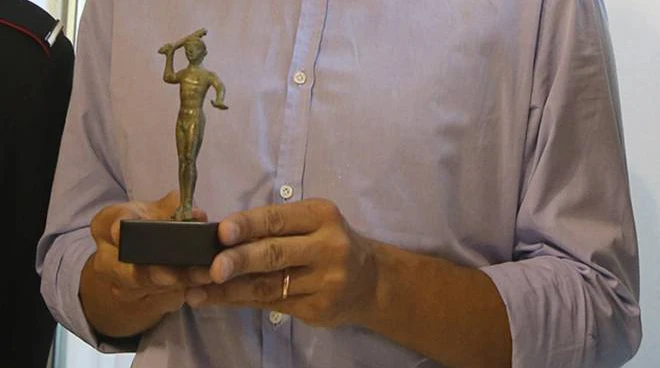
A gang of thieves, break into the Museo archeologico Oliveriano di Pesaro and make off with multiple objects, one of which is this Etruscan statuette of Hercules from the 6th to the 5th century BCE. 

19 December 1979
David Meadows identified this 300 BCE Thracian round Silver Plaque is purchased by the Museum of Fine Arts - Boston and is given Object Number: 1979.620

The provenance is listed as:
1979, sold by Michael L. Ward (dealer), Brooklyn Heights, NY to the MFA. 

19 December 1979
David Meadows identified this 300 BCE Thracian round Silver Plaque is purchased by the Museum of Fine Arts - Boston and is given Object Number: 1979.621

The provenance is listed as:
1979, sold by Michael L. Ward (dealer), Brooklyn Heights, NY to the MFA. 

1981
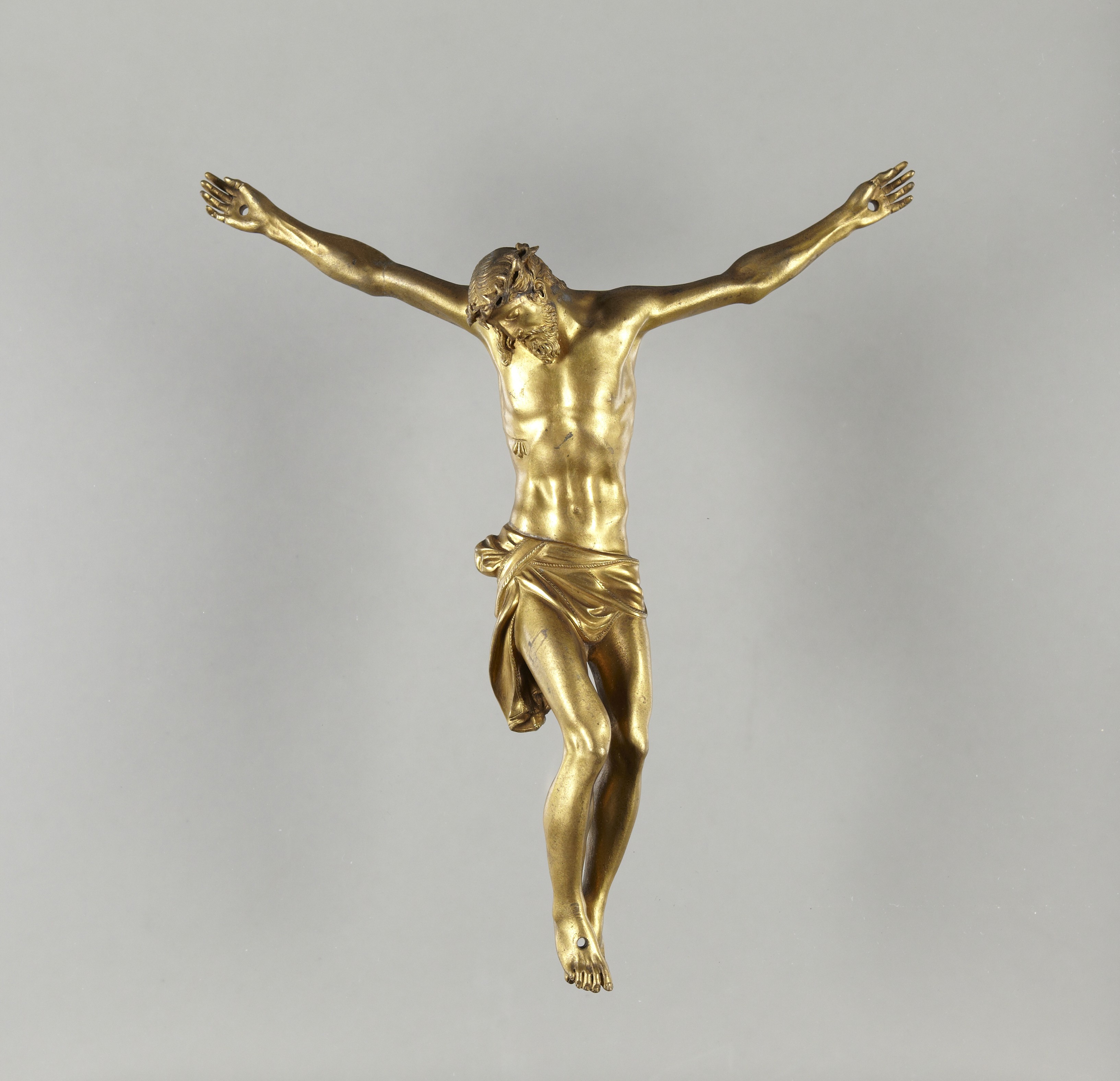
This c. 1600 CE Corpus for Crucifix from the studio of Antonio Susini, after Giambologna is gifted to the Princeton University Art Museum and is given Object Number: y1981.42

The provenance is listed as:
Michael Ward, New York; purchase by Henry Berg; 1981 gift to Princeton University Art Museum.
                                                                         
1986 
Michael Ward sells a silver applique head of a satyr, a half-human companion of Dionysos to Lawrence and Barbara Fleischman in 1986 which is later donated to the J. Paul Getty Museum in 1996 and given Object Number: 96.AM.157.

No provenance history, prior to the Michael Ward 1986 sale, is listed for this artefact within the Getty Museum's digital accession record for this object. 

1987
Dr. David Gill identified this ca. 200–150 BCE South Italian, Campanian Fragment of a lamp-filler in the form of a comic actor's mask sold by Michael Ward to the Princeton University Art Museum and given Object Number: y1987-69

No provenance details prior to Michael Ward are listed for this artefact within the Princeton University Art Museum's digital accession record for this object. 

1987
Michael Ward sells a silver 4th century BCE Greek Bowl to Lawrence and Barbara Fleischman in 1987 which is later donated to the J. Paul Getty Museum in 1996 and given Object Number: 96.AM.89.1.

No provenance history, prior to the Michael Ward 1987 sale, is listed for this artefact within the Getty Museum's digital accession record for this object. 

1987

Michael Ward sells a silver 4th century BCE Oinochoe to Lawrence and Barbara Fleischman in 1987 which is later donated to the J. Paul Getty Museum in 1996 and given Object Number: 96.AM.89.2.

No provenance history, prior to the Michael Ward 1987 sale, is listed for this artefact within the Getty Museum's digital accession record for this object. 

1987
Michael Ward sells a silver 4th century BCE Ladle to Lawrence and Barbara Fleischman in 1987 which is later donated to the J. Paul Getty Museum in 1996 and given Object Number: 96.AM.89.3.

No provenance history, prior to the Michael Ward 1987 sale, is listed for this artefact within the Getty Museum's digital accession record for this object. 

1987
Michael Ward sells a silver 4th century BCE strainer to Lawrence and Barbara Fleischman in 1987 which is later donated to the J. Paul Getty Museum in 1996 and given Object Number: 96.AM.89.4.

No provenance history, prior to the Michael Ward 1987 sale, is listed for this artefact within the Getty Museum's digital accession record for this object. 

1987
Michael Ward sells a 150-250 CE Roman Statuette of the Lar/Genius of Aurelius Valerius and Base to Lawrence and Barbara Fleischman in 1987 which is later donated to the J. Paul Getty Museum in 1996 and given Object Number: 96.AB.200.

No provenance history, prior to the Michael Ward 1987 sale, is listed for this artefact within the Getty Museum's digital accession record for this object. 

1987
Michael Ward sells a 3rd century CE Roman gold with amethyst necklace to Lawrence and Barbara Fleischman in 1987 which is later donated to the J. Paul Getty Museum in 1996 and given Object Number: 96.AM.208.

No provenance history, prior to the Michael Ward 1987 sale, is listed for this artefact within the Getty Museum's digital accession record for this object. 

1988
Michael Ward sells a 480 to 460 BCE Statuette of a Satyr to the J. Paul Getty Museum which is given Object Number: 88.AB.72

No provenance history, prior to the Michael Ward 1988 sale, is listed for this artefact within the Getty Museum's digital accession record for this object.

1989
Dr. David Gill identified this 5th century bronze Steelyard Weight sold to the Walters Art Museum and given Object Number: y1987-69


The provenance is listed as:
Michael Ward, New York, ca. 1977, by purchase; L. Alexander Wolfe, Jerusalem [date of acquisition unknown], by purchase; Sale, Frank Sternberg, Zurich, November 20, 1989, no. 423; Walters Art Museum, 1989, by purchase.

1989
This 5th century BCE Greco-Persian Intaglio seal with Artemis and deer, is purchased by the Princeton University Art Museum from Michael Ward and is given Object Number: y1989-72

The provenance is listed as:
Michael Ward, New York

1989
This 5th century BCE Greek plain black Attic Mastos cup, is purchased by the Princeton University Art Museum from Michael Ward and is given Object Number: y1989-72

The provenance is listed as:
Michael Ward, New York

1989
Dr. David Gill identified this 1st century BCE –1st century CE Lead-glazed cup with relief decoration purchased by the Princeton University Art Museum and given Object Number: y1989-73

The provenance is listed as:
Michael Ward, New York

1989
This Late 2nd century CE Roman, British or Gallo-Belgic Parisian ware beaker is purchased by the Princeton University Art Museum and is given Object Number: y1989-74

The provenance is listed as:
Michael Ward, New York

1989
This 2nd century CE Roman Balsamarium in the form of three conjoined heads is purchased by the Princeton University Art Museum and is given Object Number: y1989-75

The provenance is listed as:
Said to have been found in Sirmium, Yugoslavia; Purchased from Michael Ward, New York.

1989
Michael Ward sells a Greek bronze 500 BCE Handle of a Vessel to Lawrence and Barbara Fleischman in 1989 which is later donated to the J. Paul Getty Museum in 1996 and given Object Number: 96.AC.79.

No provenance history, prior to the Michael Ward 1989 sale, is listed for this artefact within the Getty Museum's digital accession record for this object. 

1989
Michael Ward sells a Greek-South Italian bronze 550 BCE Side Handle of a Hydria previously with Mathias Komor to Lawrence and Barbara Fleischman in 1989 which is later donated to the J. Paul Getty Museum in 1996 and given Object Number: 96.AC.107.

No provenance history, prior to the Michael Ward 1989 sale, is listed for this artefact within the Getty Museum's digital accession record for this object. 

1990
Michael Ward sells three Greek 550–525 BCE bronze statuettes of Banqueters to Lawrence and Barbara Fleischman in 1990 which are later donated to the J. Paul Getty Museum in 1996 and given Object Number: 96.AC.77.

No provenance history, prior to the Michael Ward 1990 sale, is listed for this artefact within the Getty Museum's digital accession record for this object. 

1990
Michael Ward sells a Greek 550 BCE bronze Statuette of a Rider to Lawrence and Barbara Fleischman in 1990 which is later donated to the J. Paul Getty Museum in 1996 and given  Object Number: 96.AB.45.

No provenance history, prior to the Michael Ward 1987 sale, is listed for this artefact within the Getty Museum's digital accession record for this object. 

1991
Michael Ward sold a late 4th-3rd Century BCE Gold Olive Wreath to the Michael C Carlos Museum.  Object Number 1991.014

The provenance is listed as:
Ex private collection, Europe, assembled prior to early 1980s. European art market. Ex private collection, London, England, from ca. 1984-1985. Purchased by Emory University Museum of Art and Archaeology from Michael Ward [Ward & Company, Works of Art, Inc.], New York, New York.

1992
Michael Ward sells a 325 BCE Greek Side Panel of a Grave Naiskos with the Relief of a Young Hunter to Lawrence and Barbara Fleischman in 1992 which is later donated to the J. Paul Getty Museum in 1996 Object Number: 96.AA.248.

No provenance history, prior to the Michael Ward 1992 sale, is listed for this artefact within the Getty Museum's digital accession record for this object. 

1992
Michael Ward contacts the Greek Culture Ministry and shares photographs and measurements of a grouping of golden Mycenaean jewellery from the 15th century BCE, hereinafter referred to as the Aidonia Treasure, which he was considering before purchase in Early 1992.  When placed on the market a length battle begins when it is determined that these pieces were plundered in 1978 from a Mycenaean cemetery at Aidonia, near Nemea, in southern Greece.  The parties eventually settle out of court.

The objects include necklaces with lilies, large cusped rosettes from a belt, decorated gold rings, sealstones, beads, and other stylized jewellery and ornaments totalling about 50 pieces

1992
This late 2nd century CE Roman Bronze Balsamarium in the form of a hunchback, adapted for use as a steelyard weight, is purchased by the Princeton University Art Museum from Michael Ward and is given Object Number: y1992-6

The provenance is listed as:
Purchased from Michael Ward, New York, in 1992.

1992
This 712-305 Bronze Egyptian Woman with Barrel-Shaped Drum is gifted by Michael Ward to the Brooklyn Museum and is given Object Number: 1992.169

No provenance details are listed for this artefact within the Brooklyn Museum's digital accession record for this object. 

1993
Dr. David Gill identified this c. 1500 BCE Large Romania, possibly Cirna, Middle Bronze Age earthenware Bowl, donated by Michael Ward in honour of Evan H. Turner to the Cleveland Museum of Art.  Accession No. 1993.229 

No provenance details are listed for this artefact within the Clevelend Museum of Art's digital accession record for this object. 

1993
Michael Ward donates a Greek Corinthian mid 6th century BCE Couchant lion to the Princeton University Art Museum. 
Object No: y1993-42

No provenance details are listed for this artefact within the Princeton University Art Museum's digital accession record for this object. 

Mid to Late 1990s

Lot 3: 'a Greek silver-gilt repoussé plaque'. 'circa 540-525 BCE'. 'With winged Nike in a frontal chariot with facing quadriga, each pair of horses with heads turned to opposing sides, with finely incised details, bound lotus filling motifs, pierced around the edge for attachment, from an arm-guard'. 6.8 cm high. Unsold.

Lot 5: 'a Greek bronze goat'. 'circa 5405 BCE'. 'From a vessel lid or rim, the goat recumbent with head turned to the right, with short pointed beard and upturned tail, finely incised details, the underside with lead infill, horns partially missing'. 7.6 cm high. Sold for 9,000 GBP.

Lot 14: 'A Geometric Greek Bronze Seated Male Figure'. 'circa 750-700 BCE'. 'Seated on a stool with elbows resting on his knees and left hand to chin, with long instrument in right hand, finely detailed with striated fringe of hair at back of head and eyes rendered with depressed circles, on integral square seal base with four triangular divisions on underside, on wood mount'. 63 cm high. Sold for 28,800 GBP.

Lot 18: 'Three Laconian bronze helmeted warriors'. '6th century BCE'. 'Each animated nude standing figure standing with right arm outstretched to the side and left arm raised, with fists clenched, wearing tall crested helmet'. 6.4 cm high (max). Sold for 30,000 GBP.
 
1995  
Betsy Alley identified this 2nd century Roman Empire Lynx Head gifted to Cornell University in 1994 and given Accession No. 95.030

The provenance is listed as:
Michael L. Ward, Inc., New York, NY; before 1994, David B. Simpson; 1995, collect(…)
     
1996
Dr. David Gill identified this c. 1200 CE Cauldron Ornament donated by Michael Ward in honour of Arielle P. Kozloff  to the Cleveland Museum of Art.  Accession No. 1996.312 

There is no provenance listed for this artefact. 

1996
David Meadows identified a pair of late 2nd–early 3rd century CE Roman earrings at the Dallas Museum of Art purchased via a museum credit line along with a gift of Stark and Michael Ward in honor of Virginia Nick and Anne Bromberg.  The pair are given Object Numbers: 1996.35.A-B

There is no provenance listed for this jewellery grouping. 

1997
Dr. David Gill identified this 2nd–1st century BCE Hellenistic Red Slip Bowl gifted by Lawrence A. and Barbara Fleischman in honour of Michael Padgett to the Princeton University Art Museum and given Object Number: 1997-1

The provenance is listed as:
Owned by a succession of dealers (C. Ede, H. Humbel, B. Aitken, M. Ward) before acquired by Fleischman; given to the Museum in 1997

1997
This early Byzantine vertical dial was purchased by the British Museum from Ward & Company Works of Art and assigned the Object No: 1997,0303.1

The provenance is listed as: 
Previous owner/ex-collection: Kummer
 
1997
The Judy and Michael Steinhardt Foundation donates a 12th century Byzantine Disk, possibly a pilgrimage token to the Princeton University Art Museum. Object No: 1997-34

The provenance is listed as: 
Museum purchase in 1997 from Ward & Company, Works of Art, Inc., gift of the Judy and Michael Steinhardt Foundation

October 1997
Michael Ward reports in the New York Times that he nearly sold out his booth to new customers, American and European at the International Fine Art and Antique Dealers Show.  Three of the objects mentioned at his booth are a mosaic sold to a museum, a fifth-century BCE Greek marble grave stele for $650,000 that depicts a man walking with a staff, and a $125,000 circa 800 BCE Egyptian bronze of Osiris. 

1998
This 8-9th century CE bronze finger Ring is gifted to the Princeton University Art Museum and is given Object Number: 1998-336

The provenance is listed as:
Geber, Budapest. Michael Ward, NY; purchase by John B. Elliott; bequest to Princeton University Art Museum.

1998
This 9-10th century CE Anglo Saxon bronze Applique in the form of a lion is purchased by the Princeton University Art Museum from Michael Ward and is given Object Number: 1998-343

The provenance is listed as:
Michael Ward, New York; purchase by John B. Elliott; bequest to Princeton University Art Museum

1998
This 8-9th century CE Avar culture pair of Strap ends is gifted to the Princeton University Art Museum and is given Object Number: 1998-360a and b

The provenance is listed as:
Geber, Budapest. Michael Ward, NY; purchased by John B. Elliott; 1998 bequest to Princeton University Art Museum.

1998
This 8-9th century CE Avar culture pair of Strap ends is gifted to the Princeton University Art Museum and is given Object Number: 1998-361a and b

The provenance is listed as:
Geber, Budapest. Michael Ward, NY; purchased by John B. Elliott; 1998 bequest to Princeton University Art Museum.

1998
This 8-9th century CE Avar culture pair of Strap ends is gifted to the Princeton University Art Museum and is given Object Number: 1998-362a and b

The provenance is listed as:
Geber, Budapest. Michael Ward, NY; purchased by John B. Elliott; 1998 bequest to Princeton University Art Museum.

1998
This 8-9th century CE Avar culture Strap end is gifted to the Princeton University Art Museum and is given Object Number: 1998-363

The provenance is listed as:
Geber, Budapest. Michael Ward, NY; purchased by John B. Elliott; 1998 bequest to Princeton University Art Museum.

1998
This 8-9th century CE Avar culture Strap end is gifted to the Princeton University Art Museum and is given Object Number: 1998-364

The provenance is listed as:
Geber, Budapest. Michael Ward, NY; purchased by John B. Elliott; 1998 bequest to Princeton University Art Museum.

1998
This 8-9th century CE Avar culture Strap end is gifted to the Princeton University Art Museum and is given Object Number: 1998-365

The provenance is listed as:
Geber, Budapest. Michael Ward, NY; purchased by John B. Elliott; 1998 bequest to Princeton University Art Museum.

1998
This 19-20th century CE brass Ekonda anklet is gifted to the Princeton University Art Museum and is given Object Number: 1998-640

The provenance is listed as:
[Michael Ward, Inc., New York, NY]; John B. Elliott, New York, NY by 1989; Princeton University Art Museum, 1998

1998
This 12-17th century CE Djenné copper bracelet is gifted to the Princeton University Art Museum and is given Object Number: 1998-643

The provenance is listed as:
[Michael Ward, Inc., New York, NY]; John B. Elliott, New York, NY by 1989; Princeton University Art Museum, 1998

1999 through 2022
According to the Michael L. Ward Criminal Complaint, from 1999 through 2022, Eugene Alexander had a money laundering scheme in which he sold looted antiquities to European and American collectors.  

In an open source  6 September 2023 stipulation Michael Ward affirmed that he would plead guilty to Criminal Facilitation in the Fourth Degree (N.Y. Penal Law §115.00[1]), a class A misdemeanor, and as part of his plea agreement he voluntarily agreed to surrender (40) additional antiquities, or others that he or DANY identified in his possession that were sold, consigned, or previously possessed by Eugene Alexander; and that he will cooperate truthfully and fully with DANY and, if requested by DANY and with DANY's coordination, he will assist Italy and Germany in their investigation and prosecution of Eugene Alexander.

In return, the Manhattan authorities affirmed:
    • they will not pursue any additional charges or arrests of Michael Ward for any crimes arising from his antiquities dealings or business transactions with Eugene Alexander;
    • that Michael Ward will not be prosecuted in Italy for any crimes arising from his antiquities dealings or business transactions with Eugene Alexander; 
    • that no evidence developed by DANY or provided by Michael Ward to DANY will be used for any prosecution in Germany or any other country; 
    • and that, although Michael Ward's antiquities dealing and business transactions with Eugene Alexander will be described in any charging documents of Eugene Alexander, Michael Ward will not be named as a co-conspirator.
1999
Michael Ward sold a ca. 480-470 BCE Red-Figure Calyx Krater with Apollo and Artemis Offering Libations to the Michael C Carlos Museum.  Object Number 1999.011.002

The provenance is listed as:
Ex coll. Jonathan Kagan, New York, New York. Ex coll. Damon Mezzacappa (ca. 1936-2015), New York, New York. Purchased by MCCM from Michael Ward [Ward & Company, Works of Art, Inc.], New York, New York.

1999
Michael Ward sells a 4th century BCE Votive Relief with Banquet Scene to the Michael C Carlos Museum. Object Number 1999.011.003

The provenance is listed as:
With Michael Ward [Ward & Company, Works of Art, Inc.], New York, New York, from ca. 1996. Purchased by MCCM from Ward.

1999
Michael Ward sells a 1-2nd century CE Roman Statue of Mercury to the Michael C Carlos Museum. Object Number 1999.011.005

The provenance is listed as:
Ex coll. Tempelberg Foundation, Vaduz, Liechtenstein. Purchased by MCCM from Michael Ward [Ward & Company, Works of Art, Inc.], New York, New York.

2000
Michael Ward sold a 440-430 BCE Chous with Maenad and Baby Satyr to the Michael C Carlos Museum.  Object Number 2000.001.001

The provenance is listed as:
With Galerie Blondeel-Deroyan, Paris, France, November 1999. Purchased by MCCM from Michael Ward [Ward & Company, Works of Art, Inc.], New York, New York.

2000
Michael Ward sells a 6th century BCE Votive Statuette of an Enthroned Athena to the Michael C Carlos Museum. Object Number 2000.006.003.

The provenance is listed as:
Purchased by MCCM from Michael Ward [Ward & Company, Works of Art, Inc.], New York, New York.

2000
Michael Ward sells one diadem, two 1200 - 800 CCE Bronze brooches with Spirals,  and one axe blade pendant to the Metropolitan Museum of Art. 

Accession Number: 2000.281.1 lists the provenance as:
Ward & Company Works of Art (American), New York (sold 2000)

Accession Number: 2000.281.2 lists the provenance as:
Charles Ede Limited Antiquities, London (1999)]; [ Ward & Company Works of Art (American), New York (sold 2000).

Accession Number: 2000.281.3  lists the provenance as:
Ward & Company Works of Art (American), New York (sold 1989)

Accession Number: 2000.281.4  lists the provenance as:
Ward & Company Works of Art (American), New York (sold 2000)

1 January 2000
The Art Newspaper published an ancient art market survey with dealers responses to the question of how many clients do you have who spend more than $50,000 per artefact.

Michael Ward replied that he has seen his client base in this price range and higher as doubling in number over the past five years. He counts forty clients in this price bracket.

2001
Michael Ward gifts an 8th century BCE Bird Pendant to the Michael C Carlos Museum. Object Number 2001.029.002.

The provenance is listed as: 
With Michael Ward [Ward & Company, Works of Art, Inc.], New York, New York, from at least August 1997.

2001
Michael Ward gifts a 7th Century BCE Male Orant to the Michael C Carlos Museum. Object Number 2001.029.001.

The provenance is listed as:
With Michael Ward [Ward & Company, Works of Art, Inc.], New York, New York, from at least May 1999.
2002
This 530 BCE Greek Hoof, possibly from a centaur statuette is gifted by Michael Ward to the Princeton University Art Museum from Michael Ward and is given Object Number: 2002.283

No provenance details are listed for this artefact within the Princeton University Art Museum's digital accession record for this object. 

2002
This 7th century BCE Greek Double-sided seal with centaur and two men is purchased by the Princeton University Art Museum from Michael Ward and is given Object Number: 2002.284

The provenance is listed as:
Purchased from Michael Ward, NY, in 2002.

2002
Dietrich von Bothmer gifts a 480 BCE Red-Figure Amphora Neck Fragment with a Fight to the Michael C Carlos Museum. Object Number 2002.043.026.

The provenance is listed as:
With Michael Ward [Ward & Company, Works of Art, Inc.], New York, New York, from at least May 1999.

2003
Michael Ward sells a 350 to 325 BCE Seated Figure From a Grave Naiskos to the Michael C Carlos Museum. Object Number 2003.005.001

The provenance is listed as: 
With Gianfranco Becchina, Basel Switzerland. Purchased by MCCM from Michael Ward [Ward & Company, Fine Art, Inc.], New York, New York.

2003
Michael Ward gifts a 3200-2700 BCE early Cycladic Faceted Core to the Michael C Carlos Museum. Object Number 2003.025.001

The provenance is listed as: 
Ex coll. K.John Hewett (1919-1994), England. Ex coll. Peter Sharrer, New Jersey, acquired from Hewett, London, England, by 1989. Loaned to San Antonio Museum of Art, San Antonio, Texas (L.89.1.15). Gifted to MCCM by Michael Ward [Ward & Company, Works of Art, Inc.], New York, New York.

10 December 2004
A late first century BCE Roman parcel gilt silver Skyphos decorated with a Nilotic scene, some areas raised in relief, with one side centered by a grotesque man teasing a crocodile is consigned to Christie's and sells for $623,500. 

The provenance is listed as:
London Art Market, mid 1990s.
with Ward & Company Works of Art, New York, 2000.

2005
Michael and Stark Ward gift a Greek 6th Century BCE bronze Bronze handle of a patera (shallow basin) in the form of a youth to the Metropolitan Museum of Art. Accession Number: 2005.457.

No provenance details are listed for this artefact within the Metropolitan Museum of Art's digital accession record for this object. 

2005
Dr. David Gill identified this mid–4th century BCE Black-glazed calyx-cup gifted to  the Princeton University Art Museum and given Object Number: 2005-113

The provenance is listed as:
Acquired by Andrés Mata at Christie's, New York, December 10, 2004, lot 485. The consignor was Ward & Company, New York, which had acquired it from James Ede, London, who in turn had purchased it from Michael Petropoulos, Zürich, on November 13, 1999; given to the Museum in 2005

2005
Michael Ward sells a 1st century CE Roman Head of Nike to the Michael C Carlos Museum. Object Number 2005.083.001

The provenance is listed as:
Ex coll. Michael Ward [Ward & Company, Works of Art, LLC], New York, New York, purchased July 1999.


2005 
According to the Michael Steinhardt Statement of Facts document, Michael Ward sold a red-figure calyx krater, dated to the fourth century BCE to the Dallas Museum of Art stating that the vase had come from a “Swiss private collection”—the vase had actually been looted by Becchina and smuggled to Becchina’s gallery in Basel.


2007
Michael Ward sells a 2305-2152 BCE Egyptian Relief of a Funerary Ceremony to the Michael C Carlos Museum. Object Number 2007.009.001

The provenance is listed as: 
Ex coll. Dr. Henry R. Hope (1905-1989), United States, acquired 1950s. Thence by descent. Purchased by MCCM from Michael Ward [Ward & Company, Works of Art, LLC], New York, New York.

By March 2010
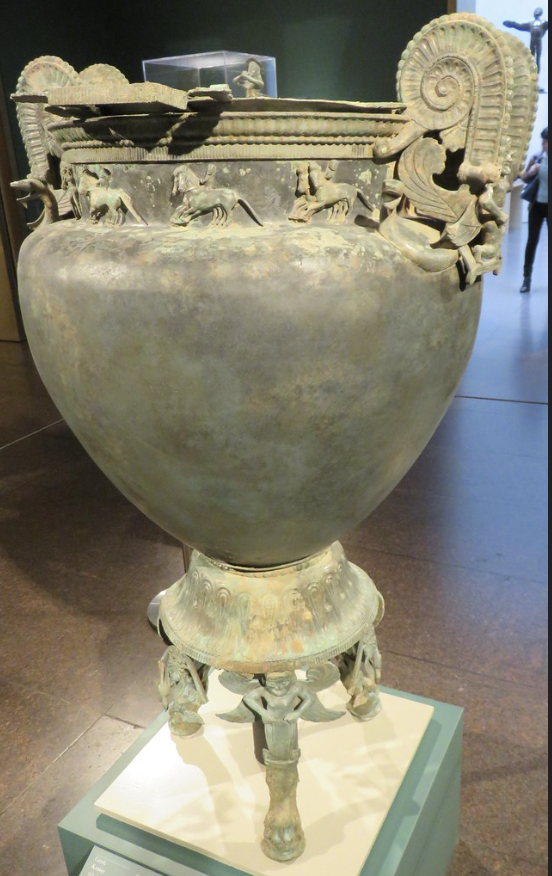
The Krater of Koreshnica, photographed here on Flickr in 20016 was loaned to the Museum of Fine Arts, Houston in 2010 by an anonymous lender.  This artefact  is believed to have been looted on/around 1996 from a 6th century BCE Macedonian burial chamber near the village of Koreshnica, in the southern part of the Republic of Macedonia.   


2012
The stolen Etruscan statuette of Hercules stolen from the Oliveriano Archaeological Museum in Pesaro is identified by experts in Italy when the object comes up for sale with Ward & Company.  It was restituted to Italy on 24 February 2015 during a ceremony in the federal prosecutor's office in Manhattan.

17 December 2013
According to the Edoardo Almagià sentencing document, the convicted dealer sold Michael Ward the following artefacts:
a. A black figure kylix;
b. A marble lion mask;
c. A  marble sculpture depicting a draped woman; 
d. A terracotta mask;
e. A torso of Aphrodite;
f. A romanesque capital;
g. A cameo female bust in marble;
h. A Roman marble urn;
i. A python crater from  Paestum  + 2 bronze vases;
j. A black figure olpe and marble torso;
k. 2 Attic craters, a hydria and abell crater.

Between 2015 and 2019
Michael Ward obtained more than 100 antiquities from Eugene Alexander between 2015 and 2019, 80 of which, according to the Michael L. Ward indictment, were clearly looted.

2016
Dr. David Gill identified this silver and gold late 5th – early 4th century BCE Greek Phiale with Thetis and the Armour of Achilles in a Phoenix Ancient Art 2016 catalogue for Spring Masters NYC. NB: Most gold-figured silver vessels have been found in Macedonian and Thracian tombs.

The provenance is listed as:
Ex- European private collection, early 1980s; Ward and Co., New York, USA, 1990 or prior; Ex- US pri- vate collection, New York, acquired in 1990.

2016
Michael Ward sells a 480 BCE Red-Figure Pelike with Two Youths in Conversation to the Michael C Carlos Museum. Object Number 2015.005.001

The provenance is listed as:
Ex coll. Vicomte du Dresnay, France, acquired before 1970. Purchased by MCCM from Michael Ward [Ward & Company, Works of Art, LLC], New York, New York.

10 November 2022
Four 4th Century B.C.Thracian Gilt-Silver Double Eagle Plaques are auctioned at Hindman in Chicago.  The artefacts sold for just $500.

The provenance is listed as: Michael Ward Gallery, New York, prior to 1992. Lewis B. Cullman, acquired from the above in 1992.

18 October 2023
And with just 4 days until bidding opens on Sotheby's online sale of The Edith & Stuart Cary Welch Collection, I will finish my round-up with this late 5th/ early 6th century Byzantine spoon, again with only Ward and Co provenance.  

 So as ARCA always says with problematic dealers, Buyers Beware. 

By: Lynda Albertson