Blog Subscription via Follow.it

Showing posts with label Nancy Wiener. Show all posts

February 23, 2026

From Skanda Trust to Singapore: Tracing One Spunky Hanuman to Douglas Latchford

If you read our recent article about the Dong Son bell identified at a museum in Assen and the troubling questions surrounding its provenance, you will recognise a pattern that extends far beyond that single suspect artefact.  That case, resting on little more than a hypothetical pre-1970 export date, forms part of a larger story that has been unfolding for years.  It is a story that continues to cast a long shadow over the global market in Southeast Asian antiquities, museum institutions, and private collections worldwide.  Time and again, it is a story in which the fingerprints of Douglas Latchford can be found on objects that passed through his hands, sometimes decades before his alleged crimes were brought to light.

Recently, I was working to identify the Cambodian, Thai and Vietnamese artefacts purchased by Leon Black which were mentioned in some of the three million documents released by the U.S. Justice Department on 30 January 2026 as part of the Jeffrey Epstein data dump.  During my wanderings my searches brought me back to Latchford's and Emma Bunker's artistic publications. 

Cultivating the image of a passionate scholar-collector prior to his indictment, the Bangkok-based dealer worked closely with Bunker to publish a series of lavishly illustrated books on Southeast Asian and Khmer art that featured many of the objects he circulated through the antiquities market.  Far from being neutral scholarly exercises, these publications functioned as instruments of laundering. 

Sculptures and bronzes with little or no documented provenance were presented alongside established museum holdings and described as significant works from private collections.  They were framed within authoritative art historical narratives that obscured both their true ownership history and the circumstances of their removal from Cambodia.  By embedding freshly surfaced objects in academic-style volumes, Latchford and Bunker effectively manufactured a sort of cosmetic legitimacy, transforming recently trafficked antiquities into catalogue-worthy published masterpieces, thereby smoothing their path into major collections.

Thumbing through the pages of their 2011 book Khmer Bronzes: New Interpretations of the Past my eyes paused briefly on a piece I recognised.  It was a bronze statue of Hanuman, the monkey general of the Indic epic poem Ramayana, who helped Rama rescue Sita from the demon Ravana.  

In the book Latchford and Bunker went on to describe the unusual piece as coming from Angkor Borei, adding:  

This fierce little Hanuman once surmounted a battle standard to which he was attached by a short tang under the foot. Hanuman waves his arms vigorously as he balances on one foot, a pose very similar to that of a gilded-bronze male figure from Vietnam in the Musee Guimet that has also been identified as a standard emblem. Hanuman is often represented in later Khmer art.

In their 544-page tome, and including this bronze, there is an outstanding number of pieces, which appear courtesy of "Skanda Trust."  Formed just three months before the book’s publication, Skanda Trust is now understood to have been one of Latchford’s offshore vehicles, registered in Jersey in the Channel Islands, and estimated by experts to have held art-related assets valued at approximately $10 million.  An email from Latchford dated 23 April 2007 to a New York dealer left little to no doubt about the dealer's level of direct involvement and knowledge in transnational criminal activity against Cambodian artefacts. In it Latchford offered his colleague (and sometimes cohort in crime) a looted standing Buddha from the same pre-Khmer site of Angkor Borei.  That artefact was depicted in a photo that showed signs of recent excavation.

So where did this Hanuman wander off to?

In a 2017 Facebook post, the Asian Civilisations Museum shared a photograph of an eighth-century bronze monkey figure identified as probably depicting Hanuman and coming from Angkor Borei.  The figure was described as unusual because it was unclothed.  I had saved a screenshot of that image for use in my course on open-source intelligence research in object tracing. It served as an excellent example of how museums use social media and how such posts can reveal information about objects in their collections, even when full catalogues are not accessible online or researchers cannot physically visit a specific institution in another country.

That is why the image clicked in my memory when reviewing Latchford’s publication.  They were one and the same.  The museum appears to have acquired the bronze in 2014 and assigned it Accession number: 2014-00439.

The presence of this Hanuman in a Latchford publication, attributed to Skanda Trust and later accessioned into an important museum collection, is not a trivial detail.  It places the object squarely within a museum collection that has already led to previous restitutions to India

In recent years, the museum has begun to confront the uncomfortable reality that publication history and aesthetic importance cannot substitute for clear, documented provenance.  If they are serious about transparency and ethical stewardship, then works linked to Latchford’s orbit warrant their careful review. 

The question is no longer whether these objects are beautiful or significant. It is whether they left Cambodia lawfully.  One hopes that this bronze will receive that scrutiny it needs, and that if the evidence points where other cases have led, that his path home will be quick. 

By:   Lynda Albertson


December 17, 2023

Lost Time, Found Art: The Decade-Long Pursuit of Restitution for Antiquities Smuggled by Douglas Latchford at the Metropolitan Museum of Art

In 2013 the Metropolitan Museum of Art restituted two,10th-century, Koh Ker stone statues, known as the “Kneeling Attendants” to Cambodia.  These artefacts had been donated in separate stages to the Museum in the late 1980s and early 1990s and had been associated with antiquities collector-dealer-trafficker Douglas Latchford, a/k/a “Pakpong Kriangsak”, who for 50 years, was once considered one of the world’s leading authorities on Asian Art before his unmasking. 

As early as 2012, Bangkok-based Latchford had already been identified in a civil lawsuit, as a middleman in the trafficking of looted Khmer sculptures from “an organized looting network” and was said to have conspired with the London auction house Spink & Son Ltd., to launder looted temple antiquities. 

Douglas Latchford's
Facebook photo
on 28 October 2017,
two years
before he was indicted.
On 21 December 2016, following months of interviews with confidential informants, and the examination of thousands of emails and other seized documents, as well as years of investigations into international smuggling networks, the office of the New York District Attorney's Office in Manhattan filed criminal charges against New York antiquities dealer Nancy Weiner, stating that she used her gallery “to buy, smuggle, launder, and sell millions of dollars’ worth of antiquities stolen from Afghanistan, Cambodia, China, India, Pakistan and Thailand.” In their complaint, it was documented that Weiner “and her co-conspirators, [one of whom was Douglas Latchford], trafficked in illegal antiquities for decades.”  (New York/Manhattan Wiener complaint, p. 2) .

In 2019 charges were filed in the United States against the then 88 year old Latchford by Assistant U.S. Attorney Jessica Feinstein, in the Office’s Money Laundering and Transnational Criminal Enterprises Unit, for his purported role in "wire fraud, smuggling, conspiracy and related charges pertaining to his trafficking in stolen and looted Cambodian antiquities." Many of the suspect objects mentioned in his 25 page indictment passed through his hands en route to the Met and other important collections, during the course of his business operations.  Latchford died on 2 August 2020 before he could be extradited to the United States and his indictment was formally dismissed, due to his death, the following month. 

Last Friday, the United States authorities announced that the Met would be returning fourteen more pieces to Cambodia, dating from the ninth to the 14th centuries, plus an additional artefacts to Thailand.

The pieces going home to Cambodia are:

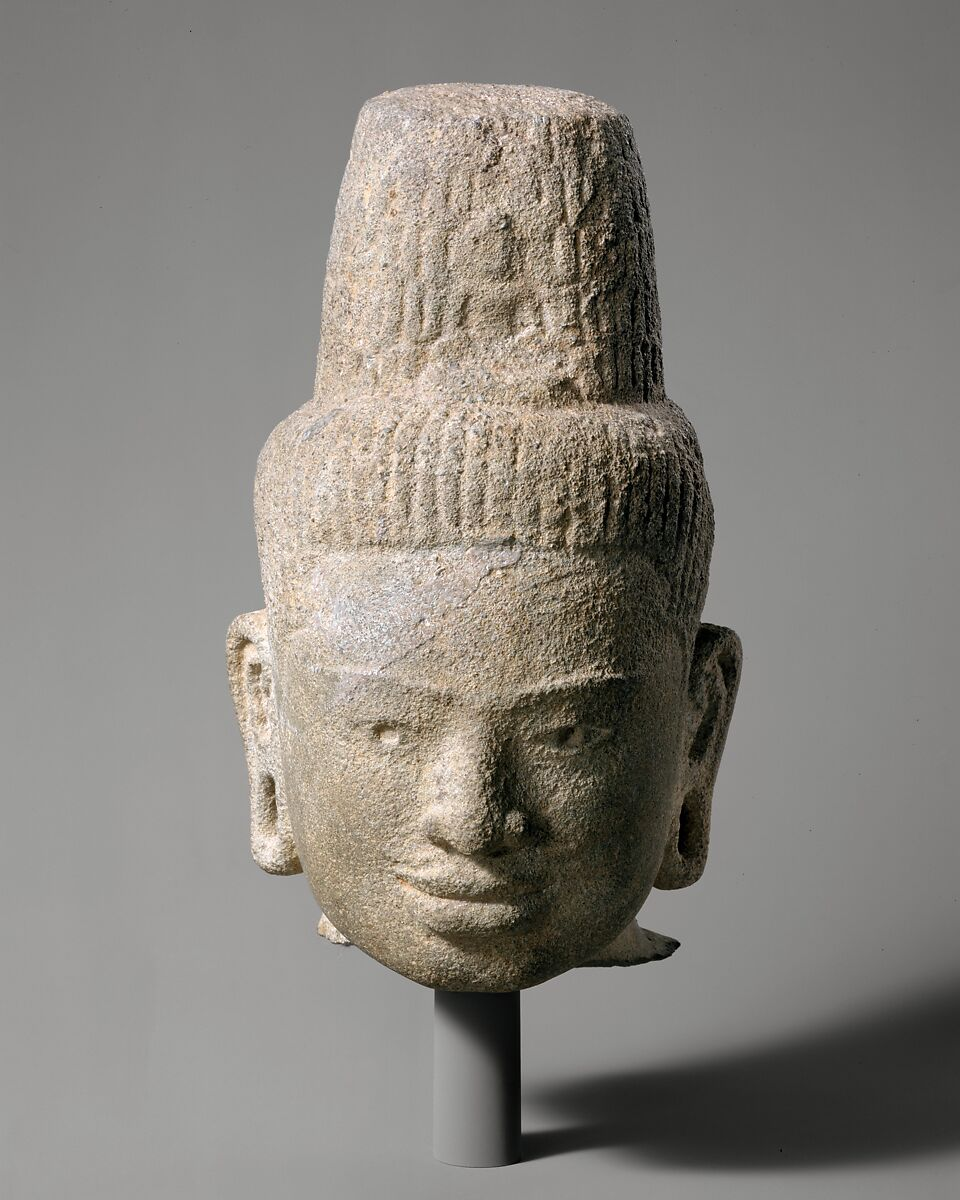
This 7th century CE pre-Angkor period sandstone Head of a Buddha, which was purportedly with implicated New York dealer Doris Wiener from 1984–2005 until she gifted it to the Metropolitan Museum of Art in 2005, upon which it was given Accession Number: 2005.512.  


This 10th - 11th century CE copper Bodhisattva Avalokiteshvara Seated in Royal Ease. It was given Accession Number: 1992.336 when it was purchased directly from Douglas Latchford using funds from the Annenberg Foundation Gift. 


This 11th century sandstone Standing Female Deity, (probably Uma), Accession Number: 1983.14 was sold by Douglas Latchford to Spink & Son Ltd., London,  who in turn sold it onward to the Metropolitan Museum of Art. 

This 10th century sandstone Standing Female Deity, which was given Accession Number: 2003.605. This artefact was purportedly with Doris Wiener from 1998 through 2003.  Various saved accession record dates show it was either donated to the Metropolitan by Doris Wiener, in honour of Martin Lerner or was purchased through this New York dealer. 

This partially fragmented 930 - 960 CE  bronze Face from a Male Deitycame to the museum via a Latchford donation in honour of Martin Lerner.   It was given Accession Number: 1998.320a–f.


This ca. 920–50 CE stone Head of a Buddha, was also donated to the museum by Douglas Latchford in 1983 (with no provenance listed), where it was given Accession Number: 1983.551. 

This 10th century, Angkor period bronze Head of Avalokiteshvara, the Bodhisattva of Infinite Compassion was in circulation with Spink & Son Ltd., London until 1998, when it was then sold to an undisclosed private collector who donated the artefact to the Metropolitan the same year, and was given Accession Number: 1998.322.

This 11th century, Angkor period, bronze Four-Armed Avalokiteshvara (Bodhisattva of Infinite Compassion)  This bodhisattva is often depicted with multiple heads and arms symbolising his limitless capacity to help alleviate grievances and is venerated as the ideal of karuna, the willingness to bear the pain of others.  Given Accession Number: 1999.262, the statue was directly purchased by the museum from Douglas Latchford via funds from Friends of Asian Art Gifts, Cynthia Hazen Polsky Gift, and Josephine L. Berger-Nadler and Dr. M. Leon Canick Gift. 


This 11th century architectural Lintel with Shiva on NandiAccession Number: 1996.473. This doorway topping was previously purchased in 1993 by Steven M. Kossak, owner of the prominent "Kronos Collections", who then loaned the piece to the Met for three years before eventually donating it to the museum in 1996. 


This late 9th century, stone Angkor period, Khmer style of Bakong, Headless Female Figure, Accession Number: 2003.592.1, is said to have been in the possession of Latchford's friend, Alexander Götz.  Originally living in Bali, then for a time in Germany, Götz and his family moved to London in 1990 where he opened a gallery specialising in Southeast Asian art, with Indonesia as the main focus. He closed his London gallery in 2015 and has since moved back to Indonesia.


This late 12th century, stone Angkor period, Standing Eight-Armed Avalokiteshvara, the Bodhisattva of Infinite Compassion. Given Accession Number: 2002.477, this stature was sold by Douglas Latchford to Jeffrey B. Soref, heir to the Master Lock fortune, who sits on the Board of Directors at the Metropolitan.  Soref in turn loaned his purchase to the Met from 1999–2002 before gifting it to the museum in 2002.  Authorities in Cambodia had received information from a reformed looter named Toek Tik, who admitted to personally stealing this, as well as other artworks from Cambodia over a span of 20 years during his time as a smuggler.


This 7th–8th century, bronze pre-Angkor period, Ardhanarishvara (Composite of Shiva and Parvati), depicts the god as half male and half female representing the Shakta as worshipper and Shakti as devotee relationship which gives the Ardhanarishvara male and female characteristics.  Assigned Accession Number: 1993.387.4 the female side of this sculpture depicts Parvati’s elegant hairstyle and flowing skirt and exposed breast, while the male side gives us half of Shiva’s moustache, as well as his third eye.  Originally, the public accession record listed only the donation of this object as coming from Enid A. Haup (who had purchased and donated another problematic piece).  The more recent the Met's record was updated to state that the statue was sold by Spink & Son Ltd., London to Haupt who gifted it to the Met in 1993.


This 9th century, stone Angkor period depicting the Head of Bodhisattva Avalokiteshvara. Given Accession Number: 1997.434.1, it was previously owned by American pipeline billionaire George Lyle Lindemann, a collector who frequently bought Khmer artefacts from individuals, some of whom were later implicated in the trade and trafficking of Cambodia's cultural heritage.  Lindemann gifted the object to the Met in 1997, who listed the object with no prior provenance, aside from the name of the wealthy donor.


This 11th century, sandstone Angkor period, Male Deity, probably Shiva.  Depicted with four-arms and a high chignon of jatamukuta, wearing a pleated sampot, this statue was given Accession Number: 1987.414.  The Met's website listed that the statue as previously owned by Margery and Harry Kahn who gifted the object to the Met in 1987 and that the statue "likely formed the centerpiece of a triad in a chapel of an unidentified temple in the vicinity of Angkor Thom.  Its style relates to sculptures recorded from the Baphuon temple, a monumental step-pyramid dedicated to Shiva, built as the state temple by King Udayadityavarman II."

The Artefacts Returning to Thailand are:


This 11th century Gilt-copper alloy, with silver inlay, possibly miss-named statue of a Standing Shivais believed to be the most complete extant gilded-bronze image from Angkor.  Given Accession Number: 1988.355, it belongs to a small group of metal sculptures of Hindu deities associated with royal cult practices that were discovered in Khmer territories including Cambodia and northeastern Thailand.  The statue was purchased by Walter H. and Leonore Annenberg via Spink & Son Ltd., London in 1988 and donated that same year to the Met. 


This 11th century bronze inlayed with silver and traces of gold statue of a Kneeling Female Figure, perhaps a Khmer queen, who kneels in a posture of adoration with arms raised above her head and palms pressed together.  Given Accession Number: 1972.147, she was sold to the museum by Doris Wiener. 


When the Metropolitan Museum of Art announced the return of 16 Khmer sculptures to Cambodia and Thailand known to be associated with Douglas Latchford with great fanfare on "X" the social media site formally known as twitter it stated that :

"Every one of the 1.5 million objects in our collection has a unique history, and part of the Museum’s mission is to tell these stories. When, how, and where was it created? Who made it and why? What was going on at that time and place in history? The Met also examines the ownership history or provenance: where has the object been and in whose care?" 

and that through research, transparency, and collaboration, the museum was committed to responsible collecting and goes to great lengths to ensure that all objects entering the collection meet its strict standards. 

ARCA would like to underscore that it took the Metropolitan Museum of Art from 2013, when the “Kneeling Attendants” were first relinquished to Cambodia, through the Nancy Weiner and Douglas Latchford's respective indictments of 2016 and 2019, alongside numerous gentle, and then more insistent requests by Cambodia, as well as the continued campaigning of heritage activist groups before the museum moved forward with their restitution on Friday, a decade later.

It is worth remembering that there is an imperative need for justice and ethical stewardship by institutions responsible for the world's cultural heritage and it should not take ten years for a museum, the size and scope of the Metropolitan to do-the-right-thing.  Prolonged processes only contribute to the perpetuation of injustice and swift restitution is essential for rectifying historical wrongs, fostering international cooperation, and preserving the cultural identity of affected communities. Lengthy delays such as this one serve to exacerbate diplomatic, as well as cultural, tensions and perpetuate a sense of cultural entitlement on the part of certain western museums. 

When illicitly acquired objects are identified in a museum's collection, expedient restitution processes are the litmus test which, in ARCA's eyes, truly serve to demonstrate a museum's genuine commitment to holding themselves accountable to their past acquisitions.  When doing so, they foster goodwill among the claimants,  and serve as a positive example which in turn amplifies and reinforces the importance of respecting rightful ownership when it comes to cultural treasures. 

To end on a positive note, ARCA is pleased to see that the Metropolitan Museum of Art has taken a step forward in its documentation protocols and has elected to leave the accession records for these relinquished objects online and visible to the public with notations of "Deaccessioned by The Metropolitan Museum of Art for return to the Kingdom of Cambodia, 2023 or Deaccessioned by The Metropolitan Museum of Art for return to the Kingdom of Thailand, 2023."  This action promotes transparency and accountability in the global effort to combat the illicit trade of cultural artefacts.

One small step for a single museum, one giant leap for museum archival documentation. 

By:  Lynda Albertson

October 14, 2021

Caveat Venditor takeaways during the guilty pleas of New York ancient art dealers


New York-based ancient art dealer Mehrdad Sadigh, AKA Michael Sadigh, who had operated Sadigh Gallery out of the Jewelry Building (Buchman and Fox: 1910) on 5th avenue for decades before his August 2021 arrest, has appeared in the New York State Supreme Court in Manhattan this week and entered his guilty plea.

At the time of his arrest, on August 6th,  Sadigh's warrant listed a host of alleged crimes including:

  • Scheme to Defraud in the First Degree, Penal Law §190.65 (1)(b),
  • Two counts of Grand Larceny in the Third Degree, Penal Law §155.35(1)
  • Two counts of Criminal Possession of a Forged Instrument in the Second Degree, Penal Law §170.25
  • Two counts of Forgery in the Second Degree, Penal Law §170.10(1)
  • Two counts of Criminal Simulation, Penal Law §170.45(2) and Conspiracy to commit the same crimes as defined under Penal Law 105.05(1)
Details regarding why these charges were brought can be viewed in our earlier article here.

Just over two months later, on 12 October 2021, the controversial dealer admitted defeat, making no further protestations about the legitimacy of his business transactions.  In what may have been the fasted cultural property crime judicial cycle in New York history,  Sadigh plead guilty Tuesday to seven felony counts including Grand Larceny in the Third Degree and Forgery in the Second Degree. 

Interestingly, the dealer also gave damning statements showing just how easily he manipulated the underinformed buying public, duping them into purchase modern reproductions he stoically insisted were ancient.  Driven by financial greed Sadigh admitted, “over the course of three decades I have sold thousands of fraudulent antiquities to countless unsuspecting collectors.” 

Sadigh also admitted to manipulating his gallery's satisfaction ratings on ratings platforms, by having contacts post false positive reviews as well as hiring a specialised reputational defence firm to manipulate Google's ratings so that negative comments from bilked clients complaining about their purchases or that Sadigh Gallery was a font of fakery were harder for the average Joe to find. 

In our previous article, we posited the assembly-line nature of Sadigh's fakes, which he admitted to in his court hearing.  The dealer openly admitted that he aged modern reproductions to make them appear plausibly authentic, by adding layers of paint, grime, and chemicals to their surfaces. 

Having been caught red-handed and having admitted to crimes that stretched for decades, the Manhattan District Attorney's office, through their Antiquities Trafficking Unit, filed what some might see as a relatively lenient sentencing memorandum.  Citing Sadigh as a first offender, the District Attorney's Office recommended five years probation and a ban on businesses related to the antiquities or reproductions trade.  

While some of the general public are angry that the prosecutor didn't recommend jail time, given that he has likely ripped off hundreds or thousands of people, others have commented that they were happy that the dealer was selling fakes rather than plundering actual archaeological sites to fill his client's burgeoning demands. 

Here at ARCA were are more sanguine. 

In less than one month we have had two members of the antiquities trade finally, and publically, take the opaque wrappings off of the business practices which go on within the antiquities trade, showing that they are not as pristine or above board, as years of paid art market lobbying has attempted to whitewash.  This was also made clear in statements of wrongdoing made at the end of September by ancient art dealer Nancy Weiner,  at her own sentencing hearing, who on openly admitted to buying antiquities from Douglas Latchford knowing they had been looted and who told the court “these false provenances were meant to facilitate the sale of these objects by obscuring the fact of their illegal export.”

For now, these folks both look forward to life sentences of looking over their shoulders, considering just how many people they have swindled.  Caveat venditor, Mr. Sadigh and Ms. Weiner, caveat venditor. 


August 11, 2020

Dying to get away with it: How one defendant's death may thwart justice for the people of Cambodia, Thailand, and India

Douglas Latchford's Facebook page photo
on 9 November 2017, two years
before he was indicted in the USA
Wire fraud,
smuggling,
conspiracy to commit wire fraud,
conspiracy to commit offenses against the United States,
and entry of goods by means of false statements.

These were the five related charges pertaining to the trafficking in stolen and looted antiquities that art expert Douglas A. J. Latchford, a/k/a “Pakpong Kriangsak” had been charged with in the 26-page indictment unsealed by the Department of Justice's U.S. Attorney’s Office for the Southern District of New York last November.  But since deceased persons cannot be prosecuted, the charges against Latchford will likely be dismissed by the court, once his death certificate, attesting to his demise on 2 August 2020, has been submitted to the court through his defense counsel.

Before the investigation into the smuggling and illicit sale of priceless antiquities from Cambodia, Thailand and India cast a long shadow over Latchford's activities, he was once considered a highly respected sponsor in museum circles, a person above reproach.  As such, his donations earned him the Grand Cross of the Royal Order of Monisaraphon in a ceremony held in Cambodia to commemorate the dealer's donation of two sets of gold Angkorian regalia to the National Museum of Cambodia.   Latchford was given the "knight class" grade of Grand Officer, which entitled him to a large yellow ribbon with a pendant medal and was granted the title Okhna, usually bestowed on those who make civic contributions of $100,000 or more. 

A year later he received the Sahak Metrei friendship medal in recognition of having bestowed the National Museum with more gifts, including two other donations, a bronze Naga antefix and a Linga cover, which he credited to the donors, Doris and Nancy Wiener, and Mrs Jeap Rodolitz respectively. These presentations doubled-up with the installation of the museum’s new electrical wiring and lighting system, donated by a who’s who of wealthy individuals in the Asian art scene. 

Apparently unaware of Latchford's role in plundering, Hab Touch, then Director General of the Department General of Cultural Affairs, now Secretary of State and high representative of Phoeurng Sackona, Minister of the Ministry of Culture and Fine Arts in Cambodia once said of Latchford:

“His gifts are very important because these artifacts teach the Cambodian people about their history...We hope his generosity will set a good example for others.”

Other pieces acquired directly or indirectly through Latchford's network also dotted collections at many important art institutions, where, at the time of their acquisitions, questions of provenance didn't seem to bother the museum's renowned curators.

Latchford is known to have donated at least seven objects to the Metropolitan Museum of Art in New York including the Kneeling Attendants (restituted), the stone head of a Buddha, and the bronze head of a Shiva, both from the 10th-century Khmer Angkor period.  He also donated four statues to the Denver Art Museum.

Other Latchford pieces found their way through direct or indirect sales and donations to US collections at the Cleveland Museum of Art, the Norton Simon Museum in Pasadena, the Denver Art Museum and the Kimbell Art Museum in Ft. Worth.  Yet, Latchford's purported acts of generosity were not just for USA museums' benefit.  His hands also touched objects lent to the Berlin Museum for Ancient Art and to the Tropenmuseum in Amsterdam.

By 2012, the tracks of the looters of the tenth-century site of Koh Ker lead repeatedly to Latchford.  Identified in a civil lawsuit as a middleman in the trafficking of looted Khmer sculptures from “an organized looting network,” he was alleged to have conspired with the London auction house Spink & Son Ltd., to obtain false export permits for the temple antiquities he brokered.

Some of the incriminating evidence against the dealer relates to a series of brazenly written emails.  One sent on 23 April 2007,  which left little to no doubt about Latchford's level of direct involvement and knowledge in transnational criminal activity against cultural artifacts.

Douglas Latchford's Facebook
photo on 28 October 2017,
two years before he was
indicted in the USA
In that email, Latchford is reported to have written:

"Hold on to your hat, just been offered this 56 cm Angkor Borei Buddha, just excavated, which looks fantastic. It’s still across the border, but WOW.”

Attached to the same brazen email was a photograph.  It depicted a freshly (and clandestinely) excavated standing Buddha statue, still freshly covered in dirt. 

A Manhattan DA's complaint also asserted that Latchford contrived to traffic in antiquities that coinvolved another ancient art dealer under investigation, Nancy Wiener. Citing another email seized by investigators, Latchford reportedly told Weiner that he would give bronze statues to his colleague Emma C. Bunker, in exchange for false provenance.  Sadly, and as if facilitating the plunder of Cambodia and Thailand were not enough, Latchford is known to have purchased, a Chandrasekara Shiva, a Chola bronze idol, stolen from the Sripuranthan temple in Ariyalur district of Tamil Nadu through another bad actor in the art market, dealer Subash Kapoor,

The same Emma C. Bunker worked closely with Latchford writing three seminal volumes on the art of the Khmer people: “Adoration and Glory: The Golden Age of Khmer Art,” “Khmer Gold,” and “Khmer Bronzes.”  Flipping through each of these image-heavy books one can easily understand the pathway to profit involving the plundered and missing cultural patrimony of Cambodia.

Asked in a 2014 interview, who held most of the orphan artworks depicted in the books, Latchford was cagey.  He answered saying they were held by collectors who trusted him to keep their identities confidential, leaving many unanswered questions that this dealer now takes to his grave, as sadly, dead men tell no tales.

By:  Lynda Albertson

November 27, 2019

"Hold on to your hat": Antiquities dealer Douglas Latchford, a/k/a “Pakpong Kriangsak”

Looted Cambodian art for sale by Douglas Latchford
Image Credit:  US DOJ
In a case being prosecuted by Assistant U.S. Attorney Jessica Feinstein, in the Office’s Money Laundering and Transnational Criminal Enterprises Unit, prominent 88-year-old British art collector and dealer Douglas A.J. Latchford has been indicted in the US Federal Court of the Southern District of New York.  The charges against the Bangkok-based dealer include "wire fraud, smuggling, conspiracy and related charges pertaining to his trafficking in stolen and looted Cambodian antiquities."

Latchford in his home standing next to
a Chola period (880 - 1279) Somaskanda from Tamil Nadu
For 50 years Latchford has been considered one of the world’s leading authorities on Asian Art, and at one point was believed to be the biggest single contributor to the National Museum of Cambodia, one of the very countries outlined in the indictment unsealed today at the US Federal Courthouse in Manhattan.  According to the prosecution, Latchford is believed to have been a major stakeholder, acting as a cross-border conduit in an multi-billion dollar cultural property network which trafficked in plundered artifacts from Southeast Asia to some of the most important galleries, auction houses, and museums in the western world charging him with conspiracy to smuggle, false import statements, wire fraud, and the illicit transport and sale of stolen cultural property.

According to the US indictment it is alleged that "from at least in or about 2000, up to and including at least in or about 2012, Latchford engaged in a fraudulent scheme to sell looted Cambodian antiquities on the international art market, including to dealers and buyers in the United States."

The statue of warrior Duryodhana, which once graced the cover of Sotheby’s Asia Week catalog was returned to Cambodia.  In situ, this warrior was one of two matching statues facing each other in a rendition of the great Hindu epic the Mahabharata. 
Included in that list of fraudulent activity is involvement in the illicit removal and sale of the Angkorian sandstone statues stolen from Prasat Chen, the most northern sanctuary in the remote Koh Ker temple complex in Northern Cambodia.  Koh Ker (Khmer: ប្រាសាទកោះកេរ្ដិ៍) sits 120 kilometres northeast of Siem Reap and was briefly the capital of the Khmer kingdom from 928 to 944 CE.

In 2012, Latchford was already identified in a civil lawsuit, as a middleman in the trafficking of looted Khmer sculptures from “an organized looting network” and said to have conspired with the London auction house Spink & Son Ltd., to obtain false export permits for the sandstone temple antiquities.

Some of the incriminating evidence against the dealer related to charges against him include a brazenly written email sent on/about April 23, 2007, which leaves little to no  doubt about the dealer's level of direct involvement and knowledge in transnational criminal activity against cultural artifacts.  Attached to this email was a photograph of a freshly (and clandestinely) excavated standing Buddha statue, still covered in dirt.  In that email, Latchford is reported as having written "Hold on to your hat, just been offered this 56 cm Angkor Borei Buddha, just excavated, which looks fantastic. It’s still across the border, but WOW.”

It should be noted that by 1996, Cambodia had already enacted its overarching Law on the Protection of Cultural Heritage, which criminalizes both the unauthorized excavation, looting, and unauthorized export of antiquities, defining "movable cultural property found by chance" to be public property. This law, known colloquially as "the 1996 Law" remains in effect and is the relevant governing law, supported by a number of decrees, sub-decrees, and regulations.  Cambodia further demonstrates its determination to protect its cultural heritage by being a signatory to the Convention for the Protection of Cultural Property in the Event of Armed Conflict (joined 1962); the 1970 UNESCO Convention on the Means of Prohibiting and Preventing the Illicit Import (joined 1972); the World Heritage Convention (joined 1991); the Convention on Stolen or Illegally Exported Cultural Objects (joined 2002), and the Convention on the Protection of the Underwater Cultural Heritage (joined 2007).

As part of the present indictment Latchford is also alleged to have created "false letters of provenance and false invoices" misrepresenting the nature, age, country of origin, and/or the value  of an antiquity in order to conceal the illicit nature of the objects he brokered.  It should also be mentioned that he is also mentioned obliquely, though not directly named, as Co-Conspirator #1, in the criminal complaint filed by the Manhattan district attorney against Nancy Wiener, and several co-conspirators in December 2016.

Douglas Latchford at his home in Bangkok, Thailand

In that New York criminal complaint co-conspirator #1 (Latchford)

  • allegedly is an antiquities dealer based in London and Bangkok
  • allegedly entered into an agreement with Nancy Wiener to purchase and sell a looted Baphuon Shiva from Cambodia, dated to the 11th Century C.E
  • allegedly shipped the Baphuon Shiva to London to be “cleaned, put together, and mounted.”
  • allegedly sold Nancy Wiener a bronze Buddha sitting on a throne of Naga stolen from Thailand or Cambodia, dated to the 10th Century C.E.
  • allegedly falsified provenance along with Nancy Wiener and Co-conspirator 2 for the bronze Buddha sitting on a throne of Naga stolen from Thailand or Cambodia, dated to the 10th Century C.E.
  • allegedly is a male 
  • allegedly admitted in email that he gave Co-Conspirator #2 bronze statues in exchange for false letters of provenance
  • allegedly purchased the Krishna Dancing on Kaliya from Subhash Kapoor
  • allegedly colluded with Nancy Wiener to create appraisal report for the Krishna Dancing on Kaliya 
Evidence collected in both cases illustrate a textbook formula of how looted antiquities are laundered onto the licit art market through poor controls and a lack of ethics and transparency among the major dealers working at the highest levels of the ancient art market.

Note: the charges contained in the US indictment are merely accusations and the defendant should be presumed innocent unless and until proven guilty.  For now Latchford, in purportedly poor health, remains at large in Bangkok, though it should be noted that the USA & Thailand signed an agreement on December 14, 1983 in which Article 2 permits extradition for any offense punishable under the laws of both States by imprisonment for more than one year.  By unsealing this indictment, it seems that the US intends to bring Latchford to the US, despite his reported ill health, to stand trial.

In conclusion, ARCA has elected to transcribe the entire SD/NY statement below, to make it searchable by future scholars conducting open source research on known/suspected traffickers.

----------


Geoffrey S. Berman, the United States Attorney for the Southern District of New York, and Peter C. Fitzhugh, the Special Agent in Charge of the New York Field Office of the Homeland Security Investigations (“HSI”), announced today the unsealing of an indictment charging antiquities dealer DOUGLAS LATCHFORD, a/k/a “Pakpong Kriangsak”— with wire fraud, smuggling, conspiracy and related charges pertaining to his trafficking in stolen and looted Cambodian antiquities.  LATCHFORD remains at large, residing in Thailand.

U.S. Attorney Geoffrey S. Berman said:  “As alleged, LATCHFORD built a career out of the smuggling and illicit sale of priceless Cambodian antiquities, often straight from archeological sites, in the international art market. This prosecution sends a clear message to the art market and to those who profit from the illegal trafficking of cultural treasures: the United States and the Southern District of New York will use every legal tool to stop the plundering of cultural heritage.”

HSI Special Agent in Charge Peter C. Fitzhugh said:  “The theft and trafficking of cultural property and priceless national treasures is a global concern. Historical artifacts are living sources of knowledge, objects of worships, and symbols of hope that must be safe guarded for future generations.  Through the investigative efforts of HSI special agents, three stolen artifacts from Cambodia and another from India, valued at a total of $750,000, were successfully recovered and will be returned to their rightful homeland.  In addition, an alleged major player in a multi-billion dollar cultural property transnational criminal network was identified and revealed.   Working hand in hand with our partners at the United States Attorney’s Office, Southern District of New York, HSI will not waiver in its commitment to stopping the illicit distribution of cultural property, both domestically and abroad.”

According to the allegations in the Indictment unsealed today in Manhattan federal court:

Background on Looting of Cambodian Antiquities

From the mid-1960s until the early 1990s, Cambodia experienced continuous civil unrest and regular outbreaks of civil war.  During these times of extreme unrest, Cambodian archeological sites from the ancient Khmer Empire, such as Angkor Wat and Koh Ker, suffered serious damage and widespread looting. This looting was widely publicized and well-known to participants in the international art market.

Looted artifacts usually entered the international art market through an organized looting network.  Local looters, often working with local military personnel, would remove statues and architectural elements from their original locations, sometimes breaking and damaging the antiquities in the process of excavation and transportation. The antiquities would be transported to the Cambodia-Thailand border and transferred to Thai brokers, who would in turn transport them to dealers of Khmer artifacts located in Thailand, particularly Bangkok. These dealers would sell the artifacts to local or international customers, who would either retain the pieces or sell them on the international art market. Widespread looting of ancient Khmer and Cambodian antiquities continued into the 1990s.

The Scheme to Sell Looted Cambodian Antiquities

At all times relevant to this Indictment, DOUGLAS LATCHFORD, a/k/a “Pakpong Kriangsak,” the defendant, was a prominent collector and dealer in Southeast Asian art and antiquities, in particular, ancient Cambodian art. Starting in or about the early 1970s, LATCHFORD supplied major auction houses, art dealers, and museums around the world, including in the United States, with Cambodian antiquities from the ancient Khmer Empire. LATCHFORD, a dual citizen of Thailand and the United Kingdom, maintained residences in Bangkok and London.

From at least in or about 2000, up to and including at least in or about 2012, LATCHFORD engaged in a fraudulent scheme to sell looted Cambodian antiquities on the international art market, including to dealers and buyers in the United States. As part of that scheme, in order to conceal that LATCHFORD’s antiquities were the product of looting, unauthorized excavation, and illicit smuggling, and to encourage sales and increase the value of his merchandise, LATCHFORD created and caused the creation of false provenance for the antiquities he was selling. In the context of art and antiquities, provenance refers to records and other evidence documenting the origin and history of ownership of an object. In particular, LATCHFORD misrepresented the provenance of Cambodian antiquities in letters, emails, invoices, and other communications. As part of the scheme, LATCHFORD also falsified invoices and related shipping documents to facilitate the international shipment of the antiquities to dealers and buyers, and to avoid restrictions on the importation of Khmer antiquities into the United States.

Beginning in or about the early 1970s, LATCHFORD regularly supplied an auction house based in the United Kingdom (“Auction House-1”) with looted Khmer antiquities, including from the archeological site of Koh Ker in Cambodia. LATCHFORD conspired with representatives of Auction House-1 and others to conceal the real provenance of looted Khmer antiquities and to create false export licenses and documentation. Many of the antiquities that LATCHFORD consigned to Auction House-1 were eventually sold to museums and collectors in the United States.  In or about 2011, an auction house in New York (“Auction House-2”) offered for sale one of the Koh Ker statutes that LATCHFORD had originally supplied to Auction House-1, a stone guardian figure called the “Duryodhana.” During the course of preparing to sell the Duryodhana in or about 2010, Auction House-2 asked LATCHFORD and a scholar closely associated with LATCHFORD (the “Scholar”) to help trace the provenance of the Duryodhana back to the early 1970s. LATCHFORD falsely stated to Auction House-2 that he had the Duryodhana in London in 1970, and that he had consigned it with Auction House-1 in 1975; whereas in truth and in fact LATCHFORD had exported the Duryodhana from Cambodia in or about 1972. About a month later, LATCHFORD changed his story, telling Auction House-2, in substance and in part, that he had never owned the Duryodhana. Around the same time that LATCHFORD falsely denied owning the Duryodhana, the Scholar warned LATCHFORD in an email, “I think maybe you shouldn’t be known to have been associated with the Koh Ker Guardian figures[.] . . . Let’s fudge a little, and just put the blame squarely on [Auction House-1] .  .  .  .”

Over the course of his lengthy career, LATCHFORD continued to act as a conduit for recently looted Cambodian antiquities. LATCHFORD advertised purportedly newly discovered and excavated pieces for sale to trusted associates, including a Manhattan-based dealer in Southeast Asian art (the “Dealer”). For example, on or about August 12, 2005, LATCHFORD emailed the Dealer photographs of a bronze seated Buddha, visibly covered in earth. Latchford explained that the photographs showed the statute “before cleaning” by a restorer, and “[w]hen it was found they took off most of the mud, or as it was, a sandy soil, it was found near Sra Srang, the lake in front of Banteay Kedi, right in the Angkor [Wat] Complex.”  Similarly, on or about March 13, 2006, LATCHFORD sent the Dealer an email labeled “PRIVATE AND CONFIDENTIAL -------- FOR YOUR EYES ONLY.” The email contained a photograph of a bronze head. LATCHFORD explained that the head “was recently found around the site of the Angkor Borei group in the N E of Cambodia, in the Preah Vihar area. They are looking for the body, no luck so far, all they have found last week were two land mines !! What price would you be interested in buying it at? let me know as I will have to bargain for it.”  On or about April 23, 2007, LATCHFORD sent the Dealer another email, attaching a photograph of a standing Buddha statute that appears to be covered in dirt. LATCHFORD wrote, “Hold on to your hat, just been offered this 56 cm Angkor Borei Buddha, just excavated, which looks fantastic. It’s still across the border, but WOW.”

In order to facilitate the sale and international transportation of the antiquities to buyers and to conceal that the antiquities were looted, LATCHFORD, created false letters of provenance and false invoices, including letters of provenance purporting to have been drafted by a particular art collector (the “False Collector”). For example, in or about 2000, LATCHFORD sold a 12th Century stone Khmer sculpture to a museum in Colorado (the “Colorado Museum”). LATCHFORD informed the Colorado Museum that he had purchased the piece from the False Collector in June 1999, and provided the Colorado Museum with a letter of provenance purportedly from the False Collector as part of the sale.  However, LATCHFORD also supplied the Colorado Museum with records indicating that the statute was transported from LATCHFORD’s residence in Bangkok to London in 1994, long before he claimed to have purchased it from the False Collector.  The False Collector died in or about 2001. Thereafter, LATCHFORD continued to provide numerous provenance letters purportedly provided by the False Collector, while claiming, falsely, that the False Collector was still alive.

On other occasions, LATCHFORD directed third parties to create false provenance documents and false invoices for him.  For example, in or about September 2005, LATCHFORD sold the Dealer a 12th Century Angkor Wat-style standing Buddha statue for $90,000. LATCHFORD told the Dealer that the Buddha “needs to be cleaned, as there is surface corrosion and earth still on it,” indicia of recent excavation. LATCHFORD arranged to ship the Buddha from Bangkok to an “antique consultant/collector” in Singapore (the “Singapore Collector”), and from Singapore to the Dealer’s gallery in Manhattan. LATCHFORD instructed the Singapore Collector to “re-invoice[]” the Buddha on the Collector’s letterhead, “mentioning it has been in your collection for the past 12 years.” The Singapore Collector followed LATCHFORD’s instructions, creating a new, false invoice and letter of provenance stating that the Buddha had been in the Singapore Collector’s private collection in Singapore for the last 12 years, omitting any mention of LATCHFORD, and falsely describing the statute as a “17th C. Bronze Standing Figure from Laos.” The Singapore Collector then shipped the Buddha with the false invoice and false provenance to the Dealer in Manhattan.

As part of the scheme to sell looted Cambodian antiquities in the United States, from at least in or about 2005 up to and including in or about 2011, LATCHFORD supplied false information to the United States Customs and Border Protection (“CBP”) regarding the antiquities he imported into the United States for resale. In particular, LATCHFORD’s false invoices misstated the nature, age, country of origin, and/or value of the Cambodian antiquities. LATCHFORD misrepresented the country of origin and the age of the goods in particular in order to conceal that they were looted antiquities, and to avoid an embargo on the importation into the United States of Khmer antiquities exported from Cambodia after 1999. Frequently, LATCHFORD listed the “country of origin” as “Great Britain” or “Laos,” rather than Cambodia, and often described the objects as “figures” from the 17th or 18th century.

*                      *                      *


October 1, 2017

Art Crime Case Documentation


This autumn ARCA will begin working on a project to create a repository art crime related case documentation on criminal and civil proceedings relevant to researchers in the field. While national and international bodies and jurisdictional court systems offer the most comprehensive and up to date information to be found within the public domain on individual cases and the laws as they apply to those cases, researchers may find that they prefer to use other sources for reasons of functionality or comparative analysis. This is particularly true for art crime researchers looking to conduct searches in which they will be comparing cases or laws from multiple jurisdictions or nations. While this repository is at its preliminary stages, we hope that its growing list of public record documents will be of use to professionals and students interested in the study of art crime and its prosecution. Some cases which have preliminary public domain documentation include the following:

United States of America 

New York 

Lynda and William Beierwaltes v. Directorate General of Antiquities of the Lebanese Republic


December 26, 2016

Some analysis of the Criminal Complaint against New York art dealer Nancy Wiener


In ARCA's December 25th blog post ARCA published the criminal complaint filed in Manhattan Criminal Court, signed by Special Agent Brenton Easter of the Department of Homeland Security, which indicated the charges presented against New York art dealer Nancy Wiener through her gallery Nancy Wiener Gallery.

Today we have thought to publish the sentencing guidelines should this defendant be convicted of the charges as well as a bit of distilled information about the individuals mentioned in the body of the New York criminal complaint. 

In New York State, Criminal Conspiracy is punishable by law when one acts, agrees, or performs with intent to commit a crime. Depending on the crime committed, a conspiracy charge could be prosecuted either as a NY State crime or as a United States Federal crime.  In this case, a criminal complaint has been brought against Nancy Wiener for:

Criminal Possession of Stolen Property in First Degree – NY Panel Law 165.54

A person is found guilty of criminal possession of stolen property in the first degree when he knowingly possesses stolen property, with intent to benefit himself or a person other than an owner thereof or to impede the recovery by an owner, and when the value of the stolen property exceeds $1,000,000. 

The pending case against New York art dealer Nancy Wiener the New York Penal Law 165.54  would be classified as a “B” non-violent felony.  As a potential first time offender, Wiener faces a minimum of one to three years in prison and a maximum of eight and one third to twenty-five years. Probation and community service are not options.

Criminal Possession of Stolen Property in Second Degree – NY Penal Law 165.52

A person is found guilty of criminal possession of stolen property in the first degree when he knowingly possesses stolen property, with intent to benefit himself or a person other than an owner thereof or to impede the recovery by an owner, and when the value of the stolen property exceeds $50,000.

The pending case against New York art dealer Nancy Wiener the New York Penal Law 165.52 would be classified as a “C” non-violent felony. As a potential first time offender, Wiener faces no minimum sentence but faces as much as five to fifteen years in prison. Alternate sentences include probation, probation coupled with jail, community service, fines, and a conditional discharge.

There are four legal presumptions associated with New York Penal Law 165.55, the following are the two relevant ones in this case:
  1. A person who knowingly possesses stolen property is presumed to possess it with intent to benefit himself or a person other than an owner thereof or to impede the recovery by an owner thereof. This presumption is often referred to as recent exclusive possession.” There has been a tremendous body of case law addressing this presumption which argues for the position that if an accused has had the exclusive possession of stolen property after a theft crime has been perpetrated and there is evidence or circumstances which show an inability to explain where the property came from, a negative inference may, in fact, be drawn. That inference being that there is a strong likelihood that the accused knew that the property he or she possessed was stolen.
  2. A collateral loan broker or a person in the business of buying, selling or otherwise dealing in property who possesses stolen property is presumed to know that such property was stolen if he obtained it without having ascertained by reasonable inquiry that the person from whom he obtained it had a legal right to possess it.
Conspiracy in the fourth degree – NY Penal Law 105.10(1)

A person is guilty of conspiracy in the fourth degree when, with intent that conduct constituting:
  1. a class B or class C felony be performed, he or she agrees with one or more persons to engage in or cause the performance of such conduct; 

The pending case against New York art dealer Nancy Wiener the New York Penal Law 105.10(1) would be classified as an “E” non-violent felony.  Punishment ranges for this offense range from no jail with probation to up to four years in state prison.

Conspiracy is relatively easy for prosecutors to prove because New York law does not require exact proof of language used in an agreement to commit a crime, and only requires the testimony of one party.  As seen in the complaint we published yesterday, there appears to be sufficient testimony to make this conspiracy charge stick.

Difference between a Criminal Complaint and a Criminal Indictment

A criminal complaint lists the charges that the prosecuting attorney will file against a person. It typically describes the nature of the offense and consists simply of a signed affidavit by the accuser.

A criminal indictment would be a written document, usually presented before a grand jury who decides if the charges warrant further action.  Criminal complaints require sworn testimony given under oath for the courts to move forward with the case.

UPDATE: Checking records at the New York State Unified Court System for this case, it now appears that this defendant has been indicted on Conspiracy in the fourth degree.    The defendant has entered a "Not Guilty" plea and has been released on her own recognisance.  Her next court appearance has been scheduled for February 28, 2017.

Who are the players mentioned in the antiquities looting network outlined in the criminal complaint?

From the content of the criminal complaint issued by New York prosecutors we get a preliminary outline of the pertinent facts alleged in the case that will then be presented in court should Ms. Wiener's case move on to trial.   The portrait painted by prosecutors illustrates what looks to be a complex network of looters, middlemen, and antiquities dealers that suggests the mentioned players have benefited financially from the trade in illicit antiquities for a number of years.

Here is a distilled summary of the key persons mentioned within the criminal complaint

Informant #1 - According to the criminal complaint this cooperating individual is a dealer in illegal antiquities known to the District Attorney. In the complaint Informant #1

  • allegedly implicated Co-Conspirator #1 in the purchase and sale of the Baphuon Shiva from Cambodia.
  • allegedly reported that Nancy Wiener had removed all records of where, when, from whom, and for how much each antiquity was acquired
  • allegedly reported that Nancy Wiener later told informant #1 that the records no longer existed. 
  • allegedly provided information on the Sharod Singh connection with the looted red sandstone relief (“Red Sandstone Couple”), from India, dated to the 1st–2nd Century C.E., 
  • allegedly provided information on the Vaman Ghiya connection with the a stolen mottled red sandstone relief depicting a Bacchanalian scene, dated to the 2nd Century C.E., 
  • allegedly implicated Co-Conspirator #5 in the sale to Doris Wiener of a silver-inlaid gilt-bronze figure of Avalokiteshvara from Northeastern India or Western Tibet (China), dated to 10th-11th C.E.,
  • allegedly reported seeing objects procured by Co-Conspirator #6 the purchased by Nancy Wiener in New York unrestored, unmounted, and/or without bases - classic signs of looting. 

Informant #2 - According to the criminal complaint this cooperating individual is another dealer in looted antiquities known to the District Attorney.  In the complaint Informant #2

  • allegedly provided information on the Naga Buddha
  • allegedly implicated Nancy Wiener in the purchase of Seated Buddha #1 from trafficker Vaman Ghiya
  • allegedly implicated Nancy Wiener in the purchase of Seated Buddha #2 from trafficker Vaman Ghiya
  • allegedly implicated Subpash Kapoor in the purchase and smuggling of the stolen Krishna Dancing on Kaliya (cobra) from Tamil Nadu, India, dating from the Chola Period (11th-12th Century)
  • allegedly implicated Co-Conspirator #4 in the handling and restoration of the stolen Krishna Dancing on Kaliya (cobra) from Tamil Nadu, India, dating from the Chola Period (11th-12th Century)
  • allegedly implicated Co-Conspirator #1 in the purchase of the stolen Krishna Dancing on Kaliya (cobra) from Tamil Nadu, India, dating from the Chola Period (11th-12th Century)
  • allegedly implicated Co-Conspirator #5 as being an antiquities smuggler of Tibetan descent based in Nepal and Hong Kong who was in frequent email contact with Defendant about illicit pieces from Nepal. 
  • allegedly implicated Co-Conspirator #6 and his father as being suppliers of illicit cultural property from primarily Afghanistan and Pakistan.
  • allegedly provided information on false provenance provided for Christie's sale created for pieces that passed between Nancy Wiener and Co-Conspirator #6 

Informant #3 - According to the criminal complaint this cooperating individual is another dealer in looted antiquities known to the District Attorney.  In the complaint Informant #3
  • allegedly provided information on false provenance provided by Nancy Wiener for the Red Sandstone Couple
Co-conspirator #1 - According to the criminal complaint co-conspirator #1
  • allegedly is an antiquities dealer based in London and Bangkok
  • allegedly entered into an agreement with Nancy Wiener to purchase and sell a looted Baphuon Shiva from Cambodia, dated to the 11th Century C.E
  • allegedly shipped the Baphuon Shiva to London to be “cleaned, put together, and mounted.”
  • allegedly sold Nancy Wiener a bronze Buddha sitting on a throne of Naga stolen from Thailand or Cambodia, dated to the 10th Century C.E.
  • allegedly falsified provenance along with Nancy Wiener and Co-conspirator 2 for the bronze Buddha sitting on a throne of Naga stolen from Thailand or Cambodia, dated to the 10th Century C.E.
  • allegedly is a male 
  • allegedly admitted in email that he gave Co-Conspirator #2 bronze statues in exchange for false letters of provenance
  • allegedly purchased the Krishna Dancing on Kaliya from Subhash Kapoor
  • allegedly colluded with Nancy Wiener to create appraisal report for the Krishna Dancing on Kaliya 
Co-conspirator #2 - According to the criminal complaint co-conspirator #2
  • allegedly is a female research consultant for an American museum 
  • allegedly falsified provenance along with Nancy Wiener and Co-conspirator 1 for the bronze Buddha sitting on a throne of Naga stolen from Thailand or Cambodia, dated to the 10th Century C.E.
  • allegedly implicated by Co-conspirator #1 who stated he gave Co-Conspirator #2 bronze statues in exchange for false letters of provenance.
Co-conspirator #3 - According to the criminal complaint co-conspirator #3
  • allegedly is a New York-based restorer, 
  • allegedly restored the bronze Buddha sitting on a throne of Naga stolen from Thailand or Cambodia, dated to the 10th Century C.E. despite it having been struck by an agricultural tool, resulting in a jagged break - a sign of looting. 
  • allegedly restored the stolen marble Apsara ceiling panel.
Co-conspirator #4, - According to the criminal complaint co-conspirator #4
  • allegedly is a U.K.-based restorer used by Subhash Kapoor and Co-conspirator #1
  • allegedly restored the Krishna Dancing on Kaliya (cobra) stolen from Tamil Nadu, India, dating from the Chola Period (11th-12th Century).
Co-conspirator #5 - According to the criminal complaint co-conspirator #5
  • allegedly is an antiquities smuggler of Tibetan descent based in Nepal and Hong Kong. 
  • allegedly sold Doris Wiener a silver-inlaid gilt-bronze figure of Avalokiteshvara.
  • allegedly incriminated Doris Wiener for providing false provenance on the silver-inlaid gilt bronze figure of Avalokiteshvara.
Co-conspirator #6 - According to the criminal complaint co-conspirator #6
  • allegedly is a male
  • and his father are allegedly suppliers of illicit cultural property from primarily Afghanistan and Pakistan.
  • allegedly grew up in Pakistan and England. 
  • allegedly was implicated in several recorded conversations for shipping large quantities of newly dug-up, stolen antiquities from Afghanistan and Pakistan to Thailand, often via Hong Kong, and then to dealers from around the world.  
  • allegedly was implicated in selling Doris Wiener 14 stolen antiquities
Other individuals who are mentioned in the complaint

Vaman Ghiya - According to the criminal complaint, seized documents and statements made by informant #2 implicate Weiner in the purchase of the Seated Buddha #1 from Vaman Ghiya, someone who was listed as a long-time supplier from India who often used "Shantoo" to sell his looted antiquities. According to seized documents and informant #1, Doris Wiener was allegedly implicated in buying a stolen mottled red sandstone relief depicting a Bacchanalian scene from Ghiya that Wiener then allegedly falsely claiming that her mother had acquired from a private collection in London.

Ghiya is a known antiquities smuggler who allegedly confessed to selling 10,000 objects of Indian art via Sotheby’s—subject of a BBC sting operation.  Convicted in 2008 and sentenced to life imprisonment, the conviction was quashed on appeal because of procedural irregularities during the police prosecution.


Ranjeet Kanwar - According to the criminal complaint and statements by a former employee of Kapoor, “Shantoo” is the alleged nickname of Ranjeet Kanwar, one of Subhash Kapoor's alleged main suppliers of stolen antiquities from India.  His name appears on a computer disk file folder that contained three pictures of looted Seated Buddha #1 found at the Sofia Bros. Storage, in New York County, a storage facility rented by Subhash Kapoor.

Om Sharma - According to the criminal complaint, seized emails, and statements by informants #1 and #2, it is alleged that Om Sharma is a supplier of illicit antiquities from India.  Wiener allegedly bought the stolen red sandstone figure depicting a Jain goddess from Sharma in 2009. The complaint also states that in August 2010, “Victor” had allegedly emailed Doris and Nancy Wiener separately to offer one of the Apsara Marbles, attaching pictures of the dirty, unrestored sculpture on the ground with what appeared to be cut marks. According to statements from informants #1 and #2, “Victor” is the alleged email pseudonym for Om and Badal Sharma.

Sharod Singh - According to the criminal complaint, informants #1 and #2, it is alleged that Sharod Singh is a supplier of illicit antiquities from India. According to emails and records provided by informant #1, Doris Wiener allegedly purchased a looted red sandstone relief (“Red Sandstone Couple”) from this individual in 2002 and the allegedly smuggled it into the US via Kurt Anderson, Inc., a corporation owned by her.

The authorities have stated that they executed more than 50 search warrants as part of this investigation.

Update:  15 August 2020:

NB: As details in parallel cases have been released publically by the courts several of the alleged co-conspirators have been identified publically.

Co-Conspirator #1 = Douglas Latchford
Co-Conspirator #2 = Emma Bunker
Co-Conspirator #3 = Neil Perry Smith.