Blog Subscription via Follow.it

Showing posts sorted by date for query Phoenix Ancient Art. Sort by relevance Show all posts

November 30, 2025

Archaeologist Arrested in Greece as Europol Expands Probe Into Bozhkov-Linked Antiquities Network


The Bulgarian Anti-Money Laundering Directorate, the Bulgarian Prosecutor's Office and Europol announced this month that a coordinated action, led by Bulgarian authorities, and supported by Europol, had resulted in 35 arrests in Bulgaria and the dismantling of a major criminal network involved in large-scale trafficking of cultural goods across Europe. 

Although Europol did not name the principal High-Value Target (HVT) in this multi-country police action, the agency noted that the investigation was triggered by a 2020 house search in Bulgaria in which authorities seized approximately 7,000 cultural artefacts of exceptional historical and monetary value.  According to the Europol statement, the material consisted largely of Greco-Roman and Thracian antiquities of remarkable quality and significance.  Bulgarian Prosecutor Angel Kanev, under national police protections for threats made to his life in this investigation, pointed out that the investigation centred on a case the country had been following for four years and involved coordination with law enforcement actions in Germany, Japan, Italy, the US, and the UK. 

The only publicly documented seizure of that scale, in Bulgaria, during 2020, was the government’s raid on the holdings of Bulgarian gaming tycoon Vasil Bozhkov, AKA Vassil Bojkov, whose business entities were searched on 20 January 2020 by the Specialised Prosecutor’s Office. Widely described as the country’s richest man, Bozhkov has long been referred to as the country's most notorious gangster, with allegations of money laundering, extortion, racketeering, tax fraud, and illegal antiquities dealing documented as early as a 2009 U.S. Embassy leaked diplomatic cable made public through WikiLeaks.

At the time of the 2020 search and subsequent seizure, Bozhkov faced seven criminal charges, including leading an organised crime group, coercion, extortion, attempted bribery of an official and incitement to malfeasance in office.  During the raid, prosecutors and police entered his offices at Nove Holding on Moskovska Street in Sofia and impounded 6,778 of the mogul's antiquities dating from as early as 4,000 BCE through the 6th century CE.  Shortly after these raids Bozhkov was handed additional charges, including influence trading and holding and expropriating valuable cultural artefacts.

Later, in June 2021, the U.S. Department of the Treasury’s Office of Foreign Assets Control (OFAC) sanctioned Bozhkov, under E.O. 13818 for materially supporting corruption, misappropriation of state assets, and related criminal activity.  In February 2023, the United Kingdom followed suit and imposed sanctions under its Global Anti-Corruption sanctions regime.  After spending years in Dubai as a fugitive and avoiding extradition on a European arrest warrant, Bozhkov returned to Sofia voluntarily in August 2023 and remains at liberty with some restrictions while his numerous trials proceed through the Bulgarian courts.

The November Europol operation, coordinated this month, expands upon Bozhkov's earlier antiquities-related investigations and extends into multiple jurisdictions.


In late November (19 November and later) Greek anti-mafia officers working with the Directorate for Combating Organized Crime (DAOE) Sub-Directorate for Combating Trafficking in Human Beings and Goods carried out a specialised police operation at multiple locations in Greece, including a mansion purchased by Bozhkov in 2018 for the sum of 6 million euros.  

Acting on a warrant issued by a Greek prosecutor, authorities in the country were aware that despite being a defendant in a mounting number of high-profile cases, including contract killings, money laundering, tax evasion and attempted rape of Maria Filipova, the former head of the State Gambling Commission, Bozhkov had been granted permission to travel abroad with court permission staying at the mansion he had purchased in the resort village of Hanioti on the Halkidiki peninsula.  In doing so, he is said to have spent more time in Greece than in Bulgaria in the past year.  

Perhaps tipped off to the pending police action, Bozhkov was not at his residence at the time the search warrant was executed by the Greek police, having departed one day prior.  In an interview with Sasho Dikov, afterward, Bozhkov admitted to the search having occurred of his Greek estate, but denied that an arrest warrant had been issued by the Greek authorities which some Bulgarian news sites have stated.

During this same investigation, related searches were also carried out by Greek authorities at other locations in Athens, Malesina (Fthiotis), and Saronida (Attica) targeting four individuals related to Bozhkov's alleged criminal activity.  At one residence in Athens, police arrested a 60-year-old archaeologist which Greek newspaper Kathimerini reported as having assisted in managing the private antiquities collection of the Bulgarian businessman known as “the Skull,” a nickname widely associated with Bozhkov.  

At said residence, officers seized 474 ancient objects from the Hellenistic and Mycenaean periods, four ancient coins, a wooden icon of St Anthony classified as an antiquity under Greek law, two precision scales, banking documents, photographs of archaeological material, reference books depicting antiquities and ancient object auctions, and 3,200 euros in cash.   Upon being taken into custody, the scholar confirmed his relationship with the Bulgarian businessman but claimed that the seized antiquities in his possession were there as part of his professional capacity for research purposes. 

Unnamed initially in most news publications, the arrested scholar is easily identified as he was said to have taught at a university in Prague.  Other news sources went on to state that the academic had previously met Bozhkov in 2014 and worked as a researcher and catalogue writer for his extensive collection, as well as on related archaeological projects.

All of the aforementioned details provide a solid match to an affiliated professor of Classical Archaeology at Charles University in Prague named Athanasios Sideris.  According to this scholar's LinkedIn profile, he was the director of excavations in Halka Bunar, Bulgaria between 2009 and 2014 and from January 2017 until August 2022 was the Head Curator of the Thrace Foundation, in Sofia where he was responsible for curating and organising exhibitions and publications for Bozhkov's mostly unprovenanced antiquities collection. 

Sideris is also the author of several books featuring material from Bozhkov problematic ancient art collection.  One of these, Theseus in Thrace: the silver lining on the clouds of the Athenian-Thracian relations in the 5th century BC published by Bozhkov's Thrace Foundation in 2015, includes unprovenanced material from the Bozhkov Collection, as well as other unnamed private collections in Bulgaria, some of which have never been published previously.  At least two of the objects depicted in this catalogue have previously been in circulation with the Swiss gallery, Phoenix Ancient Art.  They are:

     • a Phiale depicting Thetis and Nereids bringing Achilles, 430-420 BCE

     • a Kylix belonging to the “Rhenia” type depicting a  Greco-Thracian rider. 430-420 BCE

How the current investigations will advance the cases against Bozhkov or those related to his enterprises remains to be seen, but it marks a significant escalation in ongoing efforts to dismantle transnational networks responsible for the looting, laundering, and illicit circulation of plundered cultural property in Europe. It also underscores how deeply embedded some actors have been within both academic and commercial sectors, blurring the boundaries between scholarship, private collecting, and illicit trade.

As these investigations continue one thing is clear: the protection of cultural heritage depends not only on police action but on confronting the long-standing entanglements between wealth, influence, organised crime and the illegal antiquities market. For additional background on Vasil Bozhkov's art related cases, readers may wish to consult our earlier ARCA blog posts here:

October 20, 2025

The Aboutaam Brothers, Phoenix Ancient Art, and the Hidden Routes of Italy’s Lost Antiquities

Phoenix Ancient Art - BRAFA 2019 

With a precautionary seizure order, filed by the Rome Public Prosecutor's Office, led by Prosecutor Stefano Opilio, nearly three hundred ancient Italian artefacts may finally be coming home after years of investigative work marking the judgement as one of Italy's most important cultural recoveries in recent history.  

This recovery finds its roots in a multi-year operation linking the Italian Carabinieri’s Cultural Heritage Protection Command with prosecutors in Rome and the United States, as well as Belgian investigative and judicial authorities.

Acting on a European seizure order issued in July 2025 officials have frozen nearly three hundred artefacts confirmed or strongly suspected to be of Italian origin.  These were identified as being tied to storage facilities in Belgium associated with the owners of the art gallery Phoenix Ancient Art, Hicham and Ali Aboutaam.  

Some of the artefacts identified in this operation coincide with business record documentation police obtained during a lengthy group pf investigations into the illicit dealings of  ancient art dealers Robert Hecht, Giacomo Medici, Gianfranco Becchina and Robin Symes, as well as a large dossier of material recovered from the prolific tomb raider Giuseppe Evangelisti.

While this blog has dedicated ample articles on the problematic art dealers mentioned above, we have never covered Evangelisti in the past.  His involvement in the illicit trade was first identified during Operation Geryon just before Christmas in 2003, when officers overheard a conversation during wire taps which referred to someone nicknamed “Peppino il taglialegna”—Peppino the woodcutter, a name derived from the individual's “day job”, providing firewood to two villages.  At night however, Evangelisti moonlighted as a tombarolo,  scavenging the hillsides for Attic and bucchero ceramics, bronze statues and various terracotta finds primarily used in funerary contexts. 

Luckily for investigators, when they raided Peppino's home near Lake Balsena they found not just the fruit of his recent clandestine labours but a batch of books on a shelf (nine books of agendas and seven albums) which documented the extent of his looting from 1997 to 2002.   A virtual goldmine for investigators, the albums contained photographs of every object he had ever looted, even going so far as to record the depth underground of the objects he illegally excavated.  In her review of these journals and albums, former Villa Giulia employee Daniela Rizzo stated that in her twenty-six years of experience, Evangelisti was the only person, aside from Giacomino (Medici), who recorded such detailed records of his activities. 

But back to the Belgium Recoveries

The recoveries announced today are due in part to the New York investigation into the purchasing activity of problematic hedge fund billionaire Michael Steinhardt who not only surrendered $70 million in plundered antiquities, but was the first collector in the United States to be handed a lifetime ban from antiquities collecting. That District Attorney's Office investigation, conducted by the Antiquities Trafficking Unit in Manhattan, uncovered a series of clandestine networks responsible for supplying looted Mediterranean objects to museums, collectors, and gallerists in the United States. 

Following up on that US investigation, a joint Italian-Belgian investigative team was formed expanding Italy's inquiry into northern Europe’s illicit art-dealing hubs and exploring the Aboutaam's footprint in Belgium.  This European investigation allowed for the cross-referencing of some 283 artefacts identified in Belgium, documented in Italian police databases and dealer archival photos.  That number in turn  demonstrates that despite numerous seizures in the US and Europe, the transnational ancient art market, despite decades of scandals, continues to recycle problematic artefacts extracted from clandestine digs.

According to Italy prosecutors Giovanni Conzo and Stefano Opilio, 132 of the seized works can be definitively linked to Italian sites, while the remaining artefacts almost certainly share the same illicit origin. The order, upheld by the Court of Appeal, described the pieces as the product of “illegal provenance” and repeated violations of cultural-property law.

Through it all Phoenix Ancient Art, long considered one of the most prominent galleries dealing in classical antiquities, once again finds itself at the center of controversy.  While the Aboutaam brothers have not been charged in connection with the Italian-Belgian operation, their business history is inseparable from the problematic story of the antiquities trade. 

In January 2023 at the Geneva police court, Ali Aboutaam was sentenced by the Swiss authorities following a complex and multi-year criminal and procedural investigation by officers and analysts with Switzerland's customs and anti-fraud divisions, working with the Geneva Public Prosecutor's Office.  The Swiss-based merchant had earlier been found guilty of forgery of titles.  In that case the courts also confirmed the seizure of 42 artefacts, confiscated due to their illicit origin. 

For Italian authorities, the current case is less about one gallery than about dismantling a system that has long allowed cultural property to vanish from archaeological landscapes and reappear behind glass cases thousands of kilometres away. The artefacts now bound for Rome belong, by law, to the Italian state’s “unavailable assets,” meaning they can neither be privately owned nor sold and their repatriation signals both a practical and symbolic victory for Italy’s Carabinieri TPC, which has spent decades tracking stolen heritage across the world’s galleries, auction houses and art fairs.

The anticipated return of these objects does more than close a legal chapter, it again  underscores how the same names, archives, and networks continue to bear fruit in terms of recoveries, even twenty years after the Medici conviction and the scandals that rocked museums in the 1990s and early 2000s. The discovery in Brussels suggests that, despite improved international cooperation, large caches of looted antiquities remain hidden in private storage and corporate collections.

April 19, 2025

Saturday, April 19, 2025 - No comments

The Ansermet Affair: Untangling a Swiss Dealer’s Role in the Global Antiquities Trade

As mentioned in our blog post yesterday, on 11 April 2025, the UK's High Court ruled in favour of Sheikh Hamad Bin Abdullah Al-Thani against Phoenix Ancient Art, Ali and Hicham Aboutaam and the conveniently retired Swiss antiquities dealer Roland Ansermet, concluding that the New York and Swiss based gallery had engaged in fraud, dishonesty and fraudulent misrepresentation in relation to the Qatari royal's claim. But just who is Roland C. Ansermet, AKA Charles Roland Ansermet? And why is his role important when exploring artefact sales transactions, especially those which have involved the Aboutaam brothers and their well known antiquities dealership?

As early as 2002, an acquisition record for a 3000-2800 BCE Cycladic kandila at the Michael C. Carlos Museum traces the piece to Ansermet's Neuchâtel-based art collection.  This Greek marble storage jar was purchased by the MCCM via Christoph F. Leon, another extremely problematic Swiss-based antiquities dealer who sold (among other suspect pieces) the looted golden Greek funerary wreath to the J. Paul Getty Museum in 1993 for $1.1 million and who brokered the sale of  twenty-one pieces of looted Apulian pottery stolen from a single grave that has recently been restituted to Italy from the Altes Museum in Berlin.

Left: Photo from the Gianfranco Becchina archive 
Right: Accession Photo of the Pithos in the Michael C. Carlos Museum

A year later, in 2003, the same museum documents Ansermet's connection to the Aboutaam family.  That year, Jasper Gaunt, then curator of Greek and Roman art at the Michael C. Carlos Museum, corresponded directly with Ansermet in advance of the Georgia museum's purchase of a Greek Archaic period Pithos.  The museum had been offered the artefact for purchase consideration by the Aboutaams via Phoenix Ancient Art.

Ansermet informed Gaunt that the pithos was formerly in the collection of his uncle, Professor Adolphe Goumaz of Lausanne, Switzerland, from 1960 before passing to him prior to its later circulation via the Aboutaams.  The piece was ultimately acquired by the Michael C. Carlos Museum in 2004, and assigned accession no: 2004.2.1.  A photograph of this artefact however, also appears in the business records of problematic antiquities dealer Gianfranco Becchina, a name not mentioned in the collection history presented by Ansermet or the Aboutaams, who omit (or didn't know) that the antiquity had been in circulation to or from the Sicilian owner of Palladion Antike Kunst.   

While the Michael C. Carlos Museum ultimately didn't move to restitute the Pithos from its collection based on the lone Becchina photograph, the object demonstrates a decades-long business relationship between Ansermet and the Aboutaams. 

One year later, in 2005, an Oil Lamp with Ansermet and Phoenix Ancient Art provenance was acquired by the Museum of Fine Arts, Houston.  It was given accession number 2005.351.A-.C, 

Another suspect artefact traceable to Ansermet, a 3rd century CE Roman marble portrait head of the Emperor Gallienus, was consigned and ultimately sold during Christie's London Antiquities auction 1561 held on 1 October 2014.   Who the consigner was, or who the unfortunate purchaser is, has not been established through open source research.

During the Operation Achei, conducted on the orders of the investigating judge of Crotone and carried out by the Carabinieri of the Cultural Heritage Protection Command investigating an international network of antiquities traffickers, a wire tap recorded a conversation which took place on 19 February 2018, between illicit antiquities middleman Alfiero Angelucci (who will be charged later in Italy) and Roland Ansermet, who Italian investigators defined as a “character resident in Switzerland, involved in various cases related to the international trafficking of archaeological finds”.   The pair's telephone call discusses legal problems related to an ongoing Swiss investigation and recorded Ansermet boldly relaying to Angelucci: “But you don’t know what I have, the largest Etruscan collection in the world.  I showed it to them. It’s sitting in England waiting for the client and I already have the client. This one is Russian and they’ve gone crazy”.

Fast forward to two days before Sheikh Hamad Bin Abdulla al Thani accused Phoenix Ancient Art of breach of contract and negligent misrepresentation in London and Ansermet's name can again be linked to the Aboutaams, in the Beierwaltes; Aboutaam v. L’Office fédérale de la culture de la Confederation Suisse legal proceedings, which was argued on 20 October 2020, in relation to the then ongoing Swiss investigation into Ali Aboutaam's suspect business dealings. 

Ansermet's activities in conjunction with Ali Aboutaam are also detailed in records filed with the Police Court in Geneva dating to 20 July 2022 in relation to Swiss Indictment P/2949/2017 wherein Swiss prosecutors laid out that:

for the purpose of providing cultural goods, within the meaning of article 2 of the law on the transfer of cultural goods (LTBC), with a pedigree aimed at dispelling suspicions of illicit provenance and/or at facilitating their customs transfer with a view to their sale on the art market through Phoenix Ancient Art SA, Tanis Antiquities Ltd and Inanna Art Services SA, i.e. companies controlled by Ali ABOU TAAM,

Ali Aboutaam marketed a series of objects including: 

  • a so-called "Eyes" plaque in alabaster
  • a sconce in the shape of a triton in bronze
  • a Sumerian bronze head of a bull man
  • a bronze cannanite mask representing the face of a deity
  • a statuette of Orant representing a standing dignitary

In relation to these objects, Ansermet's name singularly, or Ansermet, alongside other named individuals, appears and the Swiss prosecutors contended the paperwork accompanying these pieces contained false histories or false invoices.  In January 2023, in this case, Ali Aboutaam was given an 18-month suspended jail sentence and ordered to pay roughly $490,000 (CHF450,000) in legal costs. 

In relation to the Al Thani case, Ansermet, gave evidence that he bought the suspect Byzantine chalcedony statuette of Nike, whose authenticity is disputed, in 1982 and sold it to Phoenix's agent, Tanis Antiquities Ltd.  The Aboutaams in turn sold it to the Qatari collector for $2.2 million.

In light of the substantial number of antiquities purportedly held by the aforementioned, now nearly 85 year old Swiss national, as per his wire-tapped conversation, and his documented history of transactional engagement with problematic ancient art dealers, including Fiorella Cottier-Angeli, Christoph F. Leon, Alfiero Angelucci, and the Aboutaam family—it is recommended that all accompanying documentation, including but not limited to provenance records or attestations of  ownership, be subjected to rigorous due diligence procedures.  Furthermore, any future acquisitions or transactions involving objects linked to Mr. Ansermet should be presumed potentially irregular pending comprehensive and independent verification of their lawful origin and transfer.

In closing, Caveat emptor.

By:  Lynda Albertson


April 18, 2025

Final Judgment in Qatar Investment and Projects Development Holding Company & Anor v. Phoenix Ancient Art SA & Ors: A Legal Milestone in Art Market Accountability

I. Introduction

This blog report outlines the legal proceedings and final judgment in the case of Qatar Investment and Projects Development Holding Company & Anor v. Phoenix Ancient Art SA & Ors, culminating in a decision by the England and Wales High Court (King's Bench Division) in April 2025. The case centers on allegations of fraud and misrepresentation concerning the sale of antiquities to Sheikh Hamad Bin Abdullah Al-Thani by Phoenix Ancient Art, based in New York and Geneva.

II. Background

Between 2013 and 2014 Sheikh Hamad Bin Abdullah Al-Thani, through Qatar Investment and Projects Development Holding Company (QIPCO), acquired several antiquities from Phoenix Ancient Art, including:

  • A chalcedony statuette of Nike, purchased for $2.2 million.

  • A marble head of Alexander the Great as Herakles, purchased for $3 million.

al Thani raised concerns in early 2018 about the authenticity of the Nike statue after receiving a report claiming that microscopic inspection detected modern machine tool markings and machine polishing inconsistent with ancient craftsmanship.

III. Legal Proceedings

  • Initial Claims and Limitations: In his initial complaint filed on 22 October 2020 with the high court of London, Sheikh Hamad Bin Abdulla al Thani, represented by the lawyers Pinsent Masons, accused Phoenix Ancient Art of breach of contract and/or negligent misrepresentation on the part of the gallery as the vendor of the $2.2 million Byzantine statuette of Nike whose authenticity is disputed.  Roland Ansermet was also named in the 22 October 2020 UK lawsuit.  In their response, the defendants contested the claims, arguing also that they were time-barred under the Limitation Act 1980. The High Court initially sided with the defendants 27 July 2021 ruling that despite issues related to the Covid 19 pandemic,  the complainant had failed to serve his complaint on Phoenix Ancient Art within the reasonable time limit.  In April 2022 the UK Court of Appeal upheld this decision, emphasising procedural adherence over pandemic-related delays.

  • New Action and Allegations: On 8 September 2023, Sheikh Hamad Bin Abdulla al Thani and QIPCO file a new claim, asserting fraud, fraudulent misrepresentation, and unlawful means conspiracy. The court permitted these claims to proceed, determining they were not clearly time-barred and did not constitute an abuse of process.

  • Summary Judgment: On 4 June 2024, the High Court granted summary judgment in favour of QIPCO, citing Phoenix Ancient Art's failure to disclose critical documents and evidence supporting allegations of fraud and misrepresentation.

IV. Final Judgment and Remedies

On 11 April 2025, the High Court ruled in favour of Sheikh Hamad Bin Abdullah Al-Thani, issuing a summary judgment pursuant to CPR 24.3 against Phoenix Ancient Art, Ali and Hicham Aboutaam, and the retired Swiss antiques dealer, Roland Ansermet concluding that Phoenix Ancient Art had engaged in fraud, dishonesty and fraudulent misrepresentation in relation to al Thani's claim. The court imposed a worldwide asset freeze of $10 million against Phoenix Ancient Art to secure potential damages and costs.

V. Implications

This case underscores the importance of due diligence and transparency in the art and antiquities market.  It highlights the legal responsibilities of dealers to provide accurate provenance information and the potential consequences of misrepresentation. The judgment serves as a precedent for future disputes involving the authenticity of cultural property.

References

  • Qatar Investment and Projects Development Holding Co & Anor v. Phoenix Ancient Art SA & Ors [2024] EWHC 1331 (KB)

  • Qatar Investment and Project Development Holding Company & Anor v. Phoenix Ancient Art SA [2022] EWCA Civ 422

  • "Qatari royal wins court ruling over provenance of £4m antiquities," The Times, April 2025.

By: Alice Bientinesi

March 22, 2025

Bellerophon’s Return: Spain recovers a stolen antiquity after years on the ancient art market

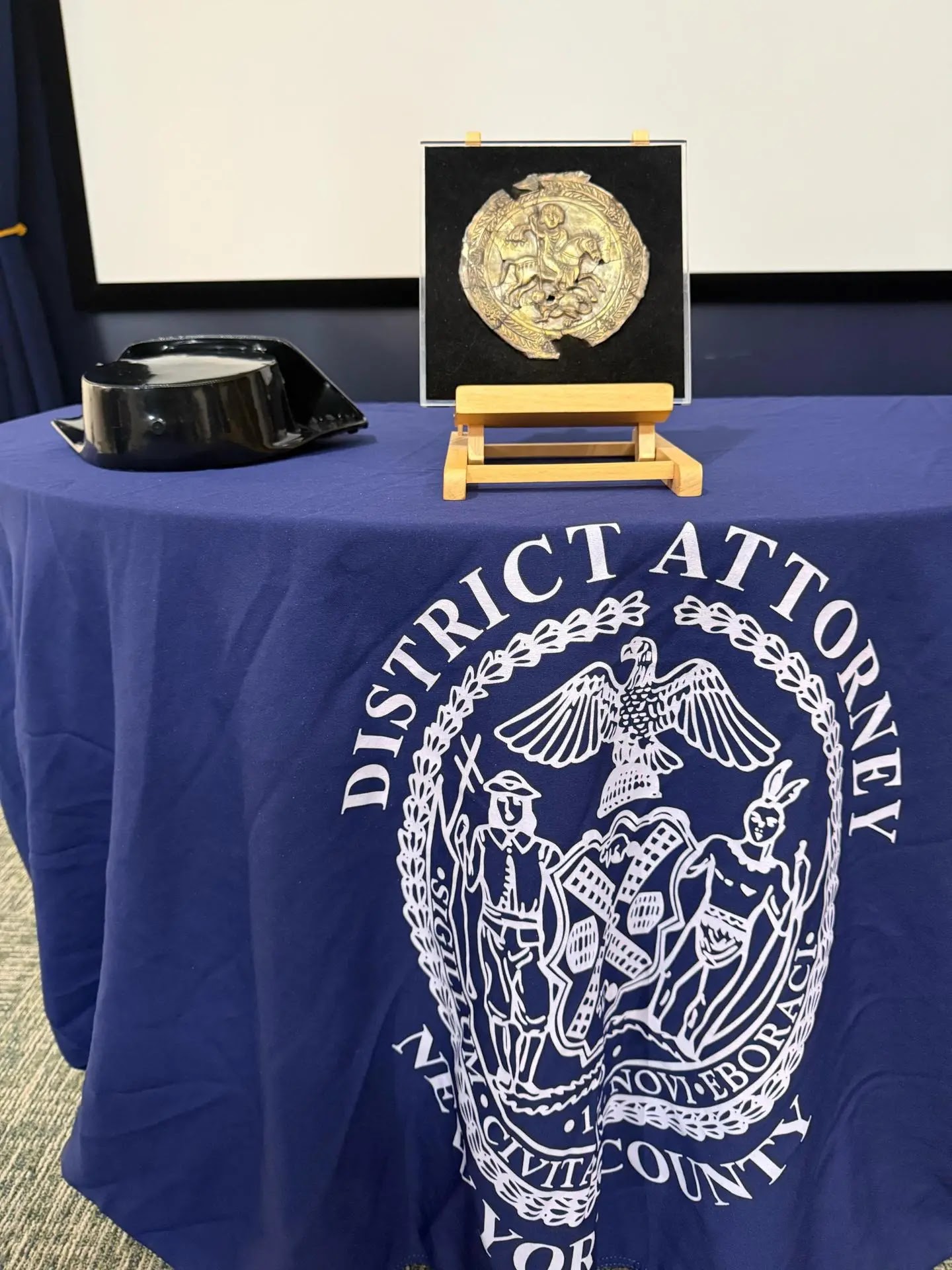
A Visigothic silver medallion, dating between the 5th and 7th century CE and depicting the Corinthian hero of Greek mythology Bellerophon on horseback, slaying a Chimera, has been formally returned to Spain, following an international investigation involving Spanish and U.S. authorities.

The artefact, measuring 13.7 centimeters in diameter, was discovered by a local metal detectorist in the municipality of Peraleda de la Mata, in Cáceres, Spain in 2007.  The individual who unearthed the piece initially reported the find to the regional government of Extremadura and even took a photograph of it still freshly covered in dirt.  However, soon after, the individual withdrew the medallion from the market, refused to cooperate with authorities, and its whereabouts became unknown.

What followed was a series of events that eventually resulted in the Spanish Civil Guard’s Central Operational Unit (UCO), U.S. Homeland Security Investigations (HSI) and the New York District Attorney's Office to formally lead to the object's recovery. 

Sometime after its disappearance, according to the New York District Attorney's Office, the medallion surfaced in the possession of the Barcelona-based antiquities dealer Félix Cervera Bea of Galería F. Cervera.   After that, it was smuggled out of Spain and purchased by Geneva's based Phoenix Ancient Art, where it was circulated publicly to international buyers. 

By 2010, the object was published, in a cleaned and restored state, in a Phoenix Ancient Art catalogue which listed the object with the following provenance: 

Ex Spanish Private Collection, collected ca. 1960, 

While vague provenance omitting a Barcelona dealer is not unusual in the art world, the date given for the purported Spanish collection ownership is completely incongruent to the one recorded with the authorities in the Spanish municipality.  Who, or what, if anything, was provided to Hicham and Ali Aboutaam to seemingly justify this false collection pedigree has not been publicly disclosed. 

By at least 2021,  the medallion had also been published to the Phoenix Ancient Art's website, where the dealers in question advertised an asking price of $210,000.   

The provenance on the webpage again did not match the discovery date of this piece in Spain, and instead stated:

Art market, prior to 1960;
Ex-Spanish private collection, collected ca. 1960

By 2022, the medallion had been featured in an academic article written by Cesáreo Pérez González and Eusebio Dohijo.  This article was published in the academic journal Oppidum, and reconfirmed that the unique Visigothic medallion was in the possession of the New York-Swiss ancient art dealers, and again noting that the artefact came from a private collection.  

The publication of this article came to the attention of the Dirección General de Bibliotecas, Archivos y Patrimonio Cultural of Extremadura who in turn alerted the Spanish Civil Guard’s UCO, a specialised division within the Guardia Civil responsible for the investigation and prosecution of the most serious forms of crime and organised crime.  The GC then reached out to US law enforcement.

When questioned as part of this case, Phoenix Ancient Art provided an invoice linking the silver medallion to the Catalan dealer, however, Spanish officials noted that no export permit had ever been requested or obtained for the object then being offered for purchase through the New York gallery.  Under Spanish law, artefacts removed from the country without a valid permit automatically become the property of the Spanish State. 

As a result of the following international investigation, involving the Spanish government, the Federal Bureau of Investigation (FBI), U.S. Homeland Security Investigations (HSI), the New York District Attorney's Office - Manhattan's Antiquities Trafficking Unit, and the Guardia Civil UCO Historical Heritage section, the owners of Phoenix Ancient Art agreed to voluntarily relinquish the artefact, indicating in doing so that they had purchased it as part of an "old collection of Spanish art."

On March 21, 2025, after 18 years, U.S. authorities officially handed over the long lost medallion to their Spanish counterparts, in a ceremony in New York.  On hand were Captain Juan José Águila, head of the Historical Heritage section of the UCO, Colonel Matthew Bogdanos, head of the Antiquities Trafficking Unit of the New York District Attorney’s Office, and Marta de Blas, Consul General of Spain in New York.

The successful repatriation of the Visigothic medallion marks another milestone in the ongoing efforts by Spanish and international authorities to combat the illicit trade of cultural artefacts and to return stolen heritage to its rightful place.  The case also serves as an example of just how long it takes for smuggled artefacts to be identified and that information relayed onward to the right authorities who can work towards restitution.  It also shows how an object's true origins can be obscured by vague provenance statements which give no hints to unweary buyers that the piece they are considering purchasing, may have left its country of origin in contravention of the national law. 

When looted artefacts like this one do resurface—whether in a gallery, auction house, or academic publication—identifying them requires the expertise of scholars, investigators, and cultural heritage officials.  Their recovery is therefore rarely straightforward, and often demands a coordinated effort between law enforcement agencies, government authorities, and vigilant researchers across multiple countries who are often the first to spot an illicitly exported piece in circulation. 

This case also underscores the immense challenge it takes to monitoring countless sales catalogues, websites, and scholarly publications in the search for artefacts that have been illegally removed, especially when their collection history has been falsified along the way. 

NB:  This article has been updated on 25 March 2025 with facts released in the official New York District Attorney's Office - Manhattan press release on this restitution. 

September 1, 2024

Phoenix Ancient Art: A Summer of Legal Entanglements and Tax Showdowns


ARCA summers are pretty busy as each year.  Since 2009, the Association has hosted its multi-course Postgraduate Certificate Program in Art Crime and Cultural heritage which often means posting new developments in the art and antiquities crime sphere slow while we turn our attention towards trainees.  Now that the 13th edition of this annual PG Cert has concluded, we can take time to reflect on some of the summer's more interesting art and antiquities stories, two which involve the ancient art gallery, Phoenix Ancient Art.

More pieces, More Accusations

Back on the 15th of May, Gotham City, a French-speaking Swiss news website that focuses on white-collar crime reported that Ali Aboutaam, the Geneva-based ancient art dealer was again in hot water with the public prosecutor's office.  Despite his previous conviction in January 2023, where he received an 18-month suspended prison sentence,  Ali Aboutaam is again the focus of a new Swiss investigation.

According to the Geneva public prosecutor's office, Ali is alleged to have possessed two suspect alabaster (brucite) statues, representing a man and a woman, while, according to Gotham's reporting, he “knew that these cultural properties had been illicitly acquired during illegal excavations in Yemen”.  Assessed by art historians, at least one of the small statues is believed to come from an area located in the southern Yemeni plateau known for the immense Himyarite Kingdom .  The area is home to a large necropolis, Shuka, which dates to the 1st-3rd centuries CE and has been the focus of looting in varying periods.

Dat-Hamin Stele
This is not the first time that Phoenix Ancient Art has handled suspect South Arabian artefacts from this war-torn country in the MENA Region.  In 2002, its New York affiliate consigned a third-century CE alabaster stele depicting the fertility goddess Dat-Hamin for auction at Sotheby’s New York.  In that instance, the gallery's owners, brothers Ali and Hicham Aboutaam, had told the auction house that the piece came from a private English collection.

In their research to prepare for their upcoming auction, Sotheby's staff discovered that the stele had been photographed and documented as a part of the Aden Museum's collection in Yemen.  The artefact had been looted in July 1994 during what is referred to as the Summer War, a civil war fought between the two Yemeni forces of the pro-union northern and the socialist separatist southern Yemeni states and their various supporters.  Relinquished by the dealers, U.S. Immigration and Customs Enforcement (ICE) ultimately seized the stele in September 2003, and the stela was officially signed over to the Yemeni ambassador in December 2004.

Following that civil war, Yemen implemented wider legal protections for its cultural heritage, although instability resulting from the present-day civil war continues to make enforcement difficult.  Law Number 21 of 1994 on Antiquities, as amended by Law Number 8 of 1997, is the primary law governing ancient sites and objects in the country.  

This law defines Yemen's “archaeological” materials; vests their ownership in the State, and controls their protection, conservation, restoration, and study.  It addresses aspects of ownership, permissions and obligations for archaeological work, introduces penalties for the illegal trade, and sets duties and guidelines on how to deal with discovered and excavated objects.  

As such, it will be interesting to evaluate what documents Phoenix possesses in support of their circulation of these two objects in Switzerland, which are presently of interest to that country's public prosecutor. 

Moving on to Taxes...

On 18 July 2024 Switzerland's Bundesgericht, the country's Federal Supreme Court in Lucerne issued several ruling impacting Ali Aboutaam.  Judgments 9C_107, 9C_184, 9C_187 and 203/2023 of 18 July 2024, issued by Federal Judges Thomas Stadelmann as the Presiding Judge, along with Judges Margit Moser-Szeless and Michael Beusch, rejected a series of complex appeals, made through the art dealer's attorneys, concerning outstanding tax assessments in relation to the importation of a group of antiquities, some housed outside the gallery and outside the Ports Francs et Entrepôts de Genève. 

In rejecting Aboutaam's appeals, the higher court's final rulings reaffirms that the Swiss-based brother has to pay approximately 3.5 million Swiss francs ($4,125,444.82) in outstanding value-added tax (VAT), as assessed by the Bundesamt für Zoll und Grenzsicherheit (Federal Customs Administration) and largely affirmed by the Federal Administrative Court.  Ali was also ordered to pay late interest payments totalling approximately 900,000 Swiss francs (another $1,060,995.36).

In November 2021, Aboutaam had originally handed a SFr 1.6m fine via Swiss customs, including the costs of the proceedings.  The tax authorities came after the antiquities dealer in that instance after Phoenix Ancient Art imported 37 million Swiss francs worth of antiquities into Switzerland between 2010 and 2017, but without paying the applicable VAT. 

The high court's judges based July's decions on various elements confirmed within the Aboutaam's case files.  First, they noted that some of the artefacts had been stored and displayed within Ali Aboutaam's private home for an average period of between the end of 2012 and 28 February 2017, the date that his home was searched pursuant to two search and seizure orders, one issued by the Geneva Prosecutor and one issued by the Federal Customs Administration of the Swiss Confederation.  That search occurred in relation to a Swiss investigation into the movements of antiquities of suspicious provenance, or chain of title, or for being imported and exported potentially in violation of Swiss law governing cultural property.  

In issuing their taxation decisions, the Swiss high court recalled "that according to art. 30 para. 1 of the Federal Ordinance of 1 November 2006 on customs (OD; RS 631.01; cf.nature. 9 al. 1 and 2 LD), goods for temporary admission into the customs territory are admitted duty-free if they are the property of a person having his registered office or domicile outside the customs territory and if they are used by such a person (let. a), if they can be identified with certainty (let. b), if the admission lasts for a maximum of two years (let. c) and if they are re-exported in the same state, the use is not deemed to be a change (let. d). The procedure for temporary admission is provided for in Articles 162 to 164 OD." 

In rejecting Aboutaams tax-related appeals, the ruling judges and the court affirmed that the Swiss-based dealer had misused the relocation procedure, which allows goods intended for resale abroad to be exempt from import tax, by instead keeping some of these items for personal use.


Dib is the business partner of Hamburg-based dealer of Egyptian art Serop Simonian who was later arrested in Hamburg by German police on suspicion of art trafficking in August 2020 and released after only five weeks behind bars.  Subject to a European Arrest Warrant, Dib was then taken into custody by French authorities on 22 March 2022.   Likewise his business partner Serop, having surrendered in Germany, was extradited to France, where he too has been indicted on 15 September 2023 on charges of fraud and organised gang money laundering as well as for criminal association. 

Fairs, Retirement, Coins, and Wine

Despite these woes, over the summer Phoenix Ancient Art participated in the UK's annual Treasure House fair from 27 June 2024 through 2 July 2024.  When interviewed, Hicham Aboutaam, says that his brother retired two years ago from Phoenix Anicent Art S.A., “to focus on the establishment of a foundation”.  Michael Hedqvist, is now listed as MD/Chief Operating Officer (directeur) of the Swiss gallery.  Ali's own website, aliaboutaam.com, now has a page which states that the Geneva dealer is "Currently developing a collection of ancient Greek and Roman coins and rare wines. Reach out if that sounds interesting to you."   

From the 13,408 likes on the Instagram post at the top of this blog post, it doesn't seem like his social followers are overly perturbed by his legal entanglements. 

By:  Lynda Albertson

October 14, 2023

Exploring Michael Ward and some peppered-about, possibly-problematic, pieces which might have provenance problems

While there are numerous artefacts which passed through Michael L. Ward's variously named galleries which may be worth further exploration,  here is a growing list of classical world artefacts ARCA has documented (so far) as perhaps needing a closer review by their various holders.   There may be others, and we will add what we find to this posting but these are the art and artefacts we have documented so far with readily available digital footprints.  
Some have been restituted. Others, identified at the Metropolitan Museum of Art, the J. Paul Getty Museum, the Michael C. Carlos Museum, the Dallas Museum of Art, the Johnson Museum of Art, at Cornell University, the Museum of Fine Art's - Boston, the Princeton University Art Museum, the Brooklyn Museum, the Walters Art Museum and the British Museum should probably be given a closer inspection and provenance review. 

Note that this dealer also sold African and Tribal Art which is not documented within this first round-up. 

7 January 1964
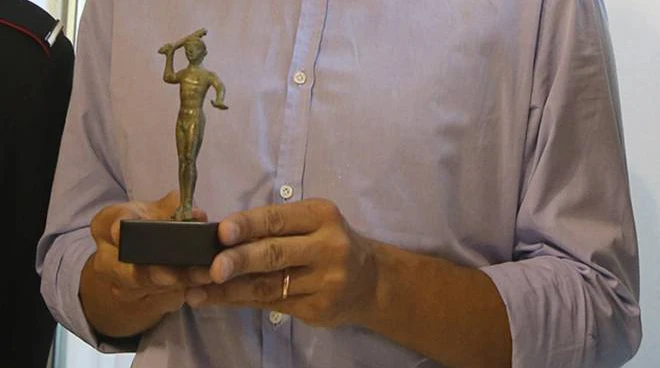
A gang of thieves, break into the Museo archeologico Oliveriano di Pesaro and make off with multiple objects, one of which is this Etruscan statuette of Hercules from the 6th to the 5th century BCE. 

19 December 1979
David Meadows identified this 300 BCE Thracian round Silver Plaque is purchased by the Museum of Fine Arts - Boston and is given Object Number: 1979.620

The provenance is listed as:
1979, sold by Michael L. Ward (dealer), Brooklyn Heights, NY to the MFA. 

19 December 1979
David Meadows identified this 300 BCE Thracian round Silver Plaque is purchased by the Museum of Fine Arts - Boston and is given Object Number: 1979.621

The provenance is listed as:
1979, sold by Michael L. Ward (dealer), Brooklyn Heights, NY to the MFA. 

1981
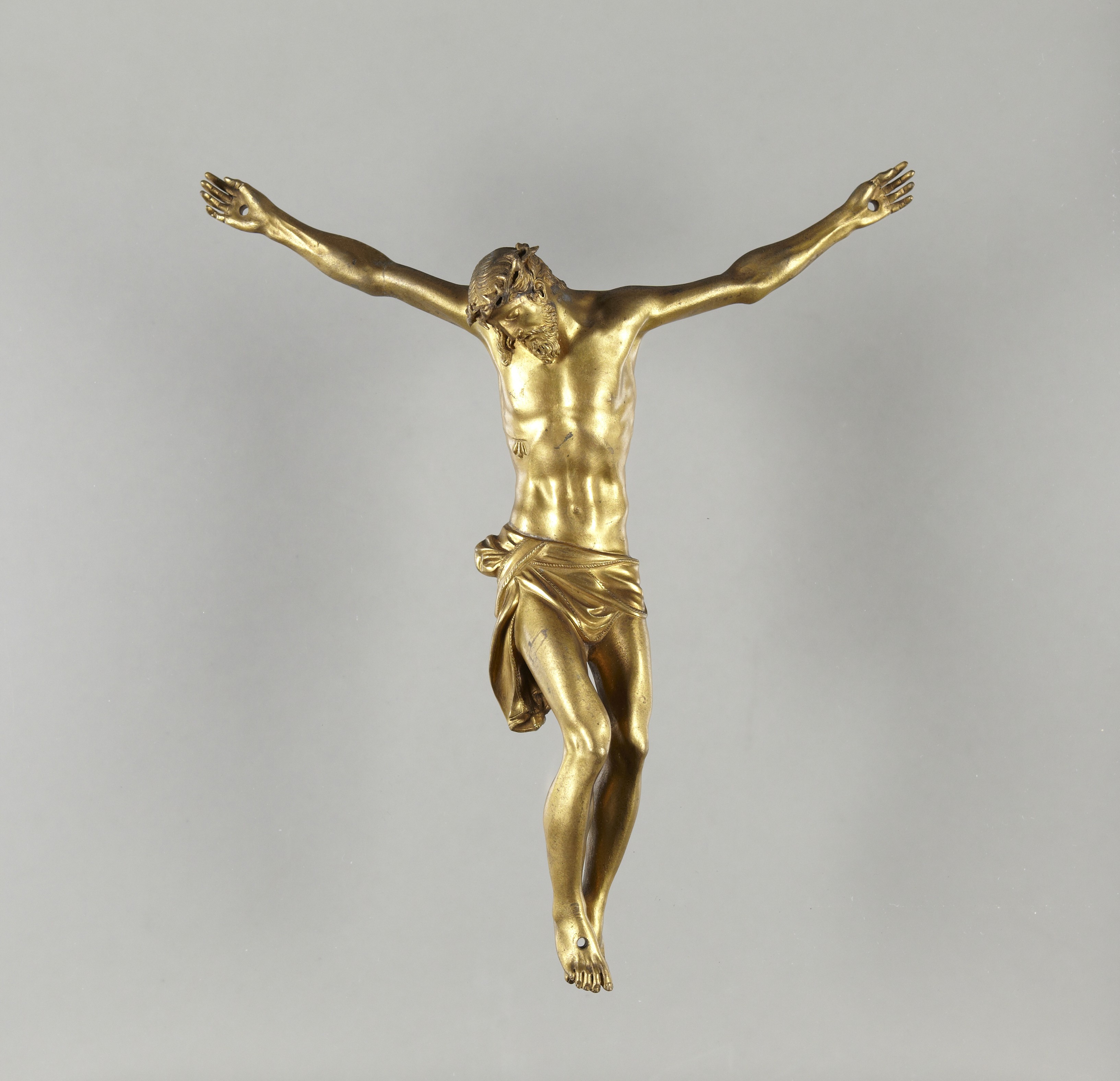
This c. 1600 CE Corpus for Crucifix from the studio of Antonio Susini, after Giambologna is gifted to the Princeton University Art Museum and is given Object Number: y1981.42

The provenance is listed as:
Michael Ward, New York; purchase by Henry Berg; 1981 gift to Princeton University Art Museum.
                                                                         
1986 
Michael Ward sells a silver applique head of a satyr, a half-human companion of Dionysos to Lawrence and Barbara Fleischman in 1986 which is later donated to the J. Paul Getty Museum in 1996 and given Object Number: 96.AM.157.

No provenance history, prior to the Michael Ward 1986 sale, is listed for this artefact within the Getty Museum's digital accession record for this object. 

1987
Dr. David Gill identified this ca. 200–150 BCE South Italian, Campanian Fragment of a lamp-filler in the form of a comic actor's mask sold by Michael Ward to the Princeton University Art Museum and given Object Number: y1987-69

No provenance details prior to Michael Ward are listed for this artefact within the Princeton University Art Museum's digital accession record for this object. 

1987
Michael Ward sells a silver 4th century BCE Greek Bowl to Lawrence and Barbara Fleischman in 1987 which is later donated to the J. Paul Getty Museum in 1996 and given Object Number: 96.AM.89.1.

No provenance history, prior to the Michael Ward 1987 sale, is listed for this artefact within the Getty Museum's digital accession record for this object. 

1987

Michael Ward sells a silver 4th century BCE Oinochoe to Lawrence and Barbara Fleischman in 1987 which is later donated to the J. Paul Getty Museum in 1996 and given Object Number: 96.AM.89.2.

No provenance history, prior to the Michael Ward 1987 sale, is listed for this artefact within the Getty Museum's digital accession record for this object. 

1987
Michael Ward sells a silver 4th century BCE Ladle to Lawrence and Barbara Fleischman in 1987 which is later donated to the J. Paul Getty Museum in 1996 and given Object Number: 96.AM.89.3.

No provenance history, prior to the Michael Ward 1987 sale, is listed for this artefact within the Getty Museum's digital accession record for this object. 

1987
Michael Ward sells a silver 4th century BCE strainer to Lawrence and Barbara Fleischman in 1987 which is later donated to the J. Paul Getty Museum in 1996 and given Object Number: 96.AM.89.4.

No provenance history, prior to the Michael Ward 1987 sale, is listed for this artefact within the Getty Museum's digital accession record for this object. 

1987
Michael Ward sells a 150-250 CE Roman Statuette of the Lar/Genius of Aurelius Valerius and Base to Lawrence and Barbara Fleischman in 1987 which is later donated to the J. Paul Getty Museum in 1996 and given Object Number: 96.AB.200.

No provenance history, prior to the Michael Ward 1987 sale, is listed for this artefact within the Getty Museum's digital accession record for this object. 

1987
Michael Ward sells a 3rd century CE Roman gold with amethyst necklace to Lawrence and Barbara Fleischman in 1987 which is later donated to the J. Paul Getty Museum in 1996 and given Object Number: 96.AM.208.

No provenance history, prior to the Michael Ward 1987 sale, is listed for this artefact within the Getty Museum's digital accession record for this object. 

1988
Michael Ward sells a 480 to 460 BCE Statuette of a Satyr to the J. Paul Getty Museum which is given Object Number: 88.AB.72

No provenance history, prior to the Michael Ward 1988 sale, is listed for this artefact within the Getty Museum's digital accession record for this object.

1989
Dr. David Gill identified this 5th century bronze Steelyard Weight sold to the Walters Art Museum and given Object Number: y1987-69


The provenance is listed as:
Michael Ward, New York, ca. 1977, by purchase; L. Alexander Wolfe, Jerusalem [date of acquisition unknown], by purchase; Sale, Frank Sternberg, Zurich, November 20, 1989, no. 423; Walters Art Museum, 1989, by purchase.

1989
This 5th century BCE Greco-Persian Intaglio seal with Artemis and deer, is purchased by the Princeton University Art Museum from Michael Ward and is given Object Number: y1989-72

The provenance is listed as:
Michael Ward, New York

1989
This 5th century BCE Greek plain black Attic Mastos cup, is purchased by the Princeton University Art Museum from Michael Ward and is given Object Number: y1989-72

The provenance is listed as:
Michael Ward, New York

1989
Dr. David Gill identified this 1st century BCE –1st century CE Lead-glazed cup with relief decoration purchased by the Princeton University Art Museum and given Object Number: y1989-73

The provenance is listed as:
Michael Ward, New York

1989
This Late 2nd century CE Roman, British or Gallo-Belgic Parisian ware beaker is purchased by the Princeton University Art Museum and is given Object Number: y1989-74

The provenance is listed as:
Michael Ward, New York

1989
This 2nd century CE Roman Balsamarium in the form of three conjoined heads is purchased by the Princeton University Art Museum and is given Object Number: y1989-75

The provenance is listed as:
Said to have been found in Sirmium, Yugoslavia; Purchased from Michael Ward, New York.

1989
Michael Ward sells a Greek bronze 500 BCE Handle of a Vessel to Lawrence and Barbara Fleischman in 1989 which is later donated to the J. Paul Getty Museum in 1996 and given Object Number: 96.AC.79.

No provenance history, prior to the Michael Ward 1989 sale, is listed for this artefact within the Getty Museum's digital accession record for this object. 

1989
Michael Ward sells a Greek-South Italian bronze 550 BCE Side Handle of a Hydria previously with Mathias Komor to Lawrence and Barbara Fleischman in 1989 which is later donated to the J. Paul Getty Museum in 1996 and given Object Number: 96.AC.107.

No provenance history, prior to the Michael Ward 1989 sale, is listed for this artefact within the Getty Museum's digital accession record for this object. 

1990
Michael Ward sells three Greek 550–525 BCE bronze statuettes of Banqueters to Lawrence and Barbara Fleischman in 1990 which are later donated to the J. Paul Getty Museum in 1996 and given Object Number: 96.AC.77.

No provenance history, prior to the Michael Ward 1990 sale, is listed for this artefact within the Getty Museum's digital accession record for this object. 

1990
Michael Ward sells a Greek 550 BCE bronze Statuette of a Rider to Lawrence and Barbara Fleischman in 1990 which is later donated to the J. Paul Getty Museum in 1996 and given  Object Number: 96.AB.45.

No provenance history, prior to the Michael Ward 1987 sale, is listed for this artefact within the Getty Museum's digital accession record for this object. 

1991
Michael Ward sold a late 4th-3rd Century BCE Gold Olive Wreath to the Michael C Carlos Museum.  Object Number 1991.014

The provenance is listed as:
Ex private collection, Europe, assembled prior to early 1980s. European art market. Ex private collection, London, England, from ca. 1984-1985. Purchased by Emory University Museum of Art and Archaeology from Michael Ward [Ward & Company, Works of Art, Inc.], New York, New York.

1992
Michael Ward sells a 325 BCE Greek Side Panel of a Grave Naiskos with the Relief of a Young Hunter to Lawrence and Barbara Fleischman in 1992 which is later donated to the J. Paul Getty Museum in 1996 Object Number: 96.AA.248.

No provenance history, prior to the Michael Ward 1992 sale, is listed for this artefact within the Getty Museum's digital accession record for this object. 

1992
Michael Ward contacts the Greek Culture Ministry and shares photographs and measurements of a grouping of golden Mycenaean jewellery from the 15th century BCE, hereinafter referred to as the Aidonia Treasure, which he was considering before purchase in Early 1992.  When placed on the market a length battle begins when it is determined that these pieces were plundered in 1978 from a Mycenaean cemetery at Aidonia, near Nemea, in southern Greece.  The parties eventually settle out of court.

The objects include necklaces with lilies, large cusped rosettes from a belt, decorated gold rings, sealstones, beads, and other stylized jewellery and ornaments totalling about 50 pieces

1992
This late 2nd century CE Roman Bronze Balsamarium in the form of a hunchback, adapted for use as a steelyard weight, is purchased by the Princeton University Art Museum from Michael Ward and is given Object Number: y1992-6

The provenance is listed as:
Purchased from Michael Ward, New York, in 1992.

1992
This 712-305 Bronze Egyptian Woman with Barrel-Shaped Drum is gifted by Michael Ward to the Brooklyn Museum and is given Object Number: 1992.169

No provenance details are listed for this artefact within the Brooklyn Museum's digital accession record for this object. 

1993
Dr. David Gill identified this c. 1500 BCE Large Romania, possibly Cirna, Middle Bronze Age earthenware Bowl, donated by Michael Ward in honour of Evan H. Turner to the Cleveland Museum of Art.  Accession No. 1993.229 

No provenance details are listed for this artefact within the Clevelend Museum of Art's digital accession record for this object. 

1993
Michael Ward donates a Greek Corinthian mid 6th century BCE Couchant lion to the Princeton University Art Museum. 
Object No: y1993-42

No provenance details are listed for this artefact within the Princeton University Art Museum's digital accession record for this object. 

Mid to Late 1990s

Lot 3: 'a Greek silver-gilt repoussé plaque'. 'circa 540-525 BCE'. 'With winged Nike in a frontal chariot with facing quadriga, each pair of horses with heads turned to opposing sides, with finely incised details, bound lotus filling motifs, pierced around the edge for attachment, from an arm-guard'. 6.8 cm high. Unsold.

Lot 5: 'a Greek bronze goat'. 'circa 5405 BCE'. 'From a vessel lid or rim, the goat recumbent with head turned to the right, with short pointed beard and upturned tail, finely incised details, the underside with lead infill, horns partially missing'. 7.6 cm high. Sold for 9,000 GBP.

Lot 14: 'A Geometric Greek Bronze Seated Male Figure'. 'circa 750-700 BCE'. 'Seated on a stool with elbows resting on his knees and left hand to chin, with long instrument in right hand, finely detailed with striated fringe of hair at back of head and eyes rendered with depressed circles, on integral square seal base with four triangular divisions on underside, on wood mount'. 63 cm high. Sold for 28,800 GBP.

Lot 18: 'Three Laconian bronze helmeted warriors'. '6th century BCE'. 'Each animated nude standing figure standing with right arm outstretched to the side and left arm raised, with fists clenched, wearing tall crested helmet'. 6.4 cm high (max). Sold for 30,000 GBP.
 
1995  
Betsy Alley identified this 2nd century Roman Empire Lynx Head gifted to Cornell University in 1994 and given Accession No. 95.030

The provenance is listed as:
Michael L. Ward, Inc., New York, NY; before 1994, David B. Simpson; 1995, collect(…)
     
1996
Dr. David Gill identified this c. 1200 CE Cauldron Ornament donated by Michael Ward in honour of Arielle P. Kozloff  to the Cleveland Museum of Art.  Accession No. 1996.312 

There is no provenance listed for this artefact. 

1996
David Meadows identified a pair of late 2nd–early 3rd century CE Roman earrings at the Dallas Museum of Art purchased via a museum credit line along with a gift of Stark and Michael Ward in honor of Virginia Nick and Anne Bromberg.  The pair are given Object Numbers: 1996.35.A-B

There is no provenance listed for this jewellery grouping. 

1997
Dr. David Gill identified this 2nd–1st century BCE Hellenistic Red Slip Bowl gifted by Lawrence A. and Barbara Fleischman in honour of Michael Padgett to the Princeton University Art Museum and given Object Number: 1997-1

The provenance is listed as:
Owned by a succession of dealers (C. Ede, H. Humbel, B. Aitken, M. Ward) before acquired by Fleischman; given to the Museum in 1997

1997
This early Byzantine vertical dial was purchased by the British Museum from Ward & Company Works of Art and assigned the Object No: 1997,0303.1

The provenance is listed as: 
Previous owner/ex-collection: Kummer
 
1997
The Judy and Michael Steinhardt Foundation donates a 12th century Byzantine Disk, possibly a pilgrimage token to the Princeton University Art Museum. Object No: 1997-34

The provenance is listed as: 
Museum purchase in 1997 from Ward & Company, Works of Art, Inc., gift of the Judy and Michael Steinhardt Foundation

October 1997
Michael Ward reports in the New York Times that he nearly sold out his booth to new customers, American and European at the International Fine Art and Antique Dealers Show.  Three of the objects mentioned at his booth are a mosaic sold to a museum, a fifth-century BCE Greek marble grave stele for $650,000 that depicts a man walking with a staff, and a $125,000 circa 800 BCE Egyptian bronze of Osiris. 

1998
This 8-9th century CE bronze finger Ring is gifted to the Princeton University Art Museum and is given Object Number: 1998-336

The provenance is listed as:
Geber, Budapest. Michael Ward, NY; purchase by John B. Elliott; bequest to Princeton University Art Museum.

1998
This 9-10th century CE Anglo Saxon bronze Applique in the form of a lion is purchased by the Princeton University Art Museum from Michael Ward and is given Object Number: 1998-343

The provenance is listed as:
Michael Ward, New York; purchase by John B. Elliott; bequest to Princeton University Art Museum

1998
This 8-9th century CE Avar culture pair of Strap ends is gifted to the Princeton University Art Museum and is given Object Number: 1998-360a and b

The provenance is listed as:
Geber, Budapest. Michael Ward, NY; purchased by John B. Elliott; 1998 bequest to Princeton University Art Museum.

1998
This 8-9th century CE Avar culture pair of Strap ends is gifted to the Princeton University Art Museum and is given Object Number: 1998-361a and b

The provenance is listed as:
Geber, Budapest. Michael Ward, NY; purchased by John B. Elliott; 1998 bequest to Princeton University Art Museum.

1998
This 8-9th century CE Avar culture pair of Strap ends is gifted to the Princeton University Art Museum and is given Object Number: 1998-362a and b

The provenance is listed as:
Geber, Budapest. Michael Ward, NY; purchased by John B. Elliott; 1998 bequest to Princeton University Art Museum.

1998
This 8-9th century CE Avar culture Strap end is gifted to the Princeton University Art Museum and is given Object Number: 1998-363

The provenance is listed as:
Geber, Budapest. Michael Ward, NY; purchased by John B. Elliott; 1998 bequest to Princeton University Art Museum.

1998
This 8-9th century CE Avar culture Strap end is gifted to the Princeton University Art Museum and is given Object Number: 1998-364

The provenance is listed as:
Geber, Budapest. Michael Ward, NY; purchased by John B. Elliott; 1998 bequest to Princeton University Art Museum.

1998
This 8-9th century CE Avar culture Strap end is gifted to the Princeton University Art Museum and is given Object Number: 1998-365

The provenance is listed as:
Geber, Budapest. Michael Ward, NY; purchased by John B. Elliott; 1998 bequest to Princeton University Art Museum.

1998
This 19-20th century CE brass Ekonda anklet is gifted to the Princeton University Art Museum and is given Object Number: 1998-640

The provenance is listed as:
[Michael Ward, Inc., New York, NY]; John B. Elliott, New York, NY by 1989; Princeton University Art Museum, 1998

1998
This 12-17th century CE Djenné copper bracelet is gifted to the Princeton University Art Museum and is given Object Number: 1998-643

The provenance is listed as:
[Michael Ward, Inc., New York, NY]; John B. Elliott, New York, NY by 1989; Princeton University Art Museum, 1998

1999 through 2022
According to the Michael L. Ward Criminal Complaint, from 1999 through 2022, Eugene Alexander had a money laundering scheme in which he sold looted antiquities to European and American collectors.  

In an open source  6 September 2023 stipulation Michael Ward affirmed that he would plead guilty to Criminal Facilitation in the Fourth Degree (N.Y. Penal Law §115.00[1]), a class A misdemeanor, and as part of his plea agreement he voluntarily agreed to surrender (40) additional antiquities, or others that he or DANY identified in his possession that were sold, consigned, or previously possessed by Eugene Alexander; and that he will cooperate truthfully and fully with DANY and, if requested by DANY and with DANY's coordination, he will assist Italy and Germany in their investigation and prosecution of Eugene Alexander.

In return, the Manhattan authorities affirmed:
    • they will not pursue any additional charges or arrests of Michael Ward for any crimes arising from his antiquities dealings or business transactions with Eugene Alexander;
    • that Michael Ward will not be prosecuted in Italy for any crimes arising from his antiquities dealings or business transactions with Eugene Alexander; 
    • that no evidence developed by DANY or provided by Michael Ward to DANY will be used for any prosecution in Germany or any other country; 
    • and that, although Michael Ward's antiquities dealing and business transactions with Eugene Alexander will be described in any charging documents of Eugene Alexander, Michael Ward will not be named as a co-conspirator.
1999
Michael Ward sold a ca. 480-470 BCE Red-Figure Calyx Krater with Apollo and Artemis Offering Libations to the Michael C Carlos Museum.  Object Number 1999.011.002

The provenance is listed as:
Ex coll. Jonathan Kagan, New York, New York. Ex coll. Damon Mezzacappa (ca. 1936-2015), New York, New York. Purchased by MCCM from Michael Ward [Ward & Company, Works of Art, Inc.], New York, New York.

1999
Michael Ward sells a 4th century BCE Votive Relief with Banquet Scene to the Michael C Carlos Museum. Object Number 1999.011.003

The provenance is listed as:
With Michael Ward [Ward & Company, Works of Art, Inc.], New York, New York, from ca. 1996. Purchased by MCCM from Ward.

1999
Michael Ward sells a 1-2nd century CE Roman Statue of Mercury to the Michael C Carlos Museum. Object Number 1999.011.005

The provenance is listed as:
Ex coll. Tempelberg Foundation, Vaduz, Liechtenstein. Purchased by MCCM from Michael Ward [Ward & Company, Works of Art, Inc.], New York, New York.

2000
Michael Ward sold a 440-430 BCE Chous with Maenad and Baby Satyr to the Michael C Carlos Museum.  Object Number 2000.001.001

The provenance is listed as:
With Galerie Blondeel-Deroyan, Paris, France, November 1999. Purchased by MCCM from Michael Ward [Ward & Company, Works of Art, Inc.], New York, New York.

2000
Michael Ward sells a 6th century BCE Votive Statuette of an Enthroned Athena to the Michael C Carlos Museum. Object Number 2000.006.003.

The provenance is listed as:
Purchased by MCCM from Michael Ward [Ward & Company, Works of Art, Inc.], New York, New York.

2000
Michael Ward sells one diadem, two 1200 - 800 CCE Bronze brooches with Spirals,  and one axe blade pendant to the Metropolitan Museum of Art. 

Accession Number: 2000.281.1 lists the provenance as:
Ward & Company Works of Art (American), New York (sold 2000)

Accession Number: 2000.281.2 lists the provenance as:
Charles Ede Limited Antiquities, London (1999)]; [ Ward & Company Works of Art (American), New York (sold 2000).

Accession Number: 2000.281.3  lists the provenance as:
Ward & Company Works of Art (American), New York (sold 1989)

Accession Number: 2000.281.4  lists the provenance as:
Ward & Company Works of Art (American), New York (sold 2000)

1 January 2000
The Art Newspaper published an ancient art market survey with dealers responses to the question of how many clients do you have who spend more than $50,000 per artefact.

Michael Ward replied that he has seen his client base in this price range and higher as doubling in number over the past five years. He counts forty clients in this price bracket.

2001
Michael Ward gifts an 8th century BCE Bird Pendant to the Michael C Carlos Museum. Object Number 2001.029.002.

The provenance is listed as: 
With Michael Ward [Ward & Company, Works of Art, Inc.], New York, New York, from at least August 1997.

2001
Michael Ward gifts a 7th Century BCE Male Orant to the Michael C Carlos Museum. Object Number 2001.029.001.

The provenance is listed as:
With Michael Ward [Ward & Company, Works of Art, Inc.], New York, New York, from at least May 1999.
2002
This 530 BCE Greek Hoof, possibly from a centaur statuette is gifted by Michael Ward to the Princeton University Art Museum from Michael Ward and is given Object Number: 2002.283

No provenance details are listed for this artefact within the Princeton University Art Museum's digital accession record for this object. 

2002
This 7th century BCE Greek Double-sided seal with centaur and two men is purchased by the Princeton University Art Museum from Michael Ward and is given Object Number: 2002.284

The provenance is listed as:
Purchased from Michael Ward, NY, in 2002.

2002
Dietrich von Bothmer gifts a 480 BCE Red-Figure Amphora Neck Fragment with a Fight to the Michael C Carlos Museum. Object Number 2002.043.026.

The provenance is listed as:
With Michael Ward [Ward & Company, Works of Art, Inc.], New York, New York, from at least May 1999.

2003
Michael Ward sells a 350 to 325 BCE Seated Figure From a Grave Naiskos to the Michael C Carlos Museum. Object Number 2003.005.001

The provenance is listed as: 
With Gianfranco Becchina, Basel Switzerland. Purchased by MCCM from Michael Ward [Ward & Company, Fine Art, Inc.], New York, New York.

2003
Michael Ward gifts a 3200-2700 BCE early Cycladic Faceted Core to the Michael C Carlos Museum. Object Number 2003.025.001

The provenance is listed as: 
Ex coll. K.John Hewett (1919-1994), England. Ex coll. Peter Sharrer, New Jersey, acquired from Hewett, London, England, by 1989. Loaned to San Antonio Museum of Art, San Antonio, Texas (L.89.1.15). Gifted to MCCM by Michael Ward [Ward & Company, Works of Art, Inc.], New York, New York.

10 December 2004
A late first century BCE Roman parcel gilt silver Skyphos decorated with a Nilotic scene, some areas raised in relief, with one side centered by a grotesque man teasing a crocodile is consigned to Christie's and sells for $623,500. 

The provenance is listed as:
London Art Market, mid 1990s.
with Ward & Company Works of Art, New York, 2000.

2005
Michael and Stark Ward gift a Greek 6th Century BCE bronze Bronze handle of a patera (shallow basin) in the form of a youth to the Metropolitan Museum of Art. Accession Number: 2005.457.

No provenance details are listed for this artefact within the Metropolitan Museum of Art's digital accession record for this object. 

2005
Dr. David Gill identified this mid–4th century BCE Black-glazed calyx-cup gifted to  the Princeton University Art Museum and given Object Number: 2005-113

The provenance is listed as:
Acquired by Andrés Mata at Christie's, New York, December 10, 2004, lot 485. The consignor was Ward & Company, New York, which had acquired it from James Ede, London, who in turn had purchased it from Michael Petropoulos, Zürich, on November 13, 1999; given to the Museum in 2005

2005
Michael Ward sells a 1st century CE Roman Head of Nike to the Michael C Carlos Museum. Object Number 2005.083.001

The provenance is listed as:
Ex coll. Michael Ward [Ward & Company, Works of Art, LLC], New York, New York, purchased July 1999.


2005 
According to the Michael Steinhardt Statement of Facts document, Michael Ward sold a red-figure calyx krater, dated to the fourth century BCE to the Dallas Museum of Art stating that the vase had come from a “Swiss private collection”—the vase had actually been looted by Becchina and smuggled to Becchina’s gallery in Basel.


2007
Michael Ward sells a 2305-2152 BCE Egyptian Relief of a Funerary Ceremony to the Michael C Carlos Museum. Object Number 2007.009.001

The provenance is listed as: 
Ex coll. Dr. Henry R. Hope (1905-1989), United States, acquired 1950s. Thence by descent. Purchased by MCCM from Michael Ward [Ward & Company, Works of Art, LLC], New York, New York.

By March 2010
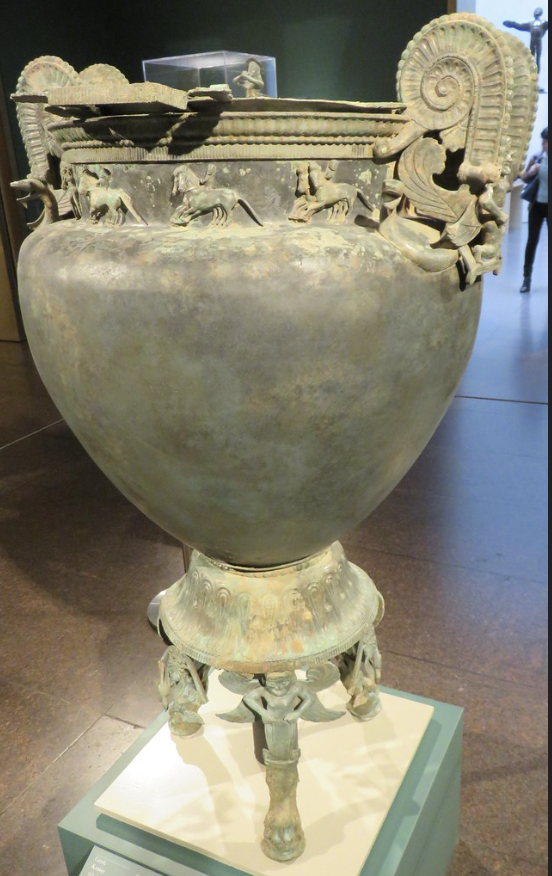
The Krater of Koreshnica, photographed here on Flickr in 20016 was loaned to the Museum of Fine Arts, Houston in 2010 by an anonymous lender.  This artefact  is believed to have been looted on/around 1996 from a 6th century BCE Macedonian burial chamber near the village of Koreshnica, in the southern part of the Republic of Macedonia.   


2012
The stolen Etruscan statuette of Hercules stolen from the Oliveriano Archaeological Museum in Pesaro is identified by experts in Italy when the object comes up for sale with Ward & Company.  It was restituted to Italy on 24 February 2015 during a ceremony in the federal prosecutor's office in Manhattan.

17 December 2013
According to the Edoardo Almagià sentencing document, the convicted dealer sold Michael Ward the following artefacts:
a. A black figure kylix;
b. A marble lion mask;
c. A  marble sculpture depicting a draped woman; 
d. A terracotta mask;
e. A torso of Aphrodite;
f. A romanesque capital;
g. A cameo female bust in marble;
h. A Roman marble urn;
i. A python crater from  Paestum  + 2 bronze vases;
j. A black figure olpe and marble torso;
k. 2 Attic craters, a hydria and abell crater.

Between 2015 and 2019
Michael Ward obtained more than 100 antiquities from Eugene Alexander between 2015 and 2019, 80 of which, according to the Michael L. Ward indictment, were clearly looted.

2016
Dr. David Gill identified this silver and gold late 5th – early 4th century BCE Greek Phiale with Thetis and the Armour of Achilles in a Phoenix Ancient Art 2016 catalogue for Spring Masters NYC. NB: Most gold-figured silver vessels have been found in Macedonian and Thracian tombs.

The provenance is listed as:
Ex- European private collection, early 1980s; Ward and Co., New York, USA, 1990 or prior; Ex- US pri- vate collection, New York, acquired in 1990.

2016
Michael Ward sells a 480 BCE Red-Figure Pelike with Two Youths in Conversation to the Michael C Carlos Museum. Object Number 2015.005.001

The provenance is listed as:
Ex coll. Vicomte du Dresnay, France, acquired before 1970. Purchased by MCCM from Michael Ward [Ward & Company, Works of Art, LLC], New York, New York.

10 November 2022
Four 4th Century B.C.Thracian Gilt-Silver Double Eagle Plaques are auctioned at Hindman in Chicago.  The artefacts sold for just $500.

The provenance is listed as: Michael Ward Gallery, New York, prior to 1992. Lewis B. Cullman, acquired from the above in 1992.

18 October 2023
And with just 4 days until bidding opens on Sotheby's online sale of The Edith & Stuart Cary Welch Collection, I will finish my round-up with this late 5th/ early 6th century Byzantine spoon, again with only Ward and Co provenance.  

 So as ARCA always says with problematic dealers, Buyers Beware. 

By: Lynda Albertson