Blog Subscription via Follow.it

Showing posts sorted by relevance for query laughing boys. Sort by date Show all posts

August 28, 2020

When a work of art is particularly popular among thieves. "Two Laughing Boys" has been stolen three times.

On 26 August 2020 the beautiful Hofje van Mevrouw van Aerden Museum in Leerdam, which houses a unique collection of 17th-century paintings, was struck by thieves.  As if three times is the charm, for the third time in a span of thirty-five years, an enterprising thief made his way into the Dutch museum and made off with the same painting.

The culprit(s) entered the museum by forcing open the back door of the museum at around half past 3 in the morning.  This, in turn, triggered the site's security system which automatically notified the local police authorities.  Unfortunately, by the time the dispatched officers arrived on the scene, the art thief was long gone. 

After a sweep of the Hofje van Mevrouw van Aerden with the museum's manager, it was determined that the 1626 painting "Two Laughing Boys" by Dutch Golden Age master Frans Hals was the only work of art taken...again. 

Stolen the first time in 1988 and recovered in 1991.  The Frans Hals artwork depicts two boys, one of whom is glancing longingly into his beer-mug.  The painting was then filched for a second time on 27 April 2011 and recovered on 28 October 2011 after the group of accomplices tried to sell it.  

This week's third theft occurred strategically on the anniversary of the artist's death and makes it the second painting stolen from a Dutch museum this year.  The first being Van Gogh's "Parsonage Garden at Nuenen in Spring" taken from the Singer Laren Museum on Vincent's birthday.

Dutch police are looking for witnesses to the break-in. If you or someone you know has seen or heard anything please contact the police on 0900-8844 or their anonymous tipline at 0800-7000 (free of charge).

May 14, 2025

The Bongoking and the brushstroke: How a drug lord’s alleged art deal links a crime syndicate to a stolen masterpiece

In the tangled web of organised crime, illicit art dealings can sometimes serve as both currency and collateral.  The ongoing trial of Flor Bressers, a Belgian national with a shocking criminal resume and a growing reputation as one of Europe's most dangerous narco-traffickers, has taken a dramatic turn into the world of cultural crime.  Dubbed the “Bongoking” in encrypted chat logs, this individual has been linked by prosecutors to the high-profile theft of Two Laughing Boys with a Mug of Beer, a 17th-century masterpiece by Dutch Golden Age painter Frans Hals, stolen on 26 August 2020 from the Hofje van Mevrouw van Aerden Museum in Leerdamhoused on the Kerkstraat.

The first lead on this case came in early 2021, when White Hat cyber-exploit hackers in the European police cracked SKY ECC's EncroChat encryption software, a chat service app that only ran on specially configured Nokia, Google, Apple and BlackBerry phones.  Listening in, the law enforcement officers struck intelligence gold.  By 2023, officers had intercepted some 115 million criminal conversations, by an estimated 60,000 users in which criminals openly negotiated, sometimes in extremely granular detail, money laundering, murders, counterfeiting, drugs, and firearms trafficking.  

In some of these messages and voice recordings, shared both in group chats and one-on-one conversations, members of this drug network coordinated cocaine shipments, talked about their connections with South America drug barons, bragged about violent exploits, and discussed the recent high-profile art theft.

Just two weeks after the museum theft in Leerdam, in messages from the police-cracked app which are now part of trial records, occurred between an individual going by the chat handle Bongoking (Flor B's alleged pseudonym) who discussed the recently filched 17th-century painting, bragging about negotiating a lower purchase price.  

In selected texts released to the public Bongoking writes:

“I recently bought a Frans Hals, 2 laughing boys,” 

“Paid dearly, brother… Asked for 750, settled for 550.” 

Authorities believe this figure represents €550,000, the price the speaker paid for the stolen painting.  He chillingly outlines the painting's purpose in the same chat: not as a collector’s trophy, but as a strategic asset—something to potentially barter for leniency in relation to his wife's role in the criminal's illegal affairs.

“It won’t work for me, brother. But I might still be able to keep my wife out of jail with it, you know,” he wrote, anticipating his own eventual downfall.

He also talked about his construction of a private airport in Equatorial Guinea, used to exploit a shipping loophole which allowed cocaine to flow more easily into the Benelux as part of the kingpin's rapidly expanding criminal enterprise. 

Already a fugitive from justice, the discerning kingpin was in hiding in Switzerland, where for 20 months, he is alleged to have run his international drug cartel from various luxury properties unchallenged.  To do so he used the names Artur Gitta or later Georgios Kandylidis.  His wife for her part became known first as Simone Jung and then as Alexandra Sapranova.  That is until shortly before midnight on 16 February 2022 when both their crime-filled lives caught up with them.   

Following an intensive manhunt, Flor B. and his wife were arrested at a luxury 22nd floor apartment in the exclusive Renaissance residence (Mobimo Tower) in the heart of Zürich West.  The couple's infant son was sleeping in his crib in the next room when law enforcement officers raided the highrise.

Taken into custody, Flor B will be held at the Pöschwies correctional facility for eight months before being extradited to Belgium where he is placed in solitary confinement at Poort van Beveren, a state of the art, high security penal institution while his case in Begium proceeds.  His wife is initially held at the Dielsdorf women's prison in special prison accommodation for offenders with small children.  She will remain there for eight months before being released, and subsequently also extradited to Belgium.  

Flor B's legal team, led by attorney Yehudi Moszkowicz, disputes the prosecution’s interpretation of the messages related to the stolen painting.  Moszkowicz insists his client denies authorship of the incriminating texts and criticises the one-sided nature of the evidence, pointing out the absence of full chat transcripts, as well as the identity of the recipient. “These chats do not show that the sender of the messages actually has access to the painting,” he argued, suggesting the possibility of exaggeration.

But this is far from Flor B’s only serious criminal allegation.  The breakthrough in the SKY ECC cryptophone app exposed this network's trafficking operations, which investigators say revealed the young man as a central figure in a massive European drug empire.  His purported alias Bongoking surfaced repeatedly in communications linked to the importation of more than 16 tons of cocaine, valued at €400 million.  The message also allegedly tie him to violent networks in South America and the Netherlands.  Among the most startling revelations is his alleged orchestration of a drug smuggling scheme using Kriva Rochem, an Antwerp-based water treatment firm that doubled as a front business for cocaine importation.

In closing, the alleged link between Flor B., and his potential connection to the Frans Hals painting is remarkably similar to the thefts of two Van Gogh paintings which ended up in the hands of Camorra-linked mafia boss Raffaele Imperiale.  Likewise last December Stefan Papić, a member of the drug cartel Tito and Dino and considered to be the right-hand man of Flor B was arrested on the basis of a warrant from Belgium.  Papić had opened an art gallery Puro Arte in Breda which is suspected of being used to launder the proceeds of crime.  All three illustrate transnational organised crime figures who are members of massive drug cartels and who dabbled in the world of artistic works with the motivation of using them to launder the proceeds of crime, or use them as collateral or leverage in negotiations, whether in backrooms, on smart phones, or ultimately, in courtrooms during plea deals.

Unfortunately as Flor B's trial continues, the Frans Hals painting remains missing and its fate remains uncertain.  What we do know is that its value is immense not only in monetary terms but as a documented example of how deeply organised crime can entrench itself in the cracks of legitimate society.  Whether hanging in museums or hidded in a drug lord's hideaway, the convergence of fine art and criminal finance continues to challenge the boundaries of law enforcement, and the integrity of the art world itself.


February 4, 2026

Bosnian-Dutch Suspect in Cocaine Trafficking and Art-Linked Money Laundering Extradited from the UAE to the Netherlands

Stefan Papic on Flor Bressers' luxury yacht.

A Bosnian-Dutch national, accused of playing a key role in a major European cocaine trafficking network and suspected of laundering drug proceeds through the art world, has (finally) been extradited from Dubai to the Netherlands. 

Stefan Papić, 30, the owner of Puro Arte, an art gallery registered in both the Netherlands and Sarajevo based in Breda, was arrested in Dubai last year, but until recently his extradition appeared unlikely.  He was sought under a Belgian European Arrest Warrant (EAW) in connection with one of the country’s most high-profile organised crime and drug trafficking investigations. Conducted jointly by Belgian and Dutch authorities, that investigation focused on a network accused of importing large quantities of cocaine concealed in manganese ore shipments shipped from South America and routed to Kriva Rochem, an Antwerp-based water purification company.

Dutch and Belgian prosecutors allege that Papić is a close associate and lieutenant of the principal suspect in the Kriva Rochem investigation, Flor "De Lange" Bressers. Bressers is currently on trial with 32 defendants, including Brazilian Sergio Roberto De Carvalho charging them with for participation in a criminal organisation responsible for importing at least 16tonnes of cocaine into Europe. Originally scheduled to begin in October 2024 the complicated case has resulted in multiple delays and heated disagreements between lawyers and the court which has resulted in several motions to recusal.

The Belgian authorities consider Papić, who used the alias 'Max' on Sky ECC, to have been key in the financing, logistics and laundering of money gained from this network's cocaine trade, including via his art gallery in Breda, which is also associated with his family.  A search of said gallery, first in 2019 and later in 2020, led to the discovery of links to Edin "Tito" Gačanin, the leader of the Balkan-based Tito and Dino drug cartel named as part of a “super cartel,” run by Gačanin alongside Irish drug kingpin, Daniel Kinahan, Italian mafia boss Raffaele Imperiale, and Dutch-Moroccan trafficker, Ridouan Taghi.

The Kriva Rochem investigation has attracted intense scrutiny from law enforcement across multiple jurisdictions, with prosecutors linking the network to hundreds of millions of euros in narcotics revenue. The case has also implicated the ringleader Bressers in the alleged black-market acquisition of Two Laughing Boys with a Mug of Beer by Dutch Golden Age master Frans Hals, which was stolen on 26 August 2020 from the Hofje van Mevrouw van Aerden Museum in Leerdam.  

Papić's gallery in Breda, was searched as part of a multinational police operation looking into the alleged illegal activities and affiliates of Bosnian Dutchman Mirza Gačanin, also a member of the Tito and Dino clan, which was led by his nephew Edin "Tito" Gačanin.  Mirza has been cited as having laundering drug profits through the purchase of European real estate, including the commercial property which Papić's gallery occupied in Breda.  He was sentenced in absentia to four years in prison in December 2022 and was lature arrested in the Spanish city of Alcante on an Interpol warrant.

If proven in court, the alleged use of Papić’s art gallery as a laundering vehicle exposes both the infiltration of organised crime into the financial flows of cultural goods and the ease with which the legitimate art market can be manipulated to conceal and launder criminal proceeds.

While art crime is often associated with theft and illicit antiquities trafficking, financial investigations into high-value art transactions sometimes illustrate that money laundering is an important vector by which criminal networks can "clean" profits generated from drugs, fraud, or other predicate offences.  Given the subjective value of art, this case underscores how galleries, auctions, and private sales can provide convenient cover for lucrative transfers that are otherwise difficult to substantiate.

September 27, 2021

Three convictions and one acquittal, the number of museum thefts Nils Menara, AKA Nils M., has been charged with.


Nils Menara, AKA Nils M., has been sentenced to 8 years in prison by the Lelystad court in the Netherlands for the theft of two artworks:

Vincent Van Gogh's 1882  painting Parish garden in Nuenen stolen from the Singer Laren Museum on 30 March 2020

Dutch Golden Age master Frans Hals' 1626 painting  Two Laughing Boys taken from the Hofje van Mevrouw van Aerden Museum in Leerdam on 26 August 2020.

Neither painting has been recovered.  

Menara was also convicted for possession of a firearm and a large amount of hard drugs and was described by the court as an "incorrigible, calculating criminal".  In making their case, prosecutors had noted Menara's DNA presence at both crime scenes, and one the basis that the modus operandi from both thefts, as well as others in the past. 

The fact that Menara was tripped up by his own DNA is either ironic or just plain stupid, given that in 2009 Dutch police tracked the thief and an accomplice through DNA traces left on a crowbar and bolt cutters, at the scene of a 2009 museum burglary at the Stadsmuseum IJsselstein in the Netherlands.  There, burglars stole six landscape paintings from the 17th and 19th centuries, including works by Jan van Goyen and Willem Roelofs.  In that case Menara was acquitted.  Despite the DNA traces, the judge cited that this evidence alone was insufficient because the tools could also have been touched elsewhere.

Perhaps emboldened by shaking the charges relating to the Stadsmuseum IJsselstein, three years later in 2012 Menara violently entered the Gouda museum using semtex explosives blasting through the museum's front door.   In less than five minutes, he made off with a gilded silver monstrance created in 1662 by Johannes Boogeart which had been on loan to the museum from the parish of St. Anthony of Padua, fleeing the scene on a motorbike.  Adding insult to injury, debris from the explosion pierced a painting by Ferdinand Bol and another work of art.

This time though, Menara's luck didn't hold.  A short while after, Dutch Police tied him to the blowing up an ATM with explosives, which helped them in obtaining a warrant to tap his phone, which gave the police the much-needed evidence which tied him directly to the Gouda Museum burglary.   

In June 2013 the investigation department of the Central Netherlands police, working on the Eiffel investigation into a series of explosions and ram raids at jewellers caught suspects Nils Menara and Erik P., on tape relating to two criminal events, one of which was a conversation about explosives and the other the 2012 Gouda museum theft.  The pair also talked about the Schiphol Airport diamond robbery in 2005, to the great frustration of the police and judicial authorities as the suspects had been previously arrested for this, but then released due to lack of evidence.

Upon his arrest for the Gouda Museum burglary, Menara was found to have heavy weapons, ammunition, money and drugs in his house. 

Thankfully, this time, his charges stick and on 5 February 2016 Menara was sentenced by the court in Utrecht to six years in prison for the robbery at the Gouda museum, two years less than the sentence requested by the Public Prosecution Service. 

In January 2017 seven more suspects were arrested in Amsterdam and Valencia, Spain with the help of a lucky break involving the Menara wiretap.

Despite all this, it appears that Menara's stint in prison hadn't deterred him from a life of crime and for now at least, he remains mum as to who he handed the artworks over to. 

October 22, 2025

Beyond the “Dr. No” Myth: Rethinking Who Steals from Museums like the Louvre and Why

In the 1962 film, "Dr No", James Bond spots the actually stolen
"Portrait of the Duke of Wellington" by Francisco Goya in Dr. No’s lair.

Who Really Steals from Museums?

A question ARCA get's asked often is whether works of art stolen from museums end up with wealthy private collectors for their hidden lairs.

When journalists raise the idea of a “theft-to-order” commissioned by an elusive connoisseur who purchases stolen works to display in secrecy has persisted in popular imagination for decades.  Yet, in practice, this trope has little grounding in criminological reality.  As in many forms of property crime, museum theft is less often the result of grand conspiracy involving a “Dr. No” type figure, than it is about  opportunism and the exploitation of institutional vulnerabilities.  In truth, the motivations and personalities who make up the actors involved in art crime are far more complex, and have little to do with the Hollywood myth. 

Impulsive Crimes of Opportunity

Take, for example, the case of Kempton Bunton, a retired British bus driver, who confessed to stealing Francisco Goya’s Portrait of the Duke of Wellington from London’s National Gallery in 1961. Bunton wasn’t wealthy, nor was he a criminal mastermind.  He was a disgruntled pensioner who objected to public money being spent on expensive art while the poor had to pay for a TV tax, for watching the telly in their home.  The painting spent weeks not in a villain’s lair or secret vault, but behind a wardrobe in Bunton’s modest Newcastle council flat. That incident also made it to the big screen, in a film aptly titles "the Duke,  staring Jim Broadbent and Helen Mirren. 

By contrast, some thefts do arise from explicit financial arrangements.

There are, however, the occasional, 

One infamous "if-you-steal-it-I-will-buy-it" arrangement is the 2010 Musée d’Art Moderne de la Ville de Paris heist, carried out by French burglar Vjéran Tomic, nicknamed “Spider-Man” for his acrobatic rooftop exploits.  After methodical planning, he broke into the Musée d’Art Moderne de la Ville de Paris under the cover of darkness, gaining entry by manipulating window screws over several nights using acid.  He then entered through the window, sidestepped defective alarms, and absconded with five masterpieces by Pablo Picasso, Henri Matisse, Georges Braque, Amedeo Modigliani, and Joseph Fernand Henri Léger, estimated to be worth over €100 million. 

But Tomic did not act alone in the museum burglary: Jean Michel Corvez, a Parisian art dealer, is believed to have commissioned, or minimally financially incentivised,  the heist.  Corvez provided Tomic with a target list of artists desired by his clients, one of them being a Léger.  Corvez then offered the cat burglar payment once the works had been stolen. 

After the burglary, the paintings passed through a third accomplice, watchmaker Yonathan Birn, who was tasked with storing them, who later claimed to have destroyed them in panic. In February 2017 the trio were convicted.  Tomic received eight years; Corvez seven years, and Birn six. 

This case demonstrates how traditional property crime can intersect with art-market demand structures, transforming theft into a form of illicit commission.

Art crime also intersects with organised criminal economies, where artworks function as negotiable assets.

Right now there is an enormous drug trafficking trial underway in Belgium involving the alleged cocaine kingpin Flor Bressers, nick-named "the finger cutter" who over encrypted messages, told fellow criminals that he purchased the painting "Two Laughing Boys with a Mug of Beer" by Frans Hals (worth millions) for €550,000 in September 2020, hoping to use it's return as a bartering tool with the authorities to keep then-girlfriend out of jail were they to be caught.   That painting was stolen, (for the third time in a span of thirty-five years,) by an enterprising thief from the Hofje Van Aerden museum.  That thief, Nils Menara, was sentenced to eight years in prison for the the theft of the Hal's painting as well as the theft of Vincent Van Gogh's  The Parsonage Garden at Nuenen in Spring.   Only the Van Gogh has been recovered

Earlier, drug trafficking kingpin and Camorra's affiliate Raffaele Imperiale, once one of Italy's most-wanted fugitives, bought two stolen paintings by Vincent Van Gogh taken from the Van Gogh Museum in 2002.  Both were later recovered after the convicted organised crime figure told the authorities were the paintings were. 

Such cases highlight how the symbolic and financial value of art can converge with individuals involved in large transnational organised crime circuits, where cultural property becomes a form of collateral or currency for underworld actors.

Even militias have found stolen art useful.


In January 2005, the Westfries Museum in Hoorn, the Netherlands, lost 24 Dutch Golden Age paintings (and a lot of silver) in a break-in. These artworks were later shopped by suspected members of the Organisation of Ukrainian Nationalists (OUN) militia, connected to the Svoboda (Freedom) party in the Ukraine, who presented a photo of one of the stolen paintings accompanied by a current Ukrainian newspaper as proof-of-life, reportedly asking for 50 million euros for their safe return. In that theft, five of the 24 paintings stolen from the museum were returned to the Netherlands by the Ukrainian authorities more than a decade later, while 19 paintings remain unaccounted for. 

Beyond the Myths

Contrary to popular imagination, there is no single archetype for those who steal from museums or facilitate the illicit circulation of cultural objects. Profiles range from ideologically motivated amateurs and opportunistic insiders to professional thieves, intermediaries, and transnational criminal actors. Their motivations are equally varied—spanning personal grievance, greed, and utilitarian bargaining within broader criminal economies. Each case reflects a unique intersection of opportunity, access, and intent.

As we teach trainees in ARCA’s art crime training programmes, recognising this diversity is essential for scholars and practitioners alike. Simplistic narratives of “master thieves” or “villainous collectors” obscure the complex socio-economic, psychological, and systemic realities behind cultural-property crime.  The study of museum theft, and art theft overall, demands an interdisciplinary approach drawing from criminology, economics, law, and museology, to illuminate how institutional vulnerabilities, market dynamics, and individual motivations converge. 

Only through this kind of nuanced, evidence-based analysis can the field move beyond myth toward an informed understanding of why cultural heritage continues to attract those who exploit it, and those who enable them.

Understanding this spectrum of motivation and examining the methods employed are not simply academic exercises, they are central to developing effective prevention and response strategies.  Dispelling the myths surrounding art crime allows us to see it not as a romantic anomaly or institutional incompetence, but as a complex and evolving form of criminal behaviour that impacts the world’s museums, collections, and cultural identity.

In doing so, we strengthen the intellectual and ethical foundations necessary to protect the shared heritage of humanity.

September 12, 2023

Vincent Van Gogh's stolen painting, The Parsonage Garden at Nuenen in Spring, has been recovered.

After extensive work on the part of the Dutch National Police and a private investigator, authorities have announced that Vincent Van Gogh's “The Parsonage Garden at Nuenen in Spring” was recovered yesterday.  The painting, which is part of the Groninger Museum's collection was stolen on 30 March 2020 while on loan at the Singer Laren museum for its The Mirror of the Soul exhibition. To steal the painting, police indicated that the thief accessed the museum by brazenly smashing his way in through the reinforced glass front door with a sledgehammer. 

Once inside, he had obtained entry through the front door, then moved past the ticket desk and gift shop and smashed open a second locked door, cherry-picking this singular Van Gogh painting and quickly leaving the way he came in, with the artwork tucked under his right arm and carrying the sledgehammer in his left hand.

Long rumoured to be in the hands of the drug underworld, the Van Gogh painting's artnappers had previously tantalised law enforcement authorities by sending a  cheeky "proof of life photo to Arthur Brand, a private art crime investigator based in Amsterdam who's made headlines with a string of high-profile art recoveries.  

The hostage-like photograph, sent to Brand on June 18, 2020 showed Vincent's painting laying flat on a garbage bag, sandwiched between a New York Times newspaper and a Dutch copy of the autobiography "The Master Thief" written by Octave "Okkie" Durham, the thief who stole two other Vincent van Gogh paintings on the evening of 7 December 2002 from the Van Gogh Museum in Amsterdam. 

Later, Nils Menara, AKA Nils M., was sentenced to 8 years in prison by the Lelystad court in the Netherlands for the theft of this painting as well as the second theft of Dutch Golden Age master Frans Hals' 1626 painting  Two Laughing Boys taken from the Hofje van Mevrouw van Aerden Museum in Leerdam on 26 August 2020.

During Menara's trial, Prosecutors noted his DNA presence at both crime scenes, and gave convincing testimony which detailed how the criminal underworld has an interest in stolen art as it can be used to demand ransom, or used as a medium of exchange for a penalty or as collateral for drug deals.  Menara was also convicted for possession of a firearm and a large amount of hard drugs and was described by the court as an "incorrigible, calculating criminal".

This week authorities announced that the painting was recovered Monday, after it was dropped off at Arthur Brand's home in Amsterdam, wrapped carefully in bubble wrap and placed in a blue IKEA bag following talks Brand held over the weekend with an informant on the Amstelveld, a square in the middle of the historical centre  in Amsterdam. 


In February 2021 Brand had already indicated that through indirect negotiations, that he had been told that the Van Gogh was in the hands of individuals affiliated with Peter Roy Kok, who was later convicted and is currently serving a 12 year prison sentence in a separate case involving the large-scale import and export of cocaine.  It is believed that the painting was to be used as collateral. 

Richard Bronswijk, head of Art Crime at the police, told Dutch Newspaper De Telegraaf  “The perpetrator is in custody and the job is back. That is a one hundred percent score that we are very happy with. Especially for the Groninger Museum. We have had an excellent collaboration with Arthur Brand.”

During his lifetime Van Gogh only sold one painting.  But when opportunity has knocked, art thieves have often had a preference for his works.  To learn more about the 37 Van Gogh works of art which have been stolen, 3 of them two times each, over the course of 15 separate art thefts, please check out my earlier reporting. 

By:  Lynda Albertson

December 31, 2022

ARCA looks back on art and crime in the year 2022

Debris covering stairs inside the Donetsk Academic Regional Drama Theatre following a March 16, 2022, bombing in Mariupol, Ukraine.
Image Credit AP - Alexei Alexandrov

As the year comes to a close, it's time to highlight (some) of the losses, and a few of the successes from the year 2022 before we look ahead to what 2023 will bring.  

In 2022 we witnessed Russia’s invasion of the Ukraine, taking thousands of lives and creating a tragic humanitarian crisis.  One symbol of both heritage and human loss was the airstrike upon the historic Donetsk Academic Regional Drama Theatre in Mariupol, a cultural landmark where hundreds of people had been sheltering as a result of the city's siege.  The theatre strike serves as painful testimony to the cost of war and the painfully permanent scale of destruction to the Ukrainian port city and ints inhabitants, as Russia's primary target in Ukraine's southeastern region of Donbas.  

Evidence collected by the AP estimates that as many as 600 civilians may have died as a result of the theatre's March 16th double airstrike, which placed this cultural institution directly in the crosshairs of the conflict.  This despite the centre's obvious civilian character and the fact that the displaced individuals who sought refuge there had plainly marked the pavement, in front of each entrance to the structure, with the word дети (children), written in Cyrillic and could be seen cooking daily meals outside.  

Five days later and just a few blocks away, Russia's bombardment also heavily damaged the Kuindzhi Art Museum, dedicated to the life and work of local realist painter Arkhip Kuindzhi.  Kuindzhi’s works were not in the museum at that time,  however, the fate of other artworks in the museum remains difficult to ascertain. 

It total UNESCO has documented 64 damaged or destroyed sites of historical and/or artistic interest in the Donetsk Region alone

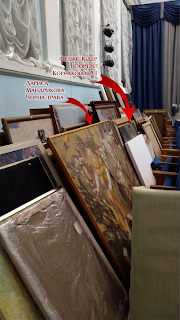
Elsewhere in the Ukraine, some 400 kilometres away, artworks from the Kherson Fine Arts Museum's collection were stolen between October 30 and November 3 just prior to Russia's forced withdrawal from the city. Photos shared later on Facebook showed dozens of paintings from the plundered museum stacked along a wall inside the  Tsentral'nyy Muzey Tavridy, the Crimean history museum in Simferopol, Crimea. 

As of December 23rd, throughout Ukraine, again according to UNESCO, the agency has verified damage at 102 religious sites, 18 museums, 81 buildings of historical and/or artistic interest, 19 monuments, and 11 libraries.

Outside Ukraine, two themes for 2022 are museums, and those in charge of them, behaving badly, and crime doesn't pay. 

In the US, investigators from the New York District Attorney's Office in Manhattan, issued three separate search warrants on the Metropolitan Museum of Art which resulted in the seizure and return of 27 antiquities to their countries of origin—21 to Italy and 6 to Egypt.  

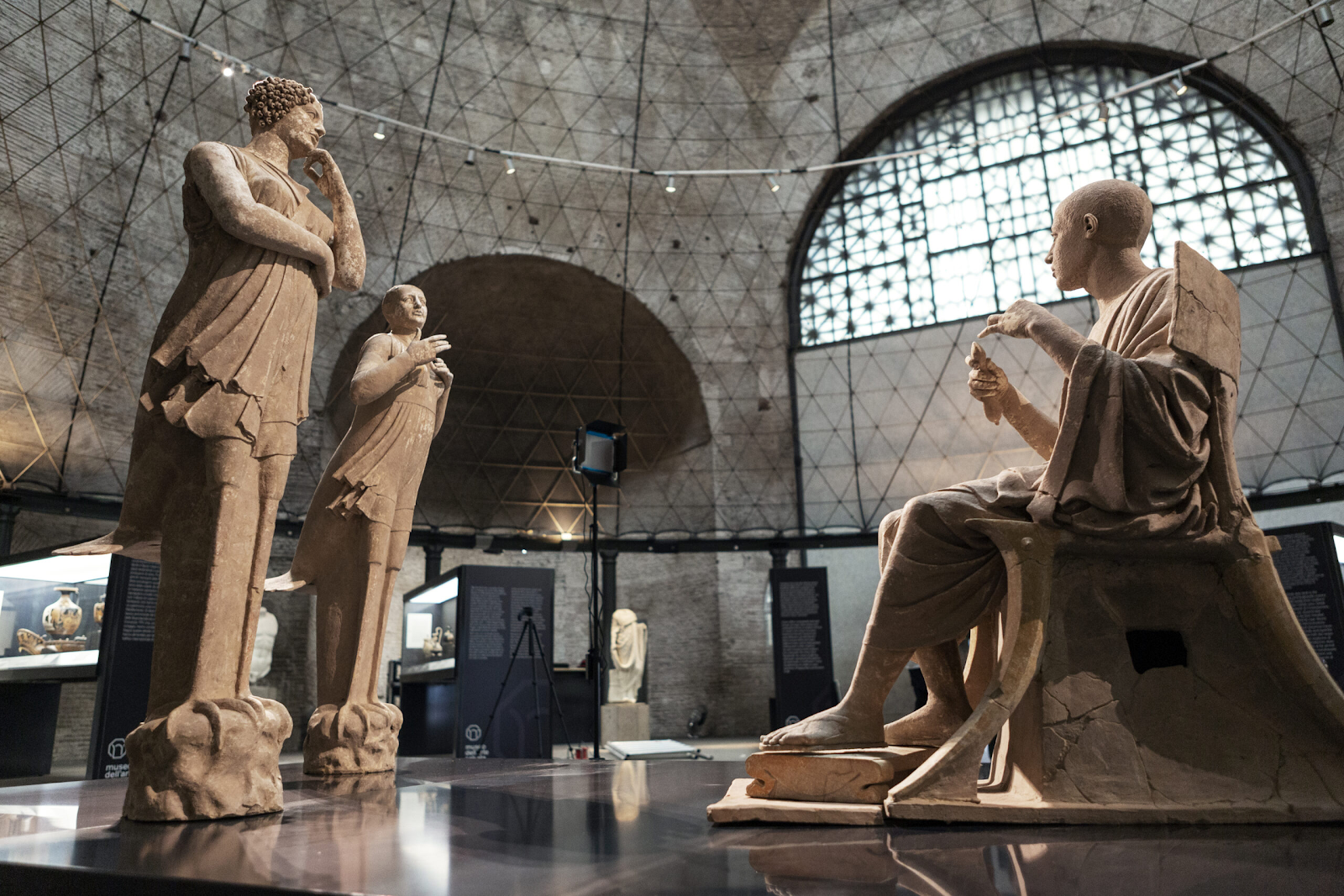
On the West Coast, the J. Paul Getty Museum in Los Angeles saw its hand forced by the same East Coast prosecutor, following an ongoing criminal investigation by DANY.  That investigation resulted in the California museum relinquishing, post-seizure, its looted group of life-size terracotta figures known as Orpheus and the Sirens back to Italy. 

Things were no quieter for museums over in Europe and the Middle East, where over the summer, France saw its former director of the Musée du Louvre, Jean-Luc Martinez and archaeologist-curator Jean-Francois Charnier formally charged for “complicity“ in having facilitated $50 million in acquisitions of illicit material by the Louvre Abu Dhabi, connected to investigations of suspect antiquities dealers Roben Dib (currently in French custody) and Germany-based dealer Serop Simonian.

As legal investigations usually take several years to unfold in France, Martinez and Charnier have been released under judicial supervision while a ruling of the examining chamber is expected in the new year, which some say, may see these preliminary charges dropped.

Dealers who behaved badly include Inigo Philbrick who received an 84 month prison sentence in May in connection with a multi-year scheme to defraud various collectors and business entities in order to finance his art business.

Eighty year old Raffaele Monticelli, a man considered by various Italian prosecutors to be one of the biggest middle-tier traffickers of archaeological finds in Europe, died in October.  Still active in smuggling illicit material out of Italy, he had only recently returned home to Taranto following the conclusion of a short prison sentence involving a looted helmet in circulation in the Netherlands. 

Also in the Netherlands, the Dutch appeals court confirmed the 8 year prison sentence in July for 59 year old Nils Menara, a professional burglar known on the street as 'Gauwtje' for his role in the thefts of two paintings, The Parsonage Garden at Nuenen in Spring (1884), by Vincent van Gogh, and Two Laughing Boys with a Mug of Beer by Frans Hals.  The two paintings, worth $20 million are still missing. 

In France, the 33rd criminal chamber of the Paris Judicial Tribunal held a decision in October in a case where Egypt requested the restitution of Egyptian antiquities within a criminal proceeding against Didier Wormser, who was accused of dealing stolen cultural property from the Saqqara necropolis. The director of the Star of Ishtar gallery, was given a three-year suspended prison sentence. 

In India, November saw disgraced antiques dealer Subhash Kapoor convicted of burglary and the illegal export of 19 antique idols during his first completed trial to date, held in the town of Kumbakonam in the Indian state of Tamil Nadu.   With more court cases to follow, Kapoor was handed a 10-Year jail sentence for this first conviction.  The judge also imposed sentences on Kapoor's accomplices: Sanjivi Asokan, Marichamy, Packiya Kumar, Sri Ram alias Ulagu and Parthiban. 

In happier news, the last month of the 2022, marked the month where German police successfully recovered 31 of the priceless 18th-century jewellery pieces stolen from  the Royal Palace that houses the historic Green Vault (Gruenes Gewoelbe) in Dresden in 2019.   

Let's hope 2023 is a year of recoveries, more successful prosecutions and an end to conflicts.