antiquities looting,art and organized crime,Athanasios Sideris,Bulgaria,Bulgarian,Greece,organized crime,Sofia,subsistence looting,Thracian,Vasil Bozhkov
 No comments
Archaeologist Arrested in Greece as Europol Expands Probe Into Bozhkov-Linked Antiquities Network

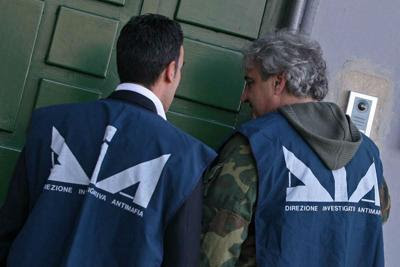
Although Europol did not name the principal High-Value Target (HVT) in this multi-country police action, the agency noted that the investigation was triggered by a 2020 house search in Bulgaria in which authorities seized approximately 7,000 cultural artefacts of exceptional historical and monetary value. According to the Europol statement, the material consisted largely of Greco-Roman and Thracian antiquities of remarkable quality and significance. Bulgarian Prosecutor Angel Kanev, under national police protections for threats made to his life in this investigation, pointed out that the investigation centred on a case the country had been following for four years and involved coordination with law enforcement actions in Germany, Japan, Italy, the US, and the UK.
The only publicly documented seizure of that scale, in Bulgaria, during 2020, was the government’s raid on the holdings of Bulgarian gaming tycoon Vasil Bozhkov, AKA Vassil Bojkov, whose business entities were searched on 20 January 2020 by the Specialised Prosecutor’s Office. Widely described as the country’s richest man, Bozhkov has long been referred to as the country's most notorious gangster, with allegations of money laundering, extortion, racketeering, tax fraud, and illegal antiquities dealing documented as early as a 2009 U.S. Embassy leaked diplomatic cable made public through WikiLeaks.
At the time of the 2020 search and subsequent seizure, Bozhkov faced seven criminal charges, including leading an organised crime group, coercion, extortion, attempted bribery of an official and incitement to malfeasance in office. During the raid, prosecutors and police entered his offices at Nove Holding on Moskovska Street in Sofia and impounded 6,778 of the mogul's antiquities dating from as early as 4,000 BCE through the 6th century CE. Shortly after these raids Bozhkov was handed additional charges, including influence trading and holding and expropriating valuable cultural artefacts.
Later, in June 2021, the U.S. Department of the Treasury’s Office of Foreign Assets Control (OFAC) sanctioned Bozhkov, under E.O. 13818 for materially supporting corruption, misappropriation of state assets, and related criminal activity. In February 2023, the United Kingdom followed suit and imposed sanctions under its Global Anti-Corruption sanctions regime. After spending years in Dubai as a fugitive and avoiding extradition on a European arrest warrant, Bozhkov returned to Sofia voluntarily in August 2023 and remains at liberty with some restrictions while his numerous trials proceed through the Bulgarian courts.
The November Europol operation, coordinated this month, expands upon Bozhkov's earlier antiquities-related investigations and extends into multiple jurisdictions.


All of the aforementioned details provide a solid match to an affiliated professor of Classical Archaeology at Charles University in Prague named Athanasios Sideris. According to this scholar's LinkedIn profile, he was the director of excavations in Halka Bunar, Bulgaria between 2009 and 2014 and from January 2017 until August 2022 was the Head Curator of the Thrace Foundation, in Sofia where he was responsible for curating and organising exhibitions and publications for Bozhkov's mostly unprovenanced antiquities collection.

Sideris is also the author of several books featuring material from Bozhkov problematic ancient art collection. One of these, Theseus in Thrace: the silver lining on the clouds of the Athenian-Thracian relations in the 5th century BC published by Bozhkov's Thrace Foundation in 2015, includes unprovenanced material from the Bozhkov Collection, as well as other unnamed private collections in Bulgaria, some of which have never been published previously. At least two of the objects depicted in this catalogue have previously been in circulation with the Swiss gallery, Phoenix Ancient Art. They are:
• a Phiale depicting Thetis and Nereids bringing Achilles, 430-420 BCE
• a Kylix belonging to the “Rhenia” type depicting a Greco-Thracian rider. 430-420 BCE
How the current investigations will advance the cases against Bozhkov or those related to his enterprises remains to be seen, but it marks a significant escalation in ongoing efforts to dismantle transnational networks responsible for the looting, laundering, and illicit circulation of plundered cultural property in Europe. It also underscores how deeply embedded some actors have been within both academic and commercial sectors, blurring the boundaries between scholarship, private collecting, and illicit trade.