Blog Subscription via Follow.it

Showing posts with label Gianfranco Becchina. Show all posts

October 20, 2025

The Aboutaam Brothers, Phoenix Ancient Art, and the Hidden Routes of Italy’s Lost Antiquities

Phoenix Ancient Art - BRAFA 2019 

With a precautionary seizure order, filed by the Rome Public Prosecutor's Office, led by Prosecutor Stefano Opilio, nearly three hundred ancient Italian artefacts may finally be coming home after years of investigative work marking the judgement as one of Italy's most important cultural recoveries in recent history.  

This recovery finds its roots in a multi-year operation linking the Italian Carabinieri’s Cultural Heritage Protection Command with prosecutors in Rome and the United States, as well as Belgian investigative and judicial authorities.

Acting on a European seizure order issued in July 2025 officials have frozen nearly three hundred artefacts confirmed or strongly suspected to be of Italian origin.  These were identified as being tied to storage facilities in Belgium associated with the owners of the art gallery Phoenix Ancient Art, Hicham and Ali Aboutaam.  

Some of the artefacts identified in this operation coincide with business record documentation police obtained during a lengthy group pf investigations into the illicit dealings of  ancient art dealers Robert Hecht, Giacomo Medici, Gianfranco Becchina and Robin Symes, as well as a large dossier of material recovered from the prolific tomb raider Giuseppe Evangelisti.

While this blog has dedicated ample articles on the problematic art dealers mentioned above, we have never covered Evangelisti in the past.  His involvement in the illicit trade was first identified during Operation Geryon just before Christmas in 2003, when officers overheard a conversation during wire taps which referred to someone nicknamed “Peppino il taglialegna”—Peppino the woodcutter, a name derived from the individual's “day job”, providing firewood to two villages.  At night however, Evangelisti moonlighted as a tombarolo,  scavenging the hillsides for Attic and bucchero ceramics, bronze statues and various terracotta finds primarily used in funerary contexts. 

Luckily for investigators, when they raided Peppino's home near Lake Balsena they found not just the fruit of his recent clandestine labours but a batch of books on a shelf (nine books of agendas and seven albums) which documented the extent of his looting from 1997 to 2002.   A virtual goldmine for investigators, the albums contained photographs of every object he had ever looted, even going so far as to record the depth underground of the objects he illegally excavated.  In her review of these journals and albums, former Villa Giulia employee Daniela Rizzo stated that in her twenty-six years of experience, Evangelisti was the only person, aside from Giacomino (Medici), who recorded such detailed records of his activities. 

But back to the Belgium Recoveries

The recoveries announced today are due in part to the New York investigation into the purchasing activity of problematic hedge fund billionaire Michael Steinhardt who not only surrendered $70 million in plundered antiquities, but was the first collector in the United States to be handed a lifetime ban from antiquities collecting. That District Attorney's Office investigation, conducted by the Antiquities Trafficking Unit in Manhattan, uncovered a series of clandestine networks responsible for supplying looted Mediterranean objects to museums, collectors, and gallerists in the United States. 

Following up on that US investigation, a joint Italian-Belgian investigative team was formed expanding Italy's inquiry into northern Europe’s illicit art-dealing hubs and exploring the Aboutaam's footprint in Belgium.  This European investigation allowed for the cross-referencing of some 283 artefacts identified in Belgium, documented in Italian police databases and dealer archival photos.  That number in turn  demonstrates that despite numerous seizures in the US and Europe, the transnational ancient art market, despite decades of scandals, continues to recycle problematic artefacts extracted from clandestine digs.

According to Italy prosecutors Giovanni Conzo and Stefano Opilio, 132 of the seized works can be definitively linked to Italian sites, while the remaining artefacts almost certainly share the same illicit origin. The order, upheld by the Court of Appeal, described the pieces as the product of “illegal provenance” and repeated violations of cultural-property law.

Through it all Phoenix Ancient Art, long considered one of the most prominent galleries dealing in classical antiquities, once again finds itself at the center of controversy.  While the Aboutaam brothers have not been charged in connection with the Italian-Belgian operation, their business history is inseparable from the problematic story of the antiquities trade. 

In January 2023 at the Geneva police court, Ali Aboutaam was sentenced by the Swiss authorities following a complex and multi-year criminal and procedural investigation by officers and analysts with Switzerland's customs and anti-fraud divisions, working with the Geneva Public Prosecutor's Office.  The Swiss-based merchant had earlier been found guilty of forgery of titles.  In that case the courts also confirmed the seizure of 42 artefacts, confiscated due to their illicit origin. 

For Italian authorities, the current case is less about one gallery than about dismantling a system that has long allowed cultural property to vanish from archaeological landscapes and reappear behind glass cases thousands of kilometres away. The artefacts now bound for Rome belong, by law, to the Italian state’s “unavailable assets,” meaning they can neither be privately owned nor sold and their repatriation signals both a practical and symbolic victory for Italy’s Carabinieri TPC, which has spent decades tracking stolen heritage across the world’s galleries, auction houses and art fairs.

The anticipated return of these objects does more than close a legal chapter, it again  underscores how the same names, archives, and networks continue to bear fruit in terms of recoveries, even twenty years after the Medici conviction and the scandals that rocked museums in the 1990s and early 2000s. The discovery in Brussels suggests that, despite improved international cooperation, large caches of looted antiquities remain hidden in private storage and corporate collections.

October 8, 2025

Caveat Emptor: What the Dancing Maenad Can Tell Us About the Market for Looted Art

Christie's 2019 Auction
In November 2019, ARCA published a blog post raising questions about a 5th-century BCE polychrome antefix depicting a dancing maenad, which had been consigned to a Christie’s auction and that I believed the piece warranted closer scrutiny. For those unfamiliar, an antefix is a decorative architectural element once placed along the eaves of ancient roofs to conceal the joints between tiles.

What drew my attention was the striking resemblance between the object at right and three other Etruscan antefixes, also portraying maenads, that had previously been repatriated to Italy after being identified as having been illegal excavated and removed from Italy.


The provenance of the previous, 2019-consigned, antefix up for auction at Christie's read:
Provenance:

In terms of its circulation history, that sparse entry left roughly 2,500 years unaccounted for as nothing prior to 1994 was specified.  Knowing a bit about the consignor's background, I knew, that before her death, Ingrid McAlpine had been married to the ancient art dealer Bruce McAlpine, and that prior to their divorce, both were listed as proprietors of McAlpine Ancient Art Limited in the United Kingdom.

The McAlpines’ names have surfaced in connection with other trafficked antiquities that passed through the legitimate art market. Among these is an Attic black-figured hydria which reached the McAlpines through Palladion Antike Kunst, a gallery operated by disgraced dealer Gianfranco Becchina. Their names also appear alongside the red flag names of Robin Symes and Barbara and Lawrence Fleischman, in relation to the donation of a looted Apulian bell-krater, both objects of which were later restituted to Italy. 

In addition, former Judge Paolo Giorgio Ferri, the Italian judge who worked heavily on these looting cases, showed me a letter, seized by the Italian authorities during their investigations which was written by the staff of Bruce and Ingrid's McAlpine Ancient Art Gallery.  This letter, dated 8 July 1986, tied the couple to at least one transaction with Giacomo Medici and Christian Boursaud and referred obliquely to companies that the later convicted Rome dealer operated through third parties, fronts, or pseudonyms. 

Despite my suspicions I still didn't know where that Etruscan dancing maenad came from.  

Villa Giulia, 1937 Excavation
A few weeks into that investigation, and following a notification from the Carabinieri Command for the Protection of Cultural Heritage, curators Leonardo Bochicchio and Daniele F. Maras of Italy’s Ministry of Culture identified the likely find spot of the disputed object: Campetti Nord. They were able to pinpoint the location precisely, as the National Etruscan Museum of Villa Giulia already held another headless antefix of a dancing maenad, featuring the same polychrome details and stylistic traits.  The museum’s specimen had been uncovered during authorised excavations by the Italian Superintendency at the Etruscan sanctuary of Campetti Nord in the autumn of 1937 — a site previously worked over by tombaroli.

The sanctuary lies within the ancient urban area of Veio, also known as Veii, one of the major cities of Etruria and a formidable rival to early Rome. Its ruins rest quietly near the medieval village of Isola Farnese, about fifteen kilometers northwest of Italy's capital, amid the rolling hills and woodlands of what is now the Veio Regional Park.  For archaeologists, the city is a treasure of discovery, offering rare insight into the architecture, rituals, and daily life of the Etruscans on the frontier between the  Etruscan and Latin worlds.

After much finagling, the story of the first looted antefix was brought to light in an art crime documentary Lot 448, directed by Bella Monticelli which highlighted the objects lack of legitimate paperwork or export license and which exposed how difficult it is to identify and document an object with only a few days notice before an appraching sale.  Fortunately, with some help from Bulgari SpA, (who purchased the artefact at auction and donated it, through the Ministry of Cultural Heritage and Activities and Tourism, to the Italian State) the 2019 auctioned dancing maenad joined her sister at the National Etruscan Museum of Villa Giulia, reunited with other ancient artworks from the same archaeological context from which both figures originated.

Fast forward to a 2nd Christie's Antquities auction, scheduled for later this month and it seems we have a third headless lady dancer from Veio. 


The provenance for this third Etruscan antefix, equally headless, but less intact reads:  Elsa Bloch-Diener (1922-2012), Bern, 1975 (Antike Kunst, no. 113).

If you look carefully, by her feet you can make out the hoof of the Silenos this lady would have been dancing with.  

This detail is remarkably similar to the antefix in the form of a Maenad and Silenos Dancing which once graced the cover of the exhibition catalog A Passion for Antiquities: Ancient Art from the Collection of Barbara and Lawrence Fleishman.  

After careful restoration that antefix was first seen on the market with Robert Hecht who sold it to the Hunt collection.  Next it was circulated via Sotheby's with that collection was liquidated and bought by Robin Symes, who immediately resold it to the Fleischmanns.  In1994 the couple exhibited the piece , along with their entire collection, at the J. Paul Getty Museum, before it was formally acquired by   the museum in 1996 (96.AD.33).  The piece was restituted to Italy after it was matched by Daniela Rizzo and Maurizio Pellegrino to a polaroid in the Giacomo Medici archive.  Like the one up for sale at Christie's now, both artefacts were broken along the lower half and when whole, depicted a Silenos dancing behind the Maenad.


Now let's look at the provenance the auction house has cited.

Elsa Bloch-Diener (1922–2012) was a Swiss art dealer who operated a gallery at Kramgasse 60 in the old town of Bern.  She is known to have collaborated with Ines Jucker (née Scherrer, 1922-2013), the scholar and sometimes ancient art dealer responsible for the exhibition catalogue Italy of the Etruscans, cited in the Christie’s lot description as an exhibition where this piece was on view to the public. 

Jucker not only authenticated works for Bloch-Diener but also curated the 1991 Etruscan exhibition at the Israel Museum in Jerusalem referenced in the Christie's sale.  Also contributing to that exhibition's catalogue were entries by Giovannangelo Camporeale, Fiorella Cottier-Angeli, George Ortiz, and Christoph Reusser, names that have, at times, prompted debate and concern within the field.

In May 2002, when Swiss and Italian authorities raided Gianfranco Becchina's Antike Kunst Palladion, as well as three of Becchina’s storage facilities in Basel, authorities seized documents which identified transactions between the Sicilian and Ines Jucker which documented that she purchased artefacts from this dealer and sold them onwards.

Along the same theme Jucker studied an Attic Red-Figured calyx krater signed by Syriskos (painter); donated by Lawrence Fleischman and his wife to the J. Paul Getty Museum which had been acquired from Robin Symes in 1988.  Pictured on Medici Polaroid it was restituted to Italy.   Likewise a Black-Figure Cup Fragment with the Capture of Silenus in the Tondo which Jucker sold to Dietrich von Bothmer was also returned to Italy.

In the Israel exhibition Jucker curated, which featured the antefix up for auction and identified it as coming from the ancient site of Veio, some four hundred Etruscan objects were presented, none of large format, some with an inscriptions.  Among them were small bronzes, ceramics, jewellery, terracottas (architectural, votive, and cinerary urns), and sculptural fragments in nenfro.  In total they represented all periods and regions of Etruscan art. 

The main nucleus of the Israel displayed ensemble came from the collection of the late Ivor and Flora Svarc, many of whose holdings would be donated to the Israel Museum.  Svarc's objects were complemented by pieces already in Israeli collections, along with loans from the collector-dealer Jonathan Rosen and other private collectors, mainly in Switzerland.  

As cited by Drs David Gill and Christopher Chippindale in Material Consequences of Contemporary Classical Collecting the vast majority of the artefacts exhibited during this exhibition were previously unpublished.  This made this public display of the items their first concretising stop towards having an art marketable pedigree. 

The fact that we know this object comes from the context of Veio, can also be found in the same catalogue as the restituted Getty atefix, A Passion for Antiquities: Ancient Art from the Collection of Barbara and Lawrence Fleishman.


Page 197 refers specifically to the artefact currently up for auction:

A number of fragmentary examples of antefixes of this type, as well as of molds for producing them, have come to light at Civita Castellana (Falerii) (see Andrén; Sprenger/Bartoloni), finds which clearly prove their local manufacture. But the votive deposit of Campetti at Veii has yielded the head of a silenos of identical type and made of Veian clay (see Vagnetti 1971), which led P. J. Riis to suggest that this type of antefix was invented at Veii. The lower half of an antefix of this type with a provenance from Veii is in a private collection in Switzerland (see Jucker), and similar fragments have recently been excavated in Rome (see Cristo fani). 

With that in mind, it is necessary to return to the same question previously directed at Christie’s: 

On what evidentiary basis, supported by what verifiable documentation, did the auction house authorise the consignment of this artefact?  In the absence of any demonstrable chain of custody or export records, the decision to green-light its sale raises serious concerns regarding the robustness of the auction house’s internal due diligence procedures.


In this case, the question is not rhetorical but fundamental. Is Christie’s in possession of any concrete paperwork supporting the legitimacy of this Dancing Maenad’s appearance on the market, or was the absence of evidence simply overlooked given its publication in an exhibition, in the hope that the object’s passage through the auction process would escape closer scrutiny.


By:  Lynda Albertson

October 14, 2023

Exploring Michael Ward and some peppered-about, possibly-problematic, pieces which might have provenance problems

While there are numerous artefacts which passed through Michael L. Ward's variously named galleries which may be worth further exploration,  here is a growing list of classical world artefacts ARCA has documented (so far) as perhaps needing a closer review by their various holders.   There may be others, and we will add what we find to this posting but these are the art and artefacts we have documented so far with readily available digital footprints.  
Some have been restituted. Others, identified at the Metropolitan Museum of Art, the J. Paul Getty Museum, the Michael C. Carlos Museum, the Dallas Museum of Art, the Johnson Museum of Art, at Cornell University, the Museum of Fine Art's - Boston, the Princeton University Art Museum, the Brooklyn Museum, the Walters Art Museum and the British Museum should probably be given a closer inspection and provenance review. 

Note that this dealer also sold African and Tribal Art which is not documented within this first round-up. 

7 January 1964
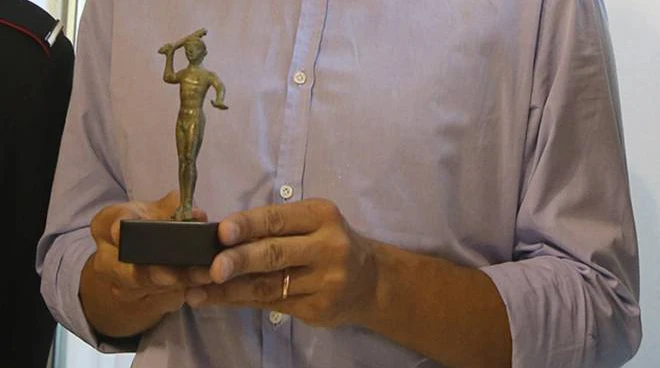
A gang of thieves, break into the Museo archeologico Oliveriano di Pesaro and make off with multiple objects, one of which is this Etruscan statuette of Hercules from the 6th to the 5th century BCE. 

19 December 1979
David Meadows identified this 300 BCE Thracian round Silver Plaque is purchased by the Museum of Fine Arts - Boston and is given Object Number: 1979.620

The provenance is listed as:
1979, sold by Michael L. Ward (dealer), Brooklyn Heights, NY to the MFA. 

19 December 1979
David Meadows identified this 300 BCE Thracian round Silver Plaque is purchased by the Museum of Fine Arts - Boston and is given Object Number: 1979.621

The provenance is listed as:
1979, sold by Michael L. Ward (dealer), Brooklyn Heights, NY to the MFA. 

1981
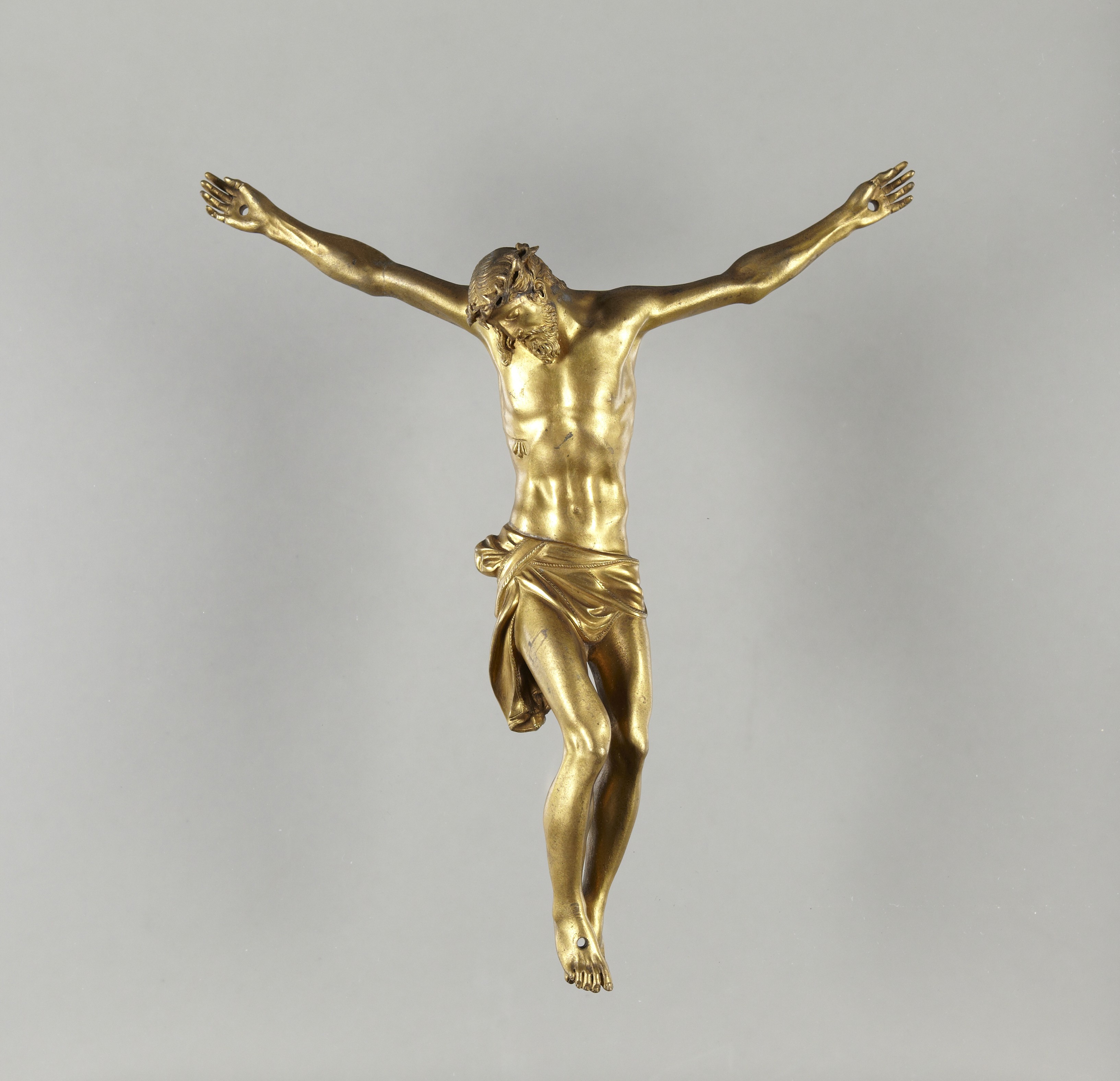
This c. 1600 CE Corpus for Crucifix from the studio of Antonio Susini, after Giambologna is gifted to the Princeton University Art Museum and is given Object Number: y1981.42

The provenance is listed as:
Michael Ward, New York; purchase by Henry Berg; 1981 gift to Princeton University Art Museum.
                                                                         
1986 
Michael Ward sells a silver applique head of a satyr, a half-human companion of Dionysos to Lawrence and Barbara Fleischman in 1986 which is later donated to the J. Paul Getty Museum in 1996 and given Object Number: 96.AM.157.

No provenance history, prior to the Michael Ward 1986 sale, is listed for this artefact within the Getty Museum's digital accession record for this object. 

1987
Dr. David Gill identified this ca. 200–150 BCE South Italian, Campanian Fragment of a lamp-filler in the form of a comic actor's mask sold by Michael Ward to the Princeton University Art Museum and given Object Number: y1987-69

No provenance details prior to Michael Ward are listed for this artefact within the Princeton University Art Museum's digital accession record for this object. 

1987
Michael Ward sells a silver 4th century BCE Greek Bowl to Lawrence and Barbara Fleischman in 1987 which is later donated to the J. Paul Getty Museum in 1996 and given Object Number: 96.AM.89.1.

No provenance history, prior to the Michael Ward 1987 sale, is listed for this artefact within the Getty Museum's digital accession record for this object. 

1987

Michael Ward sells a silver 4th century BCE Oinochoe to Lawrence and Barbara Fleischman in 1987 which is later donated to the J. Paul Getty Museum in 1996 and given Object Number: 96.AM.89.2.

No provenance history, prior to the Michael Ward 1987 sale, is listed for this artefact within the Getty Museum's digital accession record for this object. 

1987
Michael Ward sells a silver 4th century BCE Ladle to Lawrence and Barbara Fleischman in 1987 which is later donated to the J. Paul Getty Museum in 1996 and given Object Number: 96.AM.89.3.

No provenance history, prior to the Michael Ward 1987 sale, is listed for this artefact within the Getty Museum's digital accession record for this object. 

1987
Michael Ward sells a silver 4th century BCE strainer to Lawrence and Barbara Fleischman in 1987 which is later donated to the J. Paul Getty Museum in 1996 and given Object Number: 96.AM.89.4.

No provenance history, prior to the Michael Ward 1987 sale, is listed for this artefact within the Getty Museum's digital accession record for this object. 

1987
Michael Ward sells a 150-250 CE Roman Statuette of the Lar/Genius of Aurelius Valerius and Base to Lawrence and Barbara Fleischman in 1987 which is later donated to the J. Paul Getty Museum in 1996 and given Object Number: 96.AB.200.

No provenance history, prior to the Michael Ward 1987 sale, is listed for this artefact within the Getty Museum's digital accession record for this object. 

1987
Michael Ward sells a 3rd century CE Roman gold with amethyst necklace to Lawrence and Barbara Fleischman in 1987 which is later donated to the J. Paul Getty Museum in 1996 and given Object Number: 96.AM.208.

No provenance history, prior to the Michael Ward 1987 sale, is listed for this artefact within the Getty Museum's digital accession record for this object. 

1988
Michael Ward sells a 480 to 460 BCE Statuette of a Satyr to the J. Paul Getty Museum which is given Object Number: 88.AB.72

No provenance history, prior to the Michael Ward 1988 sale, is listed for this artefact within the Getty Museum's digital accession record for this object.

1989
Dr. David Gill identified this 5th century bronze Steelyard Weight sold to the Walters Art Museum and given Object Number: y1987-69


The provenance is listed as:
Michael Ward, New York, ca. 1977, by purchase; L. Alexander Wolfe, Jerusalem [date of acquisition unknown], by purchase; Sale, Frank Sternberg, Zurich, November 20, 1989, no. 423; Walters Art Museum, 1989, by purchase.

1989
This 5th century BCE Greco-Persian Intaglio seal with Artemis and deer, is purchased by the Princeton University Art Museum from Michael Ward and is given Object Number: y1989-72

The provenance is listed as:
Michael Ward, New York

1989
This 5th century BCE Greek plain black Attic Mastos cup, is purchased by the Princeton University Art Museum from Michael Ward and is given Object Number: y1989-72

The provenance is listed as:
Michael Ward, New York

1989
Dr. David Gill identified this 1st century BCE –1st century CE Lead-glazed cup with relief decoration purchased by the Princeton University Art Museum and given Object Number: y1989-73

The provenance is listed as:
Michael Ward, New York

1989
This Late 2nd century CE Roman, British or Gallo-Belgic Parisian ware beaker is purchased by the Princeton University Art Museum and is given Object Number: y1989-74

The provenance is listed as:
Michael Ward, New York

1989
This 2nd century CE Roman Balsamarium in the form of three conjoined heads is purchased by the Princeton University Art Museum and is given Object Number: y1989-75

The provenance is listed as:
Said to have been found in Sirmium, Yugoslavia; Purchased from Michael Ward, New York.

1989
Michael Ward sells a Greek bronze 500 BCE Handle of a Vessel to Lawrence and Barbara Fleischman in 1989 which is later donated to the J. Paul Getty Museum in 1996 and given Object Number: 96.AC.79.

No provenance history, prior to the Michael Ward 1989 sale, is listed for this artefact within the Getty Museum's digital accession record for this object. 

1989
Michael Ward sells a Greek-South Italian bronze 550 BCE Side Handle of a Hydria previously with Mathias Komor to Lawrence and Barbara Fleischman in 1989 which is later donated to the J. Paul Getty Museum in 1996 and given Object Number: 96.AC.107.

No provenance history, prior to the Michael Ward 1989 sale, is listed for this artefact within the Getty Museum's digital accession record for this object. 

1990
Michael Ward sells three Greek 550–525 BCE bronze statuettes of Banqueters to Lawrence and Barbara Fleischman in 1990 which are later donated to the J. Paul Getty Museum in 1996 and given Object Number: 96.AC.77.

No provenance history, prior to the Michael Ward 1990 sale, is listed for this artefact within the Getty Museum's digital accession record for this object. 

1990
Michael Ward sells a Greek 550 BCE bronze Statuette of a Rider to Lawrence and Barbara Fleischman in 1990 which is later donated to the J. Paul Getty Museum in 1996 and given  Object Number: 96.AB.45.

No provenance history, prior to the Michael Ward 1987 sale, is listed for this artefact within the Getty Museum's digital accession record for this object. 

1991
Michael Ward sold a late 4th-3rd Century BCE Gold Olive Wreath to the Michael C Carlos Museum.  Object Number 1991.014

The provenance is listed as:
Ex private collection, Europe, assembled prior to early 1980s. European art market. Ex private collection, London, England, from ca. 1984-1985. Purchased by Emory University Museum of Art and Archaeology from Michael Ward [Ward & Company, Works of Art, Inc.], New York, New York.

1992
Michael Ward sells a 325 BCE Greek Side Panel of a Grave Naiskos with the Relief of a Young Hunter to Lawrence and Barbara Fleischman in 1992 which is later donated to the J. Paul Getty Museum in 1996 Object Number: 96.AA.248.

No provenance history, prior to the Michael Ward 1992 sale, is listed for this artefact within the Getty Museum's digital accession record for this object. 

1992
Michael Ward contacts the Greek Culture Ministry and shares photographs and measurements of a grouping of golden Mycenaean jewellery from the 15th century BCE, hereinafter referred to as the Aidonia Treasure, which he was considering before purchase in Early 1992.  When placed on the market a length battle begins when it is determined that these pieces were plundered in 1978 from a Mycenaean cemetery at Aidonia, near Nemea, in southern Greece.  The parties eventually settle out of court.

The objects include necklaces with lilies, large cusped rosettes from a belt, decorated gold rings, sealstones, beads, and other stylized jewellery and ornaments totalling about 50 pieces

1992
This late 2nd century CE Roman Bronze Balsamarium in the form of a hunchback, adapted for use as a steelyard weight, is purchased by the Princeton University Art Museum from Michael Ward and is given Object Number: y1992-6

The provenance is listed as:
Purchased from Michael Ward, New York, in 1992.

1992
This 712-305 Bronze Egyptian Woman with Barrel-Shaped Drum is gifted by Michael Ward to the Brooklyn Museum and is given Object Number: 1992.169

No provenance details are listed for this artefact within the Brooklyn Museum's digital accession record for this object. 

1993
Dr. David Gill identified this c. 1500 BCE Large Romania, possibly Cirna, Middle Bronze Age earthenware Bowl, donated by Michael Ward in honour of Evan H. Turner to the Cleveland Museum of Art.  Accession No. 1993.229 

No provenance details are listed for this artefact within the Clevelend Museum of Art's digital accession record for this object. 

1993
Michael Ward donates a Greek Corinthian mid 6th century BCE Couchant lion to the Princeton University Art Museum. 
Object No: y1993-42

No provenance details are listed for this artefact within the Princeton University Art Museum's digital accession record for this object. 

Mid to Late 1990s

Lot 3: 'a Greek silver-gilt repoussé plaque'. 'circa 540-525 BCE'. 'With winged Nike in a frontal chariot with facing quadriga, each pair of horses with heads turned to opposing sides, with finely incised details, bound lotus filling motifs, pierced around the edge for attachment, from an arm-guard'. 6.8 cm high. Unsold.

Lot 5: 'a Greek bronze goat'. 'circa 5405 BCE'. 'From a vessel lid or rim, the goat recumbent with head turned to the right, with short pointed beard and upturned tail, finely incised details, the underside with lead infill, horns partially missing'. 7.6 cm high. Sold for 9,000 GBP.

Lot 14: 'A Geometric Greek Bronze Seated Male Figure'. 'circa 750-700 BCE'. 'Seated on a stool with elbows resting on his knees and left hand to chin, with long instrument in right hand, finely detailed with striated fringe of hair at back of head and eyes rendered with depressed circles, on integral square seal base with four triangular divisions on underside, on wood mount'. 63 cm high. Sold for 28,800 GBP.

Lot 18: 'Three Laconian bronze helmeted warriors'. '6th century BCE'. 'Each animated nude standing figure standing with right arm outstretched to the side and left arm raised, with fists clenched, wearing tall crested helmet'. 6.4 cm high (max). Sold for 30,000 GBP.
 
1995  
Betsy Alley identified this 2nd century Roman Empire Lynx Head gifted to Cornell University in 1994 and given Accession No. 95.030

The provenance is listed as:
Michael L. Ward, Inc., New York, NY; before 1994, David B. Simpson; 1995, collect(…)
     
1996
Dr. David Gill identified this c. 1200 CE Cauldron Ornament donated by Michael Ward in honour of Arielle P. Kozloff  to the Cleveland Museum of Art.  Accession No. 1996.312 

There is no provenance listed for this artefact. 

1996
David Meadows identified a pair of late 2nd–early 3rd century CE Roman earrings at the Dallas Museum of Art purchased via a museum credit line along with a gift of Stark and Michael Ward in honor of Virginia Nick and Anne Bromberg.  The pair are given Object Numbers: 1996.35.A-B

There is no provenance listed for this jewellery grouping. 

1997
Dr. David Gill identified this 2nd–1st century BCE Hellenistic Red Slip Bowl gifted by Lawrence A. and Barbara Fleischman in honour of Michael Padgett to the Princeton University Art Museum and given Object Number: 1997-1

The provenance is listed as:
Owned by a succession of dealers (C. Ede, H. Humbel, B. Aitken, M. Ward) before acquired by Fleischman; given to the Museum in 1997

1997
This early Byzantine vertical dial was purchased by the British Museum from Ward & Company Works of Art and assigned the Object No: 1997,0303.1

The provenance is listed as: 
Previous owner/ex-collection: Kummer
 
1997
The Judy and Michael Steinhardt Foundation donates a 12th century Byzantine Disk, possibly a pilgrimage token to the Princeton University Art Museum. Object No: 1997-34

The provenance is listed as: 
Museum purchase in 1997 from Ward & Company, Works of Art, Inc., gift of the Judy and Michael Steinhardt Foundation

October 1997
Michael Ward reports in the New York Times that he nearly sold out his booth to new customers, American and European at the International Fine Art and Antique Dealers Show.  Three of the objects mentioned at his booth are a mosaic sold to a museum, a fifth-century BCE Greek marble grave stele for $650,000 that depicts a man walking with a staff, and a $125,000 circa 800 BCE Egyptian bronze of Osiris. 

1998
This 8-9th century CE bronze finger Ring is gifted to the Princeton University Art Museum and is given Object Number: 1998-336

The provenance is listed as:
Geber, Budapest. Michael Ward, NY; purchase by John B. Elliott; bequest to Princeton University Art Museum.

1998
This 9-10th century CE Anglo Saxon bronze Applique in the form of a lion is purchased by the Princeton University Art Museum from Michael Ward and is given Object Number: 1998-343

The provenance is listed as:
Michael Ward, New York; purchase by John B. Elliott; bequest to Princeton University Art Museum

1998
This 8-9th century CE Avar culture pair of Strap ends is gifted to the Princeton University Art Museum and is given Object Number: 1998-360a and b

The provenance is listed as:
Geber, Budapest. Michael Ward, NY; purchased by John B. Elliott; 1998 bequest to Princeton University Art Museum.

1998
This 8-9th century CE Avar culture pair of Strap ends is gifted to the Princeton University Art Museum and is given Object Number: 1998-361a and b

The provenance is listed as:
Geber, Budapest. Michael Ward, NY; purchased by John B. Elliott; 1998 bequest to Princeton University Art Museum.

1998
This 8-9th century CE Avar culture pair of Strap ends is gifted to the Princeton University Art Museum and is given Object Number: 1998-362a and b

The provenance is listed as:
Geber, Budapest. Michael Ward, NY; purchased by John B. Elliott; 1998 bequest to Princeton University Art Museum.

1998
This 8-9th century CE Avar culture Strap end is gifted to the Princeton University Art Museum and is given Object Number: 1998-363

The provenance is listed as:
Geber, Budapest. Michael Ward, NY; purchased by John B. Elliott; 1998 bequest to Princeton University Art Museum.

1998
This 8-9th century CE Avar culture Strap end is gifted to the Princeton University Art Museum and is given Object Number: 1998-364

The provenance is listed as:
Geber, Budapest. Michael Ward, NY; purchased by John B. Elliott; 1998 bequest to Princeton University Art Museum.

1998
This 8-9th century CE Avar culture Strap end is gifted to the Princeton University Art Museum and is given Object Number: 1998-365

The provenance is listed as:
Geber, Budapest. Michael Ward, NY; purchased by John B. Elliott; 1998 bequest to Princeton University Art Museum.

1998
This 19-20th century CE brass Ekonda anklet is gifted to the Princeton University Art Museum and is given Object Number: 1998-640

The provenance is listed as:
[Michael Ward, Inc., New York, NY]; John B. Elliott, New York, NY by 1989; Princeton University Art Museum, 1998

1998
This 12-17th century CE Djenné copper bracelet is gifted to the Princeton University Art Museum and is given Object Number: 1998-643

The provenance is listed as:
[Michael Ward, Inc., New York, NY]; John B. Elliott, New York, NY by 1989; Princeton University Art Museum, 1998

1999 through 2022
According to the Michael L. Ward Criminal Complaint, from 1999 through 2022, Eugene Alexander had a money laundering scheme in which he sold looted antiquities to European and American collectors.  

In an open source  6 September 2023 stipulation Michael Ward affirmed that he would plead guilty to Criminal Facilitation in the Fourth Degree (N.Y. Penal Law §115.00[1]), a class A misdemeanor, and as part of his plea agreement he voluntarily agreed to surrender (40) additional antiquities, or others that he or DANY identified in his possession that were sold, consigned, or previously possessed by Eugene Alexander; and that he will cooperate truthfully and fully with DANY and, if requested by DANY and with DANY's coordination, he will assist Italy and Germany in their investigation and prosecution of Eugene Alexander.

In return, the Manhattan authorities affirmed:
    • they will not pursue any additional charges or arrests of Michael Ward for any crimes arising from his antiquities dealings or business transactions with Eugene Alexander;
    • that Michael Ward will not be prosecuted in Italy for any crimes arising from his antiquities dealings or business transactions with Eugene Alexander; 
    • that no evidence developed by DANY or provided by Michael Ward to DANY will be used for any prosecution in Germany or any other country; 
    • and that, although Michael Ward's antiquities dealing and business transactions with Eugene Alexander will be described in any charging documents of Eugene Alexander, Michael Ward will not be named as a co-conspirator.
1999
Michael Ward sold a ca. 480-470 BCE Red-Figure Calyx Krater with Apollo and Artemis Offering Libations to the Michael C Carlos Museum.  Object Number 1999.011.002

The provenance is listed as:
Ex coll. Jonathan Kagan, New York, New York. Ex coll. Damon Mezzacappa (ca. 1936-2015), New York, New York. Purchased by MCCM from Michael Ward [Ward & Company, Works of Art, Inc.], New York, New York.

1999
Michael Ward sells a 4th century BCE Votive Relief with Banquet Scene to the Michael C Carlos Museum. Object Number 1999.011.003

The provenance is listed as:
With Michael Ward [Ward & Company, Works of Art, Inc.], New York, New York, from ca. 1996. Purchased by MCCM from Ward.

1999
Michael Ward sells a 1-2nd century CE Roman Statue of Mercury to the Michael C Carlos Museum. Object Number 1999.011.005

The provenance is listed as:
Ex coll. Tempelberg Foundation, Vaduz, Liechtenstein. Purchased by MCCM from Michael Ward [Ward & Company, Works of Art, Inc.], New York, New York.

2000
Michael Ward sold a 440-430 BCE Chous with Maenad and Baby Satyr to the Michael C Carlos Museum.  Object Number 2000.001.001

The provenance is listed as:
With Galerie Blondeel-Deroyan, Paris, France, November 1999. Purchased by MCCM from Michael Ward [Ward & Company, Works of Art, Inc.], New York, New York.

2000
Michael Ward sells a 6th century BCE Votive Statuette of an Enthroned Athena to the Michael C Carlos Museum. Object Number 2000.006.003.

The provenance is listed as:
Purchased by MCCM from Michael Ward [Ward & Company, Works of Art, Inc.], New York, New York.

2000
Michael Ward sells one diadem, two 1200 - 800 CCE Bronze brooches with Spirals,  and one axe blade pendant to the Metropolitan Museum of Art. 

Accession Number: 2000.281.1 lists the provenance as:
Ward & Company Works of Art (American), New York (sold 2000)

Accession Number: 2000.281.2 lists the provenance as:
Charles Ede Limited Antiquities, London (1999)]; [ Ward & Company Works of Art (American), New York (sold 2000).

Accession Number: 2000.281.3  lists the provenance as:
Ward & Company Works of Art (American), New York (sold 1989)

Accession Number: 2000.281.4  lists the provenance as:
Ward & Company Works of Art (American), New York (sold 2000)

1 January 2000
The Art Newspaper published an ancient art market survey with dealers responses to the question of how many clients do you have who spend more than $50,000 per artefact.

Michael Ward replied that he has seen his client base in this price range and higher as doubling in number over the past five years. He counts forty clients in this price bracket.

2001
Michael Ward gifts an 8th century BCE Bird Pendant to the Michael C Carlos Museum. Object Number 2001.029.002.

The provenance is listed as: 
With Michael Ward [Ward & Company, Works of Art, Inc.], New York, New York, from at least August 1997.

2001
Michael Ward gifts a 7th Century BCE Male Orant to the Michael C Carlos Museum. Object Number 2001.029.001.

The provenance is listed as:
With Michael Ward [Ward & Company, Works of Art, Inc.], New York, New York, from at least May 1999.
2002
This 530 BCE Greek Hoof, possibly from a centaur statuette is gifted by Michael Ward to the Princeton University Art Museum from Michael Ward and is given Object Number: 2002.283

No provenance details are listed for this artefact within the Princeton University Art Museum's digital accession record for this object. 

2002
This 7th century BCE Greek Double-sided seal with centaur and two men is purchased by the Princeton University Art Museum from Michael Ward and is given Object Number: 2002.284

The provenance is listed as:
Purchased from Michael Ward, NY, in 2002.

2002
Dietrich von Bothmer gifts a 480 BCE Red-Figure Amphora Neck Fragment with a Fight to the Michael C Carlos Museum. Object Number 2002.043.026.

The provenance is listed as:
With Michael Ward [Ward & Company, Works of Art, Inc.], New York, New York, from at least May 1999.

2003
Michael Ward sells a 350 to 325 BCE Seated Figure From a Grave Naiskos to the Michael C Carlos Museum. Object Number 2003.005.001

The provenance is listed as: 
With Gianfranco Becchina, Basel Switzerland. Purchased by MCCM from Michael Ward [Ward & Company, Fine Art, Inc.], New York, New York.

2003
Michael Ward gifts a 3200-2700 BCE early Cycladic Faceted Core to the Michael C Carlos Museum. Object Number 2003.025.001

The provenance is listed as: 
Ex coll. K.John Hewett (1919-1994), England. Ex coll. Peter Sharrer, New Jersey, acquired from Hewett, London, England, by 1989. Loaned to San Antonio Museum of Art, San Antonio, Texas (L.89.1.15). Gifted to MCCM by Michael Ward [Ward & Company, Works of Art, Inc.], New York, New York.

10 December 2004
A late first century BCE Roman parcel gilt silver Skyphos decorated with a Nilotic scene, some areas raised in relief, with one side centered by a grotesque man teasing a crocodile is consigned to Christie's and sells for $623,500. 

The provenance is listed as:
London Art Market, mid 1990s.
with Ward & Company Works of Art, New York, 2000.

2005
Michael and Stark Ward gift a Greek 6th Century BCE bronze Bronze handle of a patera (shallow basin) in the form of a youth to the Metropolitan Museum of Art. Accession Number: 2005.457.

No provenance details are listed for this artefact within the Metropolitan Museum of Art's digital accession record for this object. 

2005
Dr. David Gill identified this mid–4th century BCE Black-glazed calyx-cup gifted to  the Princeton University Art Museum and given Object Number: 2005-113

The provenance is listed as:
Acquired by Andrés Mata at Christie's, New York, December 10, 2004, lot 485. The consignor was Ward & Company, New York, which had acquired it from James Ede, London, who in turn had purchased it from Michael Petropoulos, Zürich, on November 13, 1999; given to the Museum in 2005

2005
Michael Ward sells a 1st century CE Roman Head of Nike to the Michael C Carlos Museum. Object Number 2005.083.001

The provenance is listed as:
Ex coll. Michael Ward [Ward & Company, Works of Art, LLC], New York, New York, purchased July 1999.


2005 
According to the Michael Steinhardt Statement of Facts document, Michael Ward sold a red-figure calyx krater, dated to the fourth century BCE to the Dallas Museum of Art stating that the vase had come from a “Swiss private collection”—the vase had actually been looted by Becchina and smuggled to Becchina’s gallery in Basel.


2007
Michael Ward sells a 2305-2152 BCE Egyptian Relief of a Funerary Ceremony to the Michael C Carlos Museum. Object Number 2007.009.001

The provenance is listed as: 
Ex coll. Dr. Henry R. Hope (1905-1989), United States, acquired 1950s. Thence by descent. Purchased by MCCM from Michael Ward [Ward & Company, Works of Art, LLC], New York, New York.

By March 2010
The Krater of Koreshnica, photographed here on Flickr in 20016 was loaned to the Museum of Fine Arts, Houston in 2010 by an anonymous lender.  This artefact  is believed to have been looted on/around 1996 from a 6th century BCE Macedonian burial chamber near the village of Koreshnica, in the southern part of the Republic of Macedonia.   


2012
The stolen Etruscan statuette of Hercules stolen from the Oliveriano Archaeological Museum in Pesaro is identified by experts in Italy when the object comes up for sale with Ward & Company.  It was restituted to Italy on 24 February 2015 during a ceremony in the federal prosecutor's office in Manhattan.

17 December 2013
According to the Edoardo Almagià sentencing document, the convicted dealer sold Michael Ward the following artefacts:
a. A black figure kylix;
b. A marble lion mask;
c. A  marble sculpture depicting a draped woman; 
d. A terracotta mask;
e. A torso of Aphrodite;
f. A romanesque capital;
g. A cameo female bust in marble;
h. A Roman marble urn;
i. A python crater from  Paestum  + 2 bronze vases;
j. A black figure olpe and marble torso;
k. 2 Attic craters, a hydria and abell crater.

Between 2015 and 2019
Michael Ward obtained more than 100 antiquities from Eugene Alexander between 2015 and 2019, 80 of which, according to the Michael L. Ward indictment, were clearly looted.

2016
Dr. David Gill identified this silver and gold late 5th – early 4th century BCE Greek Phiale with Thetis and the Armour of Achilles in a Phoenix Ancient Art 2016 catalogue for Spring Masters NYC. NB: Most gold-figured silver vessels have been found in Macedonian and Thracian tombs.

The provenance is listed as:
Ex- European private collection, early 1980s; Ward and Co., New York, USA, 1990 or prior; Ex- US pri- vate collection, New York, acquired in 1990.

2016
Michael Ward sells a 480 BCE Red-Figure Pelike with Two Youths in Conversation to the Michael C Carlos Museum. Object Number 2015.005.001

The provenance is listed as:
Ex coll. Vicomte du Dresnay, France, acquired before 1970. Purchased by MCCM from Michael Ward [Ward & Company, Works of Art, LLC], New York, New York.

10 November 2022
Four 4th Century B.C.Thracian Gilt-Silver Double Eagle Plaques are auctioned at Hindman in Chicago.  The artefacts sold for just $500.

The provenance is listed as: Michael Ward Gallery, New York, prior to 1992. Lewis B. Cullman, acquired from the above in 1992.

18 October 2023
And with just 4 days until bidding opens on Sotheby's online sale of The Edith & Stuart Cary Welch Collection, I will finish my round-up with this late 5th/ early 6th century Byzantine spoon, again with only Ward and Co provenance.  

 So as ARCA always says with problematic dealers, Buyers Beware. 

By: Lynda Albertson